


The United States State Department has approved an estimated 825 million dollar military sale of Stinger anti-aircraft missiles to the Kingdom of Morocco.
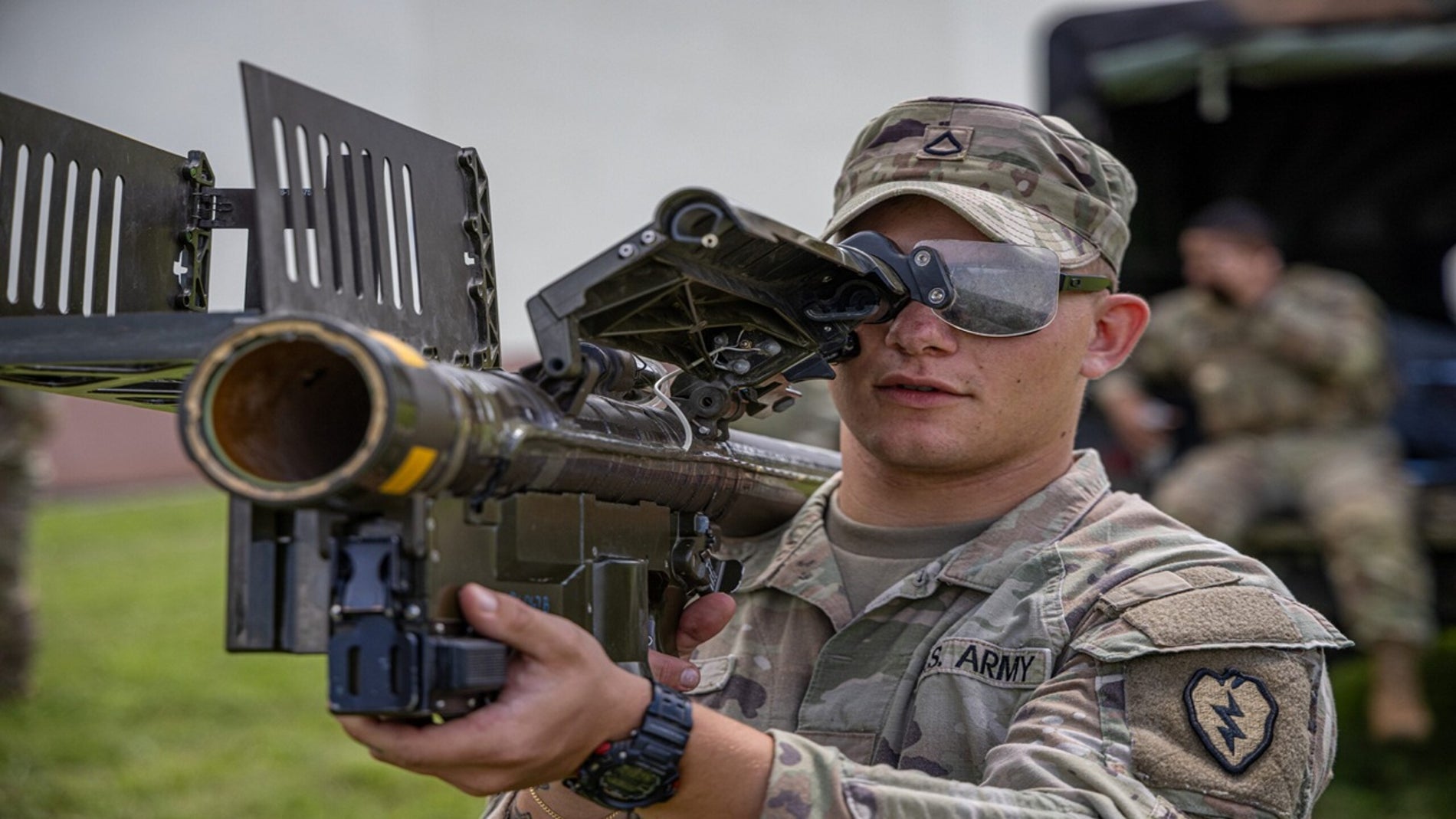
The defense transaction includes up to 600 FIM-92K Stinger Block I short-range air defense missiles intended to strengthen the North African country's airspace with advanced technology.
Official documentation from the U.S. Defense Security Cooperation Agency indicates that the agreement includes continuous technical support and engineering services provided by the U.S. government and defense contractors.
Missile specifications and defense contractors
The FIM-92K Stinger Block I is a battlefield-proven, short-range surface-to-air missile system engineered to target low-altitude airborne threats. Stinger systems are shoulder-fired or vehicle-mounted weapons manufactured to defend ground forces against low-flying aircraft, helicopters, and unmanned aerial vehicles.
Two major American defense manufacturers will serve as the primary contractors executing the contract. RTX Corporation, which operates missile manufacturing facilities in Arizona, and Lockheed Martin, headquartered in New York, will produce and deliver the missile systems to Rabat.
The U.S. Defense Security Cooperation Agency confirmed that formal notification has been delivered to the United States Congress to satisfy international transaction protocols. The agency noted that there is no record of any proposed offset agreement associated with the transaction, leaving any potential parallel commercial negotiations to the purchasing country and the manufacturing firms.
Strategic alliance and Maghreb stability
Washington considers Rabat a vital partner for maintaining security across North Africa. Morocco holds designation as a major non-NATO ally of the United States, a status granted to key strategic partners that work closely with American armed forces on international security initiatives.
U.S. foreign policy officials emphasized that strengthening Moroccan border security directly aligns with American strategic interests. According to the Defense Security Cooperation Agency, the weapons sale will improve the ability of Morocco to address present and upcoming security threats.
Moroccan military commanders intend to use the new arsenal to modernise the nation's armed forces and expand operational air defense capabilities. Technical evaluations confirm that Moroccan troops possess the necessary preparation to integrate the Stinger systems immediately into existing military structures without operational difficulty.
Despite the size of the 825 million dollar package and the volume of projectiles involved, U.S. military analysts stated that the sale will not alter the basic military balance in the Maghreb region. The acquisition is classified as defensive, tailored specifically to protect low-altitude airspace against hostile incursions.
European defense debate and regional capabilities
The U.S. arms transfer to Morocco coincides with ongoing discussions among European defense analysts regarding military readiness and strategic balance in the Mediterranean region.
Retired Lieutenant General Francisco José Gan, a former director of Spain's Armed Forces Intelligence Center (CIFAS), commented on Spanish military readiness, stating that Spain maintains the military capability to shut down Morocco within 24 hours.
Former Navantia executive Admiral José Manuel Sanjurjo addressed naval export strategies, stating that competing in submarine exports requires operating in the top division, which is the primary objective of Spain's S-80 submarine program. Navantia is Spain's state-owned naval shipbuilding enterprise responsible for constructing the S-80 air-independent propulsion vessels.
Evaluating air power alternatives, retired Lieutenant General Eduardo Zamarripa stated that adopting the F-35 stealth fighter would represent a qualitative capability leap but would compromise part of Spain's technological sovereignty. Retired Aviation Colonel Julio Serrano Carranza similarly advocated that Spain ought to prioritize purchasing advanced systems.
Assessing broader alliance obligations, retired General Fernando Alejandre stated that current operational readiness within the Spanish Army falls below the standards expected by allied nations. From an international perspective, retired British General Richard Shirreff, a former Deputy Supreme Allied Commander Europe for NATO, previously warned that Europe could not execute large-scale military operations independently without United States support.
Broader economic and domestic commentary
Public commentary surrounding technical developments has also highlighted economic trends. Businesswoman Yaiza Canosa, aged 33, observed that she encounters more plumbers driving Land Rovers than IT developers, arguing for the value of skilled manual trades over technology sector trends.
In consumer technology, details emerged regarding home appliances such as a Lidl indoor clothes dryer priced at 89.99 euros, capable of extracting 10 liters of moisture daily to prevent window condensation.
Additional regional reporting covers upcoming seasonal events, including forecasts by reporter Juan García Jiménez on expected October gas bill increases ahead of winter, and observations regarding the 2026 Harvest Moon in Spain. Health guidance from H. de Miguel noted World Health Organization warnings regarding health risks associated with El Niño, while legal reporting noted potential jury candidates Abdulkarim, Hussein, Ahmed, and Shawesh in the Begoña Gómez court proceedings.


