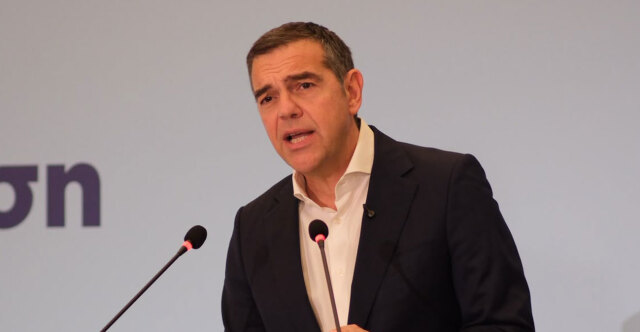
Former Greek prime minister Alexis Tsipras has mounted a fierce defence of his government's penal code reforms, accusing Prime Minister Kyriakos Mitsotakis of political slander.
Speaking from Paris in an interview broadcast by Mega News, the president of the Hellenic Left Alliance challenged the governing New Democracy party to present concrete proof and names or drop the allegations entirely.
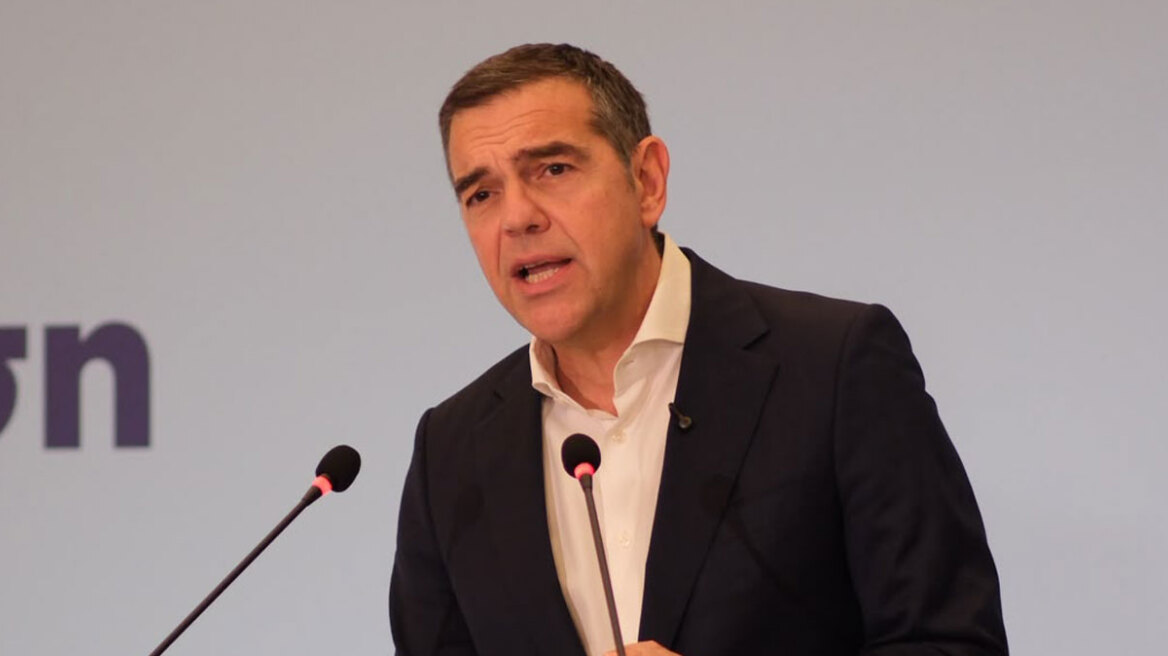
Tsipras described the continuing accusations against his past administration as a short-lived campaign of mud and toxicity. He asserted that slander operates as a twin sister of corruption, arguing that Mitsotakis systematically revives attacks on legal reforms whenever rising inflation and economic difficulties leave the government facing dead ends.
The former premier questioned why Mitsotakis had not pursued the allegations during his seven and a half years in office, particularly when Tsipras sat opposite him in parliament as leader of the official opposition. Echoing a colloquial phrase previously used by veteran conservative lawmaker Dora Bakoyannis, Tsipras said opponents must either speak with facts or shut their mouths.
Defence of the 2019 legal overhaul
Tsipras rejected criticism regarding the timing of the criminal code overhaul, which passed shortly before his party left power in the summer of 2019. He insisted that parliament remained in full session at the time, noting that he had pre-announced national elections but had not stepped down before the scheduled legislative work concluded.
According to Tsipras, a dedicated law-drafting committee established under jurist Christoforos Argyropoulos in 2015 completed an extensive review before delivering the final draft. Cross-party consultations began in 2018, and several legal experts and political opponents urged the government not to leave the landmark reform shelved in ministerial drawers.
Tsipras specifically named former deputy prime minister Evangelos Venizelos as one of the figures who encouraged the swift passage of the revised codes. He also pointed out that opposition lawmaker Charis Theoharis voted in favour of the measure at the time.
Drawing a sharp line between systemic reforms and routine revisions, Tsipras said full overhauls take years of scientific preparation and cross-party engagement. By contrast, he noted that individual governments frequently adjust specific articles on their own authority, pointing out that New Democracy introduced its own amendments in November 2019, only months after taking office.
Dismissal of Kontonis claims and coalition record
Asked about accusations made by his former justice minister Stavros Kontonis, Tsipras told interviewers that questions should be addressed directly to Kontonis. He stated that a preliminary judicial inquiry into the claims had already been dismissed and thrown into the wastebasket on two separate occasions.
The former prime minister also addressed questions regarding his administration's four-year coalition with the right-wing Independent Greeks party, led by Panos Kammenos. Tsipras argued that critics routinely overlook the defining political division of that era, which pitted supporters of international bailout agreements against opponents of austerity.
Tsipras pointed out that the socialist PASOK party had previously governed alongside far-right politicians including Makis Voridis, Adonis Georgiadis, and Georgios Karatzaferis without facing similar accusations. He noted that he had never raised such accusations against PASOK because that administration also operated under exceptional circumstances.
Tsipras emphasised that the enduring legacy of 2015 was the election of the first left-wing government in modern Greek history. He highlighted key progressive legislation passed by his cabinet, including the Prespa Agreement resolving the naming dispute with North Macedonia, the granting of citizenship to children of immigrants, and legal recognition of gender identity.
While conceding that the harsh fiscal policies required during his term had caused widespread hardship and disappointed many citizens, Tsipras maintained that he would never permit rivals to challenge his personal or political ethics.
Warnings over far-right alliances and political rivals
Turning to current parliamentary politics, Tsipras directed sharp criticism at Kyriakos Velopoulos, the leader of the nationalist Greek Solution party. He claimed that the true political role of Velopoulos had been unmasked following the elections, describing the right-wing party leader as someone caught in an artificial offside position.
Tsipras predicted that if New Democracy wins the next general election, Mitsotakis will actively seek governing partners from willing factions on the far right as well as cooperative figures from the political centre.
Tsipras also addressed Health Minister Adonis Georgiadis, who was celebrating his birthday on the day of the broadcast. Tsipras offered personal birthday wishes of good health and good sense, but suggested that Georgiadis intentionally provokes controversies to remain in the public eye and secure a higher spot on his constituency ballot because he is trailing behind political competitors.
Tsipras added that momentary electoral success quickly fades, remarking that a politician is ultimately judged by lasting conduct and moral character.
Tensions over the Greece-Cyprus electricity cable
On foreign affairs, Tsipras expressed grave concern over rising friction between Greece and Turkey concerning the underwater electricity cable linking the Greek and Cypriot power grids. The project, previously known as the Eurasia Interconnector, originated during Tsipras's term in office to end the energy isolation of Cyprus.
Tsipras stated that there is currently no evidence indicating that the cable route crosses the continental shelf. He warned that both nations have reached the brink of naval incidents and potential maritime violence without valid justification.
The former premier questioned why the Greek foreign ministry is undertaking diplomatic moves now instead of acting a year ago, when Turkish warships blocked cable-laying vessels near Greek territorial waters off the island of Kasos. He voiced hope that the dispute would conclude peacefully in accordance with international law, as expected between neighbouring countries.
Paris demonstrations and solidarity with French rallies
While visiting the French capital, Tsipras shared video footage on social media documenting mass street protests across Paris. He described the demonstrations as a peaceful human river and a celebration of democracy, praising France as Europe's enduring political and social workshop.
Tsipras expressed full solidarity with the French public, noting that hundreds of thousands of citizens took to the streets to demand lower living costs and an end to price spikes. He also framed the demonstrations as a broader struggle against far-right politics, warning that the serpent's egg of right-wing extremism is incubating across Greece, France, and Germany.
Highlighting the sounds of the Italian partisan anthem Bella Ciao resonating through the Paris demonstrations, Tsipras concluded that the song reflects the collective resolve of European citizens to prevent the continent from sliding back into its darker past.