
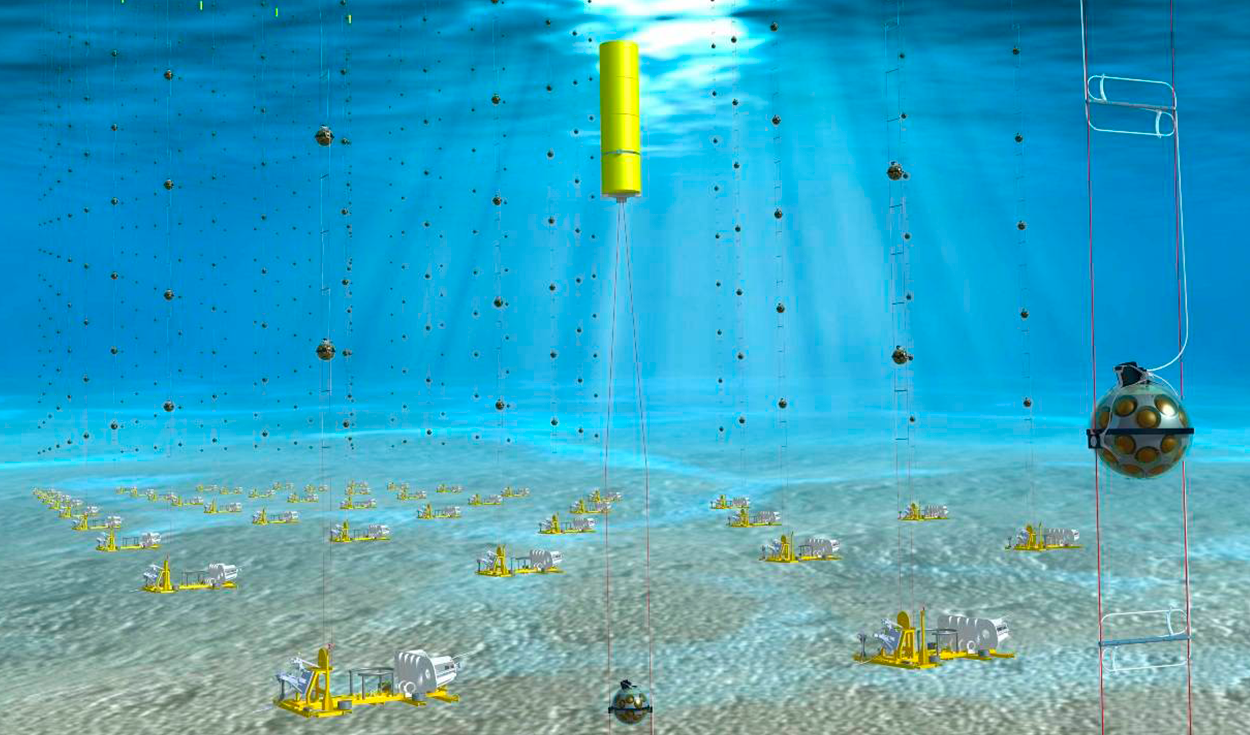
An international team of physicists using a deep-sea neutrino telescope off Toulon, France, has found no flaws in Albert Einstein's theory of relativity.
The researchers tested Lorentz invariance, a fundamental principle stating that physical laws remain unchanged for all observers, by measuring atmospheric particles that traveled through the interior of the Earth to an observatory anchored 2,400 metres beneath the Mediterranean Sea.
The findings, published in the Journal of Cosmology and Astroparticle Physics, confirmed that Albert Einstein's century-old formulation continues to hold up under extreme experimental conditions.
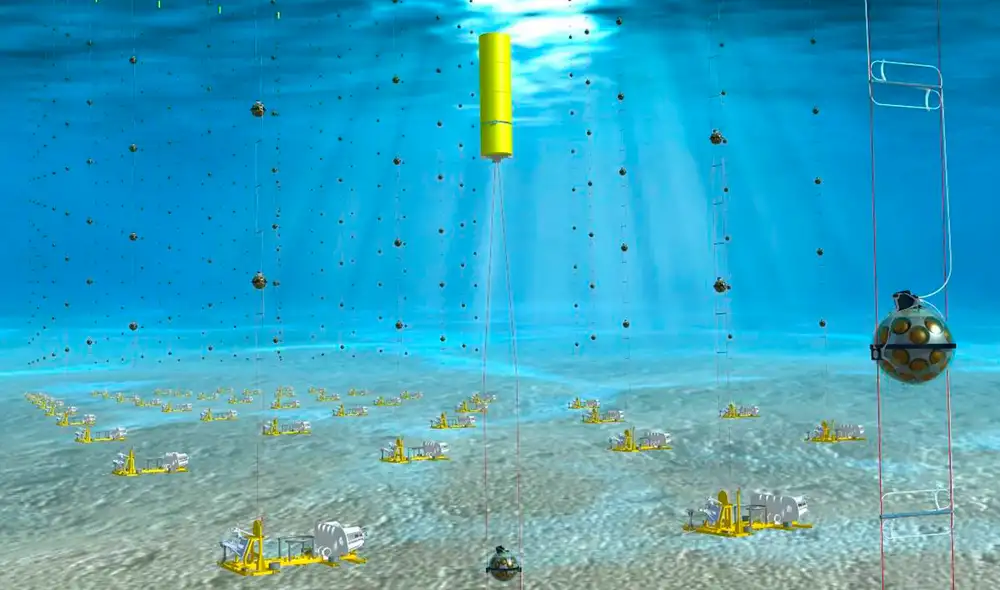
Data for the experiment came from ORCA, an underwater neutrino detector operating off the French coast as part of the multi-nation KM3NeT collaboration.
Testing the core foundations of modern physics
The research team focused its investigation on Lorentz invariance, a concept that underpins both general relativity and the standard model of particle physics. The principle holds that the laws of nature are symmetrical and remain identical whether an observer is stationary, moving at high velocity, or facing in a different direction.
Lorentz invariance was formulated by Dutch physicist Hendrik Lorentz and became a core postulate of Albert Einstein's 1905 special theory of relativity. Einstein later expanded the concept in his 1915 general theory of relativity, which treats gravity not as an invisible pull, but as the physical warping of space and time by mass and energy.
Although general relativity accurately describes massive cosmic structures and the standard model explains subatomic forces, physicists cannot reconcile the two frameworks. The incompatibility has driven a decades-long search for a unified theory of quantum gravity that unites large-scale cosmic mechanics with the quantum realm.
Several candidate theories suggest that space-time may not be a seamless fabric at microscopic scales, but instead consists of tiny discrete units near the Planck scale. Such a grainy texture could allow subtle violations of Lorentz invariance to occur when particles interact with the underlying structure of space-time.
Lukas Hennig, an advanced physics researcher at the University of Erlangen-Nuremberg and co-author of the study, explained that one of the most basic assumptions scientists hold about the universe could potentially be violated if these theoretical predictions prove true.
How neutrino oscillations expose space-time flaws
To detect such minuscule deviations, researchers rely on neutrinos, which are among the most abundant yet mysterious particles in the universe. Neutrinos possess neutral electrical charge and barely interact with ordinary matter, allowing trillions of them to pass harmlessly through solid objects every second.
Neutrinos exist in three distinct types, known to physicists as electron, muon, and tau flavours. As they travel across empty space or through dense matter, they continuously morph from one type into another through a quantum mechanical process called neutrino oscillation.
Physicists determined that if Lorentz invariance were broken, this regular pattern of transformation would be altered. Because any theoretical deviation would accumulate with every kilometre traveled, the effects would be most pronounced in particles journeying over vast distances.
To test this hypothesis, the scientists tracked atmospheric neutrinos produced when high-energy cosmic rays strike atoms in the upper atmosphere of the Earth. The team focused specifically on upward-going particles that originated on the opposite side of the planet and traveled up to 12,700 kilometres through the Earth before reaching the detector.
Hennig pointed out that only neutrinos are capable of passing completely through the planet. He explained that the Earth serves as an enormous natural filter, screening out all other cosmic particles that could otherwise interfere with the sensitive measurements.
Detecting faint blue flashes in the ocean abyss
The ORCA observatory, which stands for Oscillation Research with Cosmics in the Abyss, detects particles using strings of pressure-resistant glass spheres moored to the seafloor. Each sphere contains sensitive optical sensors designed to detect the faintest traces of light in the pitch-black deep sea.
When an incoming neutrino collides with an atom in the seawater near the detector, the reaction produces secondary charged particles moving faster than the phase velocity of light in water. This process generates a faint cone of blue light known as Cherenkov radiation, allowing researchers to calculate the incoming particle's trajectory, energy, and flavour.
The research team analysed 5,828 neutrino events recorded over roughly 17 months between 2020 and 2021. The measurements confirmed that the observed oscillations matched standard physical predictions, providing no evidence of any breakdown in Lorentz invariance.
The experiment also established the first direct experimental limits on potential space-time alterations that would affect muon and tau neutrinos differently. Hennig admitted that he was surprised the collaboration had achieved competitive results while operating with only six detection units during the study period.
Precision results and future Mediterranean detectors
The ORCA facility has grown considerably since the initial data collection run. The underwater installation currently operates 44 detection units anchored to the seabed, and the KM3NeT collaboration aims to deploy 108 units by 2030.
The researchers also plan to carry out similar tests using ARCA, a sister telescope located off the coast of Sicily, Italy. While ORCA is tuned to low-energy atmospheric neutrinos, the ARCA observatory is designed to detect high-energy neutrinos originating from distant cosmic phenomena such as supernovae and active galaxies.
Alba Domi, another researcher who contributed to the study, highlighted that neutrinos are particularly valuable for testing fundamental physics because the enormous distances they cover offer greater opportunities to detect potential disruptions in the established laws of physics.