


Smartphones running Google Android software and Apple iPhones can function as basic metal detectors using their built-in magnetic hardware sensors, according to tech reporting. The capability relies on internal magnetometers that mobile handsets already use to power digital compasses and orient map applications for satellite navigation.
Tech outlet Android.com.pl reported that the compact sensor determines direction by measuring magnetic field strength across three distinct axes, designated as X, Y, and Z. When a user brings a handset close to metallic objects, the metal alters the surrounding magnetic field and disrupts baseline sensor readings.
Users can test the hardware capability by downloading free utilities from the Google Play app store, such as the Metal Detector app. Placing a smartphone immediately adjacent to a metallic object causes sensor readings to surge sharply, reaching up to 900 microteslas in certain tests. Microteslas are the standard metric unit used to measure magnetic flux density, with Earth's natural background magnetic field typically registering between 30 and 60 microteslas.
Performance limits compared to dedicated detectors
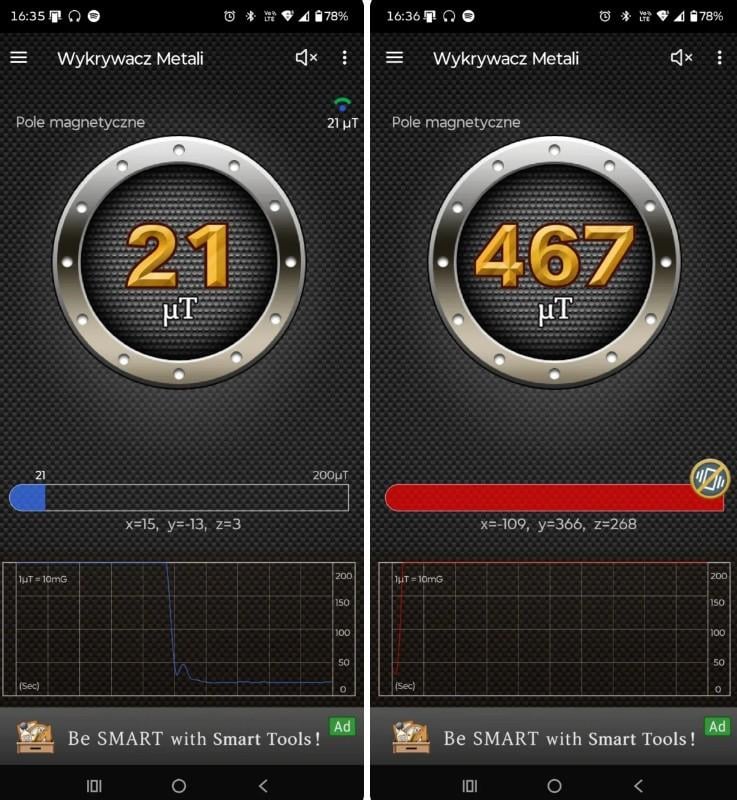
Despite the novel capability, technology experts stress that smartphones cannot replace dedicated metal detection equipment. The internal magnetometer registers magnetic changes only at extremely close range. Moving the phone even a short distance away from an object causes the reading spike to vanish rapidly.
Purpose-built metal detectors operate with significantly greater range and sensitivity. Specialized hardware units can locate small metallic objects buried under sand at distances of up to 15 centimetres. Industry analysts describe smartphone metal detection as an entertaining experiment or quick local test rather than a practical tool for serious searching.
Additional smartphone sensors and device features
Modern mobile devices incorporate multiple specialized sensors alongside magnetometers. Integrated barometers measure atmospheric pressure variations to assist location services and predict local weather shifts, while accelerometers track physical movement. In related device reporting, news agency UNIAN highlighted a discovery by a Samsung Galaxy user who reclaimed up to 50 gigabytes of internal storage without deleting files.
UNIAN also detailed the role of green and blue indicator dots displayed in the upper corner of Android screens. The visual interface elements act as critical security features by alerting users whenever an application accesses the device camera or microphone, even though the status icons occasionally annoy smartphone owners.
Recent mobile coverage has also outlined top Samsung smartphone recommendations for 2026 across different budget tiers and consumer needs. Further industry developments note that Xiaomi plans to provide software update support for a new budget handset through 2032, while leaked photos of iPhone 18 Pro packaging revealed an updated camera system featuring an unusual hardware capability.


