


The United States Air Force has completed 27 autonomous combat interceptions using an artificial intelligence system on its X-62A VISTA test aircraft in California. The aircraft executed the maneuvers against a T-38 Talon training plane acting as a live target in airspace across eight test flights at Edwards Air Force Base.
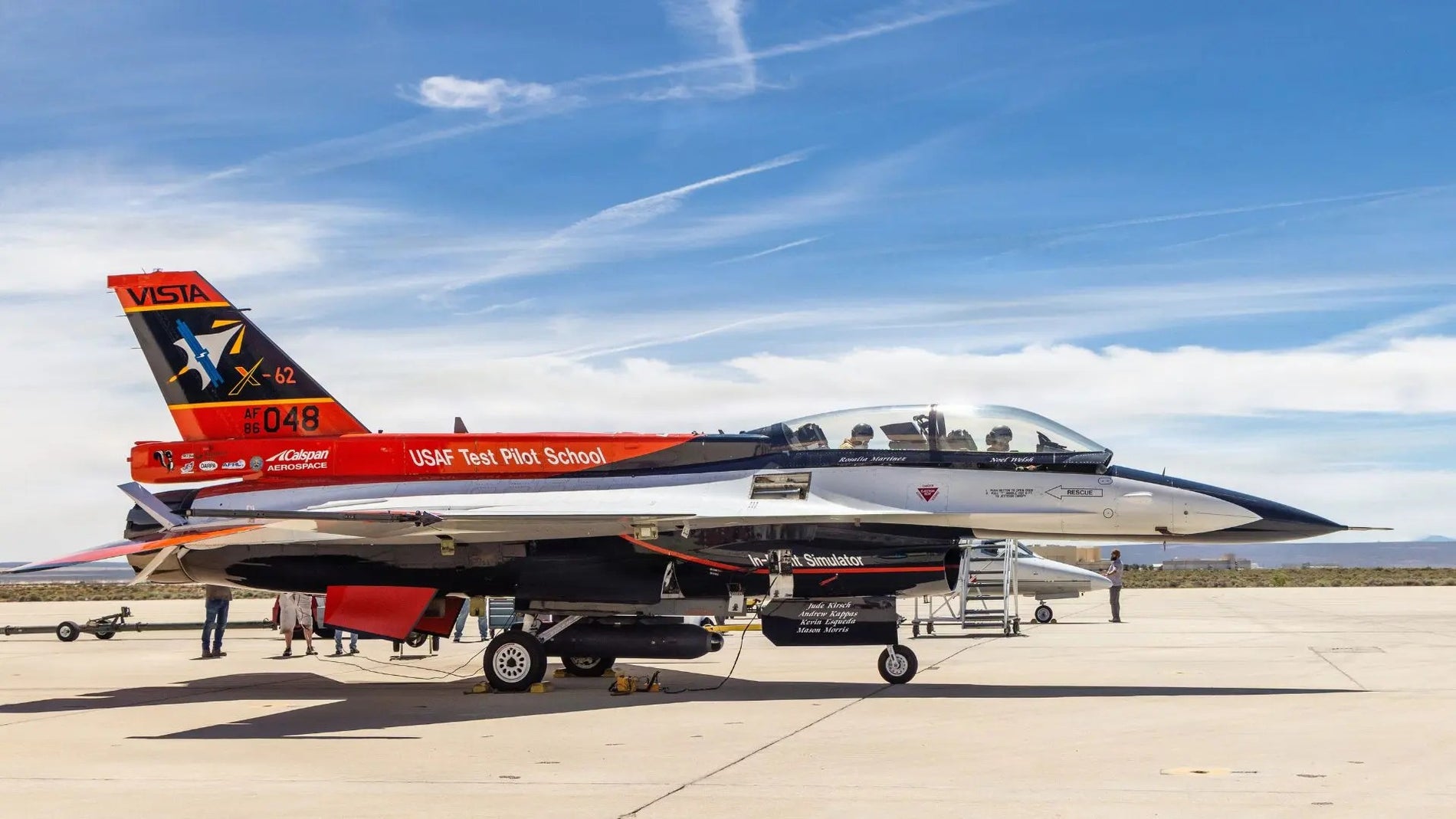
The X-62A VISTA is a heavily modified version of the classic F-16D fighter that currently serves as a flying laboratory. Officially code-named HAVE HEAT, the test campaign was directed by the Test Pilot School, according to specialized outlet Interesting Engineering.
Project officials said the primary milestone of the tests was using live sensor data during flights rather than relying on pre-programmed computer simulations. They added that the achievement brings autonomous flight technology closer to real combat scenarios.
Flight test technology and sensor integration
To accomplish the maneuvers, the experimental jet was equipped with the Legion Pod advanced system developed by aerospace manufacturer Lockheed Martin. The device operates as an infrared search and track sensor, gathering detailed environmental information in real time while tracking thermal signatures from other aircraft.
Sensor data transfers instantly to the artificial intelligence agent, which takes full control of the flight controls. The computer system processes the incoming data autonomously to pilot the plane into an optimal tactical position for interception.
The aircraft also integrated the Supermassive system developed by Skunk Works, a secret division of Lockheed Martin. The system allows the jet to process classified streams of data in flight within fractions of a second.
Future military operations and collaborative aircraft
Project leaders described the test results as an absolute force multiplier for future military operations. Lieutenant Colonel Joshua Strafaccia, dean of research at the Test Pilot School, said the program closes an operational capability gap and positions the military to test autonomous systems faster.
The United States Air Force continues work to develop Collaborative Combat Aircraft. Officials said these future unmanned jets will fly semi-autonomously alongside traditional fighters, receiving general directions from human pilots while executing attack and defense maneuvers independently on the battlefield.


