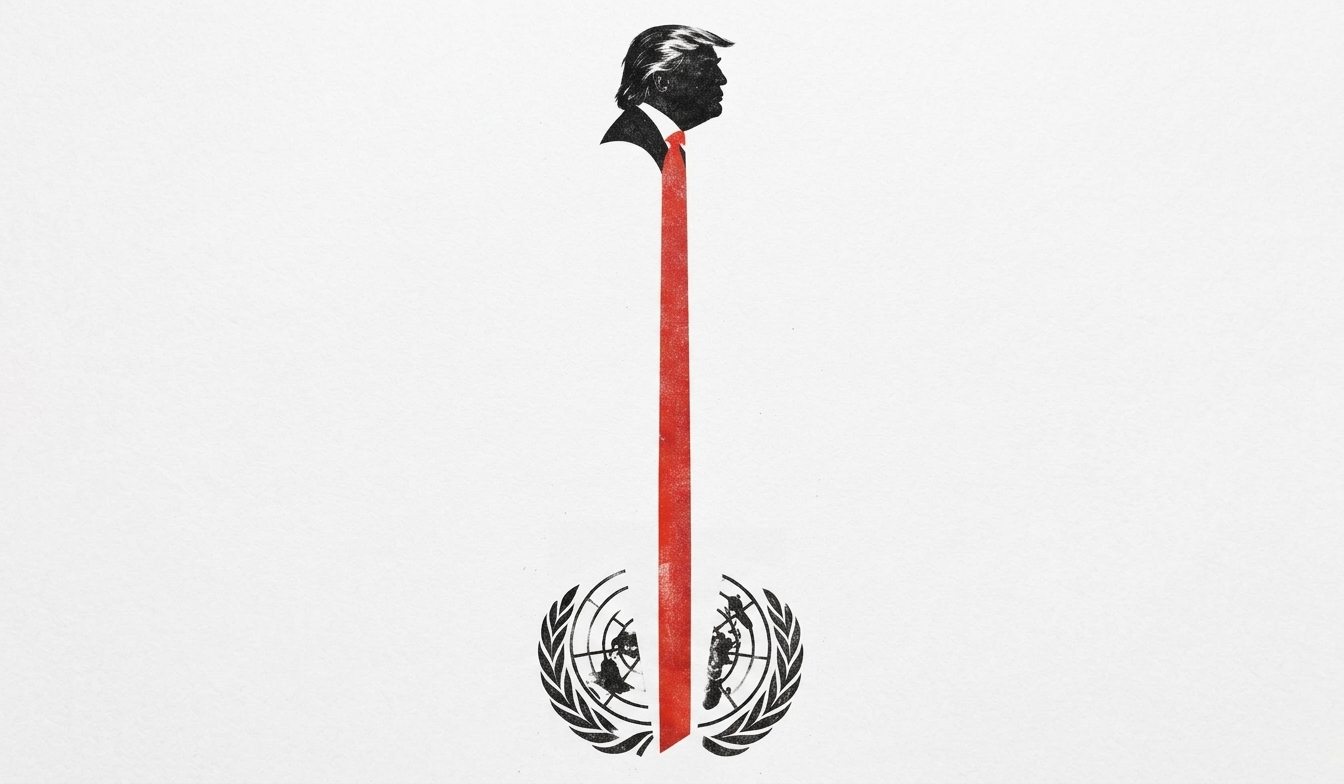
A three-phase United States strategy for Venezuela combining economic stabilization and oil development could reshape political power before democratic elections take place, according to a policy analysis of the bilateral energy arrangement.
The sequence designed in Washington establishes three formal stages comprising initial economic stabilization, infrastructure reconstruction, and ultimate democratic transition for the South American nation.
The framework centers on a major agreement covering 17 oil fields holding an estimated 65 billion barrels of crude reserves, representing a substantial economic intervention rather than a conventional commercial investment.
Under the announced structure, the United States government secures a direct economic stake through North American Blue Energy Partners, alongside preferential access to a portion of Venezuelan oil production.
The White House has formally positioned the bilateral energy agreement within its broader hemispheric security strategy, seeking to secure reliable petroleum access while significantly reducing the commercial and strategic presence of China and Russia in Latin America.
Major international energy firms, including California-based multinational Chevron Corporation and Italian state-controlled energy enterprise Eni, are expected to operate alongside North American Blue Energy Partners to ramp up production across the designated oil fields.
Although many terms, annexes, and contracts associated with the transaction remain undisclosed, incomplete, or contradictory, the arrangement attempts an unconventional response to Venezuela's institutional collapse.
After years of severe economic and institutional deterioration, Venezuela lacks the functioning legal state and dependable institutions necessary to attract traditional private capital. By acquiring a direct economic interest in the oil structure, Washington effectively lends its own sovereign credibility to Venezuela during the initial stabilization period, though such borrowed credibility cannot be maintained indefinitely.
Oil Recovery and Changing Power Dynamics
While the complete development of Venezuela's oil infrastructure may require many years, the political effects of the agreement could emerge much sooner as initial recovery signals appear.
As capital returns, infrastructure recovers, and production increases, economic stabilization will begin to generate effects extending far beyond petroleum output, foreign investment, and top-line economic growth.
If stabilization and reconstruction deliver visible improvements, the governing officials who manage the early phases could see their domestic political standing strengthened rather than diminished when the third stage arrives.
A population experiencing expanding employment, rising personal income, and tangible economic relief often develops a heightened aversion to political uncertainty, leading citizens to alter their political preferences in favor of those governing the recovery.
This potential consolidation of authority highlights a central paradox in Washington's strategic design. The successful administration of the early economic phases can convert financial recovery directly into durable political power for the incumbent administration.
Democratization and Institutional Rules
A political strengthening of current officeholders does not automatically signal a failure of democratic transition, provided the ultimate contest takes place under fair standards.
A genuine democratic transition does not require that the leaders who managed the initial recovery stages lose the first competitive elections. Instead, it requires that all political actors compete under genuinely democratic rules where the governing party can realistically lose power at the ballot box.
Electoral victory under competitive conditions does not grant legal impunity to governing figures. Winning office through democratic elections would not erase historical legal responsibilities or eliminate the essential requirements for truth, justice, and victim reparation that define transitional governance.
Citing foundational academic work on democratic transitions by political scientists Guillermo O'Donnell and Philippe Schmitter, the analysis emphasizes that political transitions are inherently uncertain processes rather than mechanical successions of predetermined steps.
Guillermo O'Donnell, an Argentine scholar, and Philippe Schmitter, an American political scientist, authored seminal research on transitology, analyzing how pacts, conflicts, and shifting power balances determine whether authoritarian regimes successfully transition into sustainable democracies.
Path Dependency and Sustainable Governance
As billions of dollars flow into oil fields and American corporations build operating assets, the resulting economic balances generate powerful new interests that become increasingly costly to reverse over time.
Political and economic arrangements that generate positive economic value are far harder to alter than system states that produce only financial costs, creating path-dependent trajectories that shape future political options.
Although gradual economic management may be practical, political opening and institutional building cannot be postponed until economic reconstruction ends. Both processes must proceed simultaneously to broaden civil liberties, build reliable legal institutions, and establish real conditions for future electoral competition.
Competitive elections alone do not complete a democratic transition. Referencing political analysis by Venezuelan consultant John Magdaleno, the study notes that the core challenge is not simply inaugurating a democratic order, but ensuring that democratic governance can endure permanently.
John Magdaleno is a prominent Venezuelan political scientist and founder of Polity, a specialized analytical firm focusing on political risk, state strategy, and democratic transitions in Latin America.
A lasting political transition cannot be constructed exclusively from Washington or by current power holders in Caracas. Long-term sustainability requires incorporating diverse political actors who must compete in elections, accept voting results, and coexist peacefully within the emerging political order.
The fundamental issue surrounding the United States strategy is not choosing between economic stability and political democracy, but ensuring that economic stability opens a path toward democracy without predetermining who wins power.
While a failure of the oil agreement would create a different set of crises, the central question for Venezuela's future is what happens if Washington's three-phase strategy succeeds in stabilizing the nation, boosting oil production, and securing American geopolitical goals.
A three-phase plan outlines an intent, but it cannot freeze the evolving interests, public preferences, or power balances of the people living through the transition. The ultimate test of the oil deal is not what occurs if it fails, but how its success transforms the country.