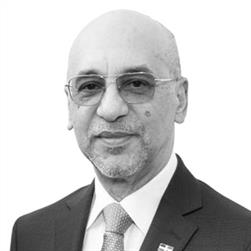

Dominican educator Ángel Hernández has called for school principals in Santo Domingo to transition from administrative managers into pedagogical leaders focused on student learning.

Writing in an opinion piece published in Santo Domingo, Hernández argued that institutional change in the education system depends on creating a shared culture of responsibility across school management, teachers, families, and the broader community.
Hernández, who previously served as the Dominican Republic minister of education, explained that school principals serve as the primary agents for implementing central educational policy at the local level. Without effective leadership in individual schools, systemic reforms and innovations encounter significant resistance.
Support for school leadership
Recalling his tenure leading the Ministry of Education of the Dominican Republic, known as Minerd, Hernández noted his early engagement with school administrators. Upon learning of the creation of the National Association of School Principals, known as Asonadedi, he invited the organization to the ministry to offer full official backing.
To bolster morale and elevate the standing of school heads, Minerd authorized two separate salary increases for principals during that period. Hernández explained that his goal was to raise the visibility of school directors, emphasizing that they are accountable not only for administrative upkeep but primarily for guiding pedagogical progress alongside their management teams.
Hernández stressed that while principals create the structural conditions for academic success, student learning is never the outcome of a single individual's work. Instead, educational achievement requires coordinated effort among principals, pedagogical teams, classroom teachers, parents, and local communities.
Redefining the role of principals
According to Hernández, traditional perceptions of school directors must change. Rather than functioning chiefly as administrators overseeing supply allocation, class schedules, student discipline, and official paperwork, principals must take direct responsibility for ensuring that all students master the required curriculum.
This leadership shift requires establishing explicit learning goals for each school, grade level, and individual student based on specific academic needs. Principals must analyze baseline student results, pinpoint learning obstacles, mentor teaching staff, and foster an institutional culture grounded in empirical evidence.
Effective school leaders set high yet realistic expectations while establishing time management practices that protect instructional hours. Hernández noted that minimizing unnecessary classroom disruptions requires cooperation from the teachers union, ensuring that available educational resources directly benefit classroom instruction.
In addition, Hernández stated that principals must lead by personal example. He observed that a school cannot build a culture of accountability unless its top administrator demonstrates discipline, commitment, active listening, and a continuous willingness to learn.
Data-driven pedagogical teams
Acknowledging that principals cannot manage pedagogical development alone, Hernández emphasized the necessity of strong internal pedagogical teams. These teams should consist of instructional coordinators, guidance counselors, classroom teachers, and specialized school staff working in close coordination.
These pedagogical teams must conduct regular reviews of student learning data, including standardized test evaluations, daily classwork, attendance records, classroom participation, and identified learning gaps. By monitoring these metrics, educators can determine what students are learning, identify who is falling behind, and adjust teaching strategies accordingly.
Hernández highlighted that continuous data tracking and targeted intervention are especially critical during the first three grades of primary education, where foundational literacy and numeracy skills are established.
To support this work, school management must schedule dedicated collaboration time for teachers. These shared sessions enable instructors to plan lessons together, observe classroom practices, share successful methods, and solve common teaching challenges as a collective body.
Collaborative teacher training
Professional development for teachers must link directly to daily classroom needs rather than focusing on accumulating certificates or degrees, according to Hernández. He stated that training programs are only valuable if they produce observable improvements in teaching methods and student performance.
Effective teacher training should incorporate practical demonstrations, classroom observations, peer feedback, and structured follow-up support. Hernández added that principals must oversee how teachers integrate core textbooks, open educational resources, digital tools, and artificial intelligence into their instruction.
While technological tools and artificial intelligence offer new instructional opportunities, Hernández cautioned that no digital tool should replace a teacher's pedagogical judgment. He noted that while an isolated teacher can improve their own practice, a teaching body that learns collectively can transform an entire institution.
Building a collective learning culture
The long-term strength of a school depends on establishing a shared vision that no student will be left behind, Hernández wrote. In this framework, the principal sets the direction, the pedagogical team analyzes performance data, teachers deliver concrete learning experiences, and the surrounding community provides ongoing support.
Hernández argued that school quality should not be evaluated solely by the talent of individual teachers. Instead, institutions must be judged by their capacity to operate as professional learning communities that regularly measure outcomes, correct shortcomings, and pursue continuous improvement.
Transitioning from isolated teaching practices to a unified institutional effort represents the main challenge facing school leadership today. To achieve this cultural shift, Hernández recommended expanding professional development for principals to strengthen both their administrative skills and their pedagogical leadership capacities.