Peruvian historian Raúl Asensio has published a historical study examining the eight-year military dictatorship of General Manuel A. Odría, as highlighted by historian José Ragas in a review for the newspaper La República on October 7, 2026.
The book, titled Los años de Odría, 1948-1956, was published in Lima by the Instituto de Estudios Peruanos as part of its Historias Mínimas series. Spanning nearly 300 pages, the work offers an integrated analysis of the political, economic, and cultural developments that defined the regime.
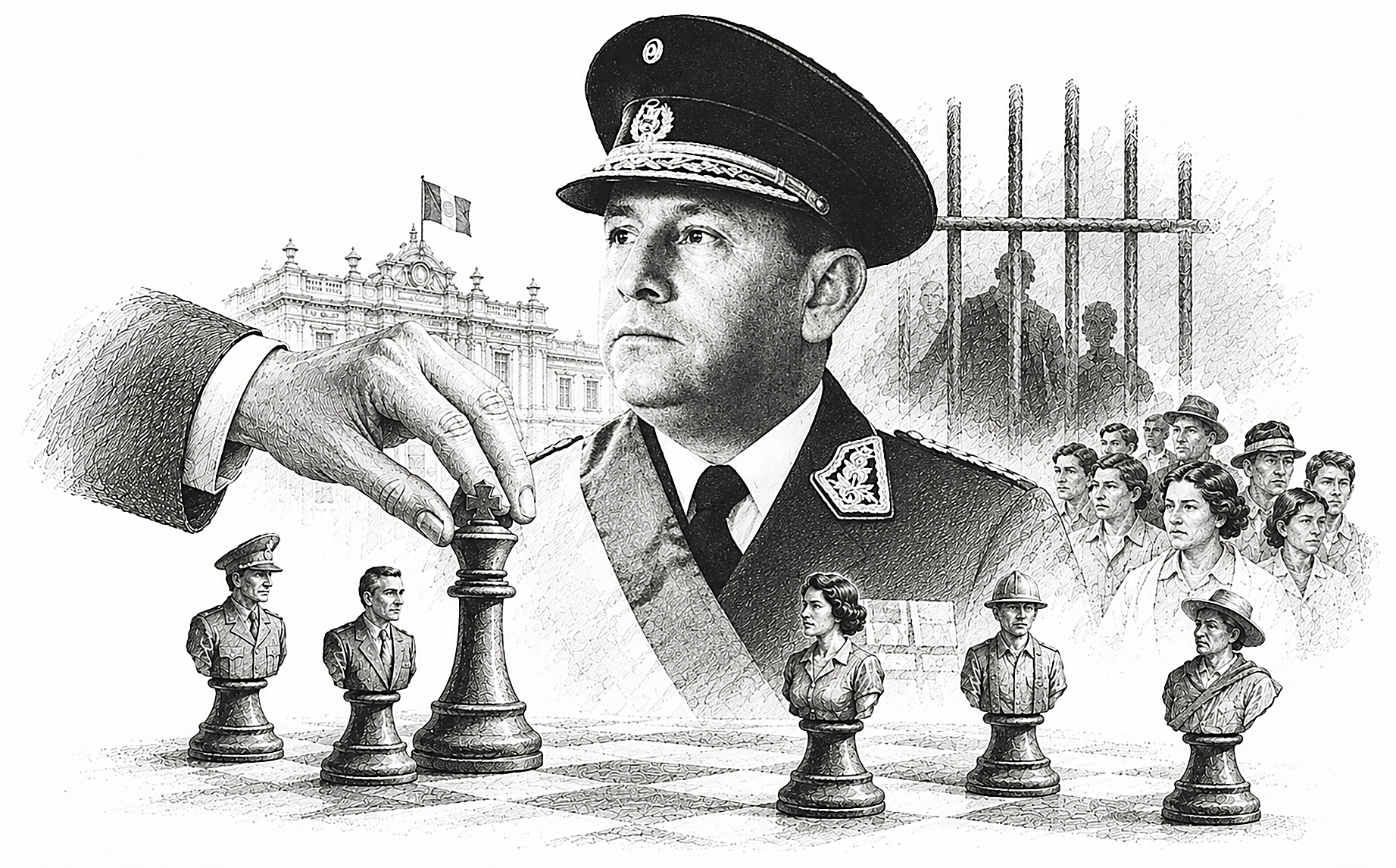
Ragas wrote that Odría led an authoritarian government that seized power with elite backing before seeking to build a popular support base. The regime aligned unconditionally with the United States during the early Cold War and launched a heavy anti-communist campaign to distract from unfulfilled promises. Ragas noted that this profile closely mirrors contemporary political challenges in Peru seven decades later.
A Dictatorship Ahead of Its Time
General Manuel A. Odría took power in Peru following a military coup in October 1948, initiating an eight-year period known as the Ochenio. Ragas described the administration as a military dictatorship from every angle. He wrote that Odría anticipated Fujimorism, referring to the 1990s government of Alberto Fujimori, by four decades in attempting to use national elections to gain political legitimacy.
Ragas emphasized that a primary virtue of Asensio's study is its nuanced treatment of the regime. The book explores the gray zones created by Odría through his efforts to reach, maintain, and leave power in ways most convenient for himself and his associates.
The Instituto de Estudios Peruanos, founded in 1964 as a social science research center in Lima, publishes the Historias Mínimas collection to provide concise syntheses of significant Peruvian administrations. Ragas noted that while these governments stood out in national history, they did not always do so for their virtues.
Unpublished Images and Cold War Context
Although the pocket-sized format might suggest a brief summary of the eight-year regime, Ragas explained that Asensio went far beyond a basic overview. The author combined analytical content with historical photographs, including several previously unpublished archival images.
Asensio faced a double responsibility in writing the volume because the Ochenio remains relatively obscure compared to other periods in Peruvian history. He was tasked with introducing the era to readers while providing novel analytical angles on Peruvian society during the Cold War.
Ragas attributed Asensio's success to his experience balancing regional history with global contexts. Asensio previously authored a study on the 1950 Cusco earthquake and international cooperation to rebuild the Andean city. Ragas noted that this regional focus provides a welcome departure from accounts focused exclusively on the capital city of Lima.
Economic Booms and Social Imaginaries
The book combines spatial, economic, and cultural dimensions to analyze the structural challenges of the era. Asensio examines the recurring dilemma between export booms and lean fiscal periods, showing how economic volatility impacted state coffers.
These economic shifts directly influenced government social projects. The Ochenio sought to bypass traditional ruling elites by establishing clientelistic support networks among the urban middle class and working-class sectors.
Ragas noted that temporary economic expansions during the period included the rapid growth of anchovy fishing and the initial emergence of drug trafficking. However, these ephemeral booms generated short-term revenue without contributing to long-term national development.
Literary Reflections of a Divided Society
Social dynamics under the dictatorship were defined by a middle class fearful of falling into poverty and losing status, alongside government efforts to depoliticize rural peasant communities. Ragas wrote that these social conditions shaped the dominant national imaginaries of the mid-20th century.
Peruvian literature captured these societal tensions in detail. Ragas highlighted how writers such as Mario Vargas Llosa, Julio Ramón Ribeyro, and José María Arguedas portrayed the underlying conflicts of the era across their novels and short stories.
These literary works contributed to the formation of a critical public sphere in Peru. Ragas noted that this critical intellectual tradition persisted through the 1970s and 1980s, continuing to expose national social problems and the true nature of governing regimes.
Pragmatism, Police Suppression and Women Suffrage
Ragas stressed that the pragmatic and opportunistic character of Odría's regime stands out in Asensio's analysis. Rather than reducing the government to a simple label of authoritarianism, Asensio explains how Odría navigated expanding American hegemony during the early Cold War.
The study draws on official cabinet meeting minutes of the Council of Ministers, a primary source recording internal government concerns as domestic and international challenges unsettled military leaders. Ragas noted that the regime enjoyed few calm moments and failed to capitalize on them because it viewed its relationship with citizens as one of subordination.
Odría demonstrated a willingness to forge and break political alliances whenever necessary to remain in Government Palace. Ragas described the administration as relying heavily on force over conciliation, dispatching police to suppress public protests while covertly probing political support from the American Popular Revolutionary Alliance, known as APRA.
The regime also granted women the right to vote in Peru, a move Ragas described as a calculated effort to secure female votes in a potential future presidential campaign. Additionally, the government courted newly arrived rural migrants in cities after realizing their votes were more useful than arresting them for land invasions.
Expanding Regional Research on the 20th Century
Ragas concluded that Asensio's book successfully repositions Odría and his administration within Peruvian historiography, detailing both the opportunities and constraints that marked the eight-year regime.
He expressed hope that the work would encourage other researchers to build upon Asensio's arguments. Disagreeing with colleagues who view 20th-century Peruvian history as adequately covered, Ragas called for further regional and comparative studies placed within an international context.
Recent Analysis and Historical Commentary by José Ragas
In addition to his evaluation of Asensio's book, Ragas has authored a series of recent opinion columns for La República covering Peruvian cultural history, organized crime, and political violence.
On October 7, 2026, Ragas summarized Asensio's work on the Ochenio, praising the book's integration of economic, cultural, and political factors to explain a little-known historical period.
On September 27, 2026, Ragas published an article titled Flor Pucarina, inmortal, examining the legacy of the iconic Peruvian folk singer. Ragas noted that despite her immense cultural significance, Flor Pucarina has received limited formal recognition, though two current projects offer a fresh opportunity to rediscover her story.
Also on September 27, 2026, Ragas reviewed Jorge Nureña's book Esta bala lleva tu nombre in an article titled Trujillo y los orígenes de la extorsión. Ragas explained that the study details the history of contract killings in the northern city of Trujillo, tracing the expansion of extortion and the failure of law enforcement to control it.
On August 26, 2026, Ragas published Inventando a Sendero, reviewing the book Los nuevos cronistas del Perú. Ragas highlighted the work's re-examination of the Shining Path insurgent movement, noting that it challenges rigid academic interpretations and stresses the importance of regional politics in Ayacucho during the group's rise.
On August 12, 2026, Ragas cited Nureña's study on Trujillo extortion to defend the societal value of academic research. Ragas urged skeptics who question the impact of humanities and social sciences to examine the findings and demand that public authorities stop extortion violence before more citizens are targeted.