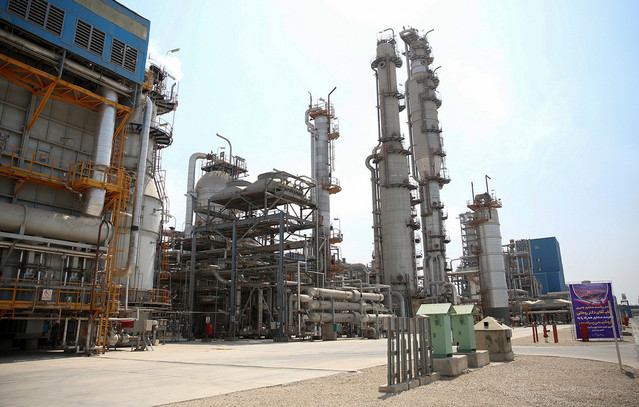
American energy major Chevron has announced an investment program exceeding 7 billion dollars in Venezuela to more than double its crude oil production over five years.
The move comes as Washington attempts to reshape the overall energy map of the South American nation. Italian energy group Eni is also expanding its footprint after signing an agreement to develop the Junin 5 heavy oil field in the Orinoco Belt.
Chevron plans to raise its production in Venezuela to approximately 600,000 barrels per day within the next five years. The company produced about 270,000 barrels daily in July, up from nearly 240,000 barrels per day at the start of 2026.
Chevron Expands Operations in Orinoco Belt
The investment commitment by Chevron represents one of the largest foreign energy investments in Venezuela in years. Under the plan, the joint venture Petroindependencia is acquiring two new areas in the Carabobo sector of the Orinoco Belt, a region in eastern Venezuela known for holding some of the world's largest deposits of heavy crude oil. Chevron holds a 49 percent stake in Petroindependencia.
Chevron Chief Executive Officer Mike Wirth clarified that the 7 billion dollar outlay is not limited to Petroindependencia alone. Instead, the capital covers all three joint ventures through which the San Ramon, California-based company operates inside Venezuela.
The campaign aims to drill new wells, utilize existing facilities, and steadily raise output. Chevron noted that production costs at the new investments could remain below 20 dollars per barrel, making the fields highly attractive if a stable political and legal environment is maintained.
Wirth described an additional production capacity of around 300,000 barrels per day within a few years as a significant increase by oil industry standards. He added that Chevron's facilities in Venezuela are in better condition than much of the country's broader oil infrastructure, which could accelerate development.
Century-Long Presence and Sanctions History
Chevron has maintained operations in Venezuela for more than a century, establishing a presence that predates modern state oil management. Unlike competing American oil giants such as ExxonMobil and ConocoPhillips, which departed after nationalizations in previous decades, Chevron chose to remain.
The United States imposed an oil embargo on Venezuela in 2019 before partially easing restrictions in 2023. President Donald Trump revoked several operator licenses during the first half of 2025, but Chevron secured a special exemption that allowed it to continue basic operations and protect its facilities.
The situation changed radically following the removal of President Nicolas Maduro by United States forces in January 2026. That event established a new framework of cooperation between Washington and Caracas, the Venezuelan capital.
A major challenge for Venezuela is convincing foreign investors that new terms can be sustained for decades. Wirth said significant changes have occurred in dispute resolution mechanisms as well as contractual and financial guarantees for investors, giving Chevron greater confidence for long-term investments.
Industry skepticism remains high across the sector. Early in 2026, ExxonMobil Chief Executive Officer Darren Woods described Venezuela as essentially uninvestable under conditions at the time, recalling that his company's assets had been seized twice in the past.
Italian Major Eni Targets Junin 5 Field
State-backed Italian energy company Eni, based in Rome, is also broadening its operations in the Orinoco Belt. Eni signed an agreement allowing it to proceed with the development of the Junin 5 heavy oil field, where it plans to invest approximately 1.5 billion dollars.
Production at the Junin 5 field currently stands at around 12,000 barrels per day. Under Eni's development project, output is expected to rise gradually to approximately 200,000 barrels daily.
Eni has set an overall target to boost its total Venezuelan oil production to about 400,000 barrels per day by the end of the decade, establishing itself as a principal European operator in the region.
US Secures Access to One-Fifth of Reserves
The investment moves by Chevron and Eni follow a larger geopolitical agreement announced days earlier by the Trump administration. Under that deal, United States commercial interests gained long-term access to 17 Venezuelan oil fields containing an estimated 65 billion barrels of oil.
That volume corresponds to roughly one-fifth of Venezuela's proven oil reserves. The arrangement foresees a 100-year lease of the fields through North American Blue Energy Partners, a private firm.
Several of the oil fields covered by the lease were until recently under Chinese or Russian influence, giving the agreement clear geopolitical significance beyond energy production. However, parts of the oil industry have expressed reservations over how the concession was granted, citing the lack of a competitive process and questioning whether it creates an unlevel playing field for other investors.
Rebuilding Infrastructure and Global Energy Impact
United States Energy Secretary Chris Wright visited Caracas for the signing of the agreements and estimated that incoming investments could lead to a more than doubling of Venezuela's production in coming years. Venezuela currently produces between 1.1 million and 1.25 million barrels of oil per day, far below historical levels that once exceeded 3 million barrels daily.
Wright estimated that national production could exceed 2 million barrels per day by the end of the decade. The Trump administration has set an even broader framework, calling on energy companies to invest up to 100 billion dollars overall to rebuild Venezuela's energy industry.
Venezuela holds more than 300 billion barrels of proven crude reserves, representing the largest resource base in the world. However, decades of chronic underinvestment, mismanagement, nationalizations, decaying infrastructure, and international sanctions caused a collapse in production capacity.
Restoring production to 2 million barrels per day will require billions of dollars in investments in drilling, pipelines, electrical power supply, heavy crude upgrading units, and export infrastructure. Consequently, the latest announcements do not mean new barrels will immediately enter global markets.
Nevertheless, the developments represent the strongest indication yet that major Western energy groups are again treating Venezuela as a potential investment destination. Amid ongoing turmoil in the Middle East and uncertainty regarding flows through the Strait of Hormuz, Washington has an added incentive to seek more Latin American barrels returning to the market.