The 28th International Book Fair opened at the National Theatre with an official ceremony calling for improved reading comprehension among students.
The event introduced the motto Open a book, open a world, highlighting a decline in student reading ability and comprehension shown in educational assessments.
The National Theatre, located in Santo Domingo, serves as the primary cultural venue for the Dominican Republic. The annual fair brings together writers, publishers, educators, and readers from across the country and the wider Caribbean region.
Staging on Reading and Technology
The opening ceremony featured a theatrical performance depicting an elderly grandmother holding a large book while conversing with her three young grandchildren about its contents. The children argued that viewing images on a mobile phone or an iPad was easier and more entertaining than reading a physical book.
The performance turned when the grandmother showed the children a blank page left for the reader to build using imagination. The children realized that imagining for themselves, thinking, creating, and developing critical capacity enriches human life, distinguishing humans from other species.
Organisers emphasized that opening and understanding written material remains the central challenge for the educational system. Reading comprehension applies to both printed paper and digital media, as books may be printed without being opened or read without being understood.
Dominican Publishing Boom and Reading Tests
Speakers at the ceremony noted a contrast between a boom in Dominican publishing and a drop in national reading comprehension scores. While the number of books put into circulation has grown, overall reading comprehension has decreased.
The decline in reading and understanding among pupils is corroborated by results from the PISA test. The Programme for International Student Assessment, known as PISA, evaluates educational systems worldwide by measuring the reading, mathematics, and science skills of 15-year-old pupils.
Tribute to Poet Jose Marmol
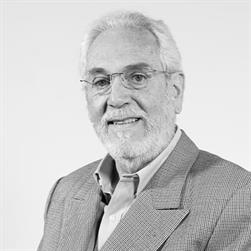
The ceremony included a tribute to poet Jose Marmol, in whose honour the fair is dedicated and named this year. Speeches at the event were described as coherent and well structured, praising his literary contributions to the nation.
Marmol was visibly moved when surprised by a video presentation prepared for the occasion featuring his wife and children. The family video expressed their admiration and love for his poetic work and inspired metrics.
Jose Marmol is a prominent Dominican poet and essayist born in Santo Domingo. He has won major national literary awards, establishing himself as a distinguished figure in contemporary Caribbean literature.
Call for Regional Unity and Cultural Exchange
Panama showcased its host traditions at the gathering, encouraging attendees to make the fair a meeting place for cultures, dialogue, understanding, and international exchange.
Speakers recalled the historical vision of Simon Bolivar, who wrote in his 1815 Jamaica Letter about creating a unified continental nation in the New World. Bolivar proposed a single bond linking territories sharing a common origin, language, customs, and religion under a single government confederating the different states.
Bolivar envisioned a confederation of nations linked by treaties rather than a giant sovereign state like the United States. Although he may have preferred a federation, he was aware of the immense obstacles created by ambitions for power.
Simon Bolivar led South American independence movements against Spanish colonial rule in the early 19th century. His Jamaica Letter, written while in exile in Kingston, outlined his political philosophy for Latin American cooperation and governance.
History of the 1826 Amphictyonic Congress
In his 1815 letter, Bolivar expressed hope that the Isthmus of Panama would serve the Americas as the Isthmus of Corinth served ancient Greece by hosting an august congress of republic representatives to discuss peace and war.
At Bolivar's request, the Amphictyonic Congress convened in Panama in June 1826, at a time when Spanish- and Portuguese-speaking America was relatively unified in several large nations. Representatives attended from Gran Colombia, comprising Venezuela, Colombia, Ecuador, and Panama, as well as Peru, Mexico, and the United Provinces of Central America, which included Costa Rica, Guatemala, El Salvador, Honduras, and Nicaragua.
Brazil, Paraguay, Chile, and the United Provinces of the River Plate, representing Argentina, did not attend the 1826 meeting. Delegates on the agenda discussed rules of international law, trade and navigation treaties, common military expense contributions, and shared resentment against former colonial ruler Spain.
The measures discussed and approved at the 1826 congress were never ratified, as individual nations chose independent paths over regional confederation. Decades passed before Latin American nations again raised the need for economic and political integration, an objective that remains unfulfilled.