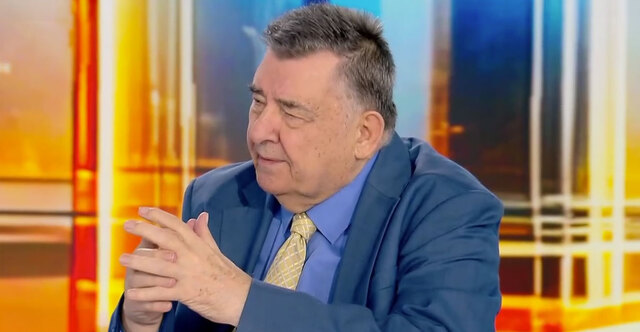
ELAS deputy shadow finance minister Giorgos Pappas has issued a clarification after his comments about taxing jewelry in bank deposit boxes sparked public controversy. Speaking after intense reactions on social media, Pappas stated that a proposed Patriotic Contribution would target only the wealthiest one percent of Greeks rather than personal items stored in bank vaults.
The initial controversy arose following an interview given by Pappas on the Greek radio station SKAI. During the broadcast, the financial official outlined the framework of a temporary wealth levy previously announced by Alexis Tsipras, explaining that the tax aimed to generate significantly higher revenues than currently estimated.
In his radio remarks, Pappas suggested that net wealth evaluations should incorporate all personal assets, citing real estate, stocks, investments, vehicles, and items listed in asset registries, including jewelry stored in safety deposit boxes. He argued that per 100 euros of net wealth, individuals holding substantial assets should contribute as a patriotic duty, act of responsibility, and condition for social cohesion. He added that the measure would not be permanent but would run for a few years to fund essential social needs such as education, health services, and support for the middle class.
Initial Radio Comments and Public Reaction
The comments circulated rapidly across online platforms, drawing sharp focus to the inclusion of deposit box jewelry in future asset registries. The online backlash prompted Pappas to issue a follow up statement aimed at dispelling misinterpretations regarding who would bear the financial burden of the measure.
In his clarifying statement, Pappas emphasized that the Patriotic Contribution announced by Tsipras was framed strictly for the top one percent of the richest Greeks. He insisted that the tax would not rely on taxing the jewelry of wealthy women, explaining instead that the levy would focus primarily on high value movable and immovable property.
Scope of the Proposed Patriotic Tax
Pappas noted that immovable property such as real estate is already officially registered across the country. However, he stated that movable assets, including stocks, bonds, and bank deposits, would need to be formally recorded under the system, drawing comparisons to wealth tax frameworks operating in European countries such as Switzerland and Spain.
Concluding his clarification, Pappas remarked that critics and observers need not worry about the jewelry kept in the safety deposit boxes of wealthy women in the top one percent.
Background on Greek Fiscal Debates
Wealth taxation proposals and asset registry reforms have remained central to economic debates in Greece, where political parties often debate mechanisms to expand the national tax base and strengthen social welfare programs. SKAI Radio, based in Athens, is one of the nation's leading commercial news stations, frequently hosting political discussions on national fiscal policy.
Alexis Tsipras, a prominent figure in Greek politics who previously served as Prime Minister, has frequently advocated for fiscal reform package measures aimed at wealth redistribution. Countries such as Spain and Switzerland maintain established wealth tax regimes that require taxpayers to declare global movable assets, including equities and financial deposits, alongside traditional real estate holdings.