

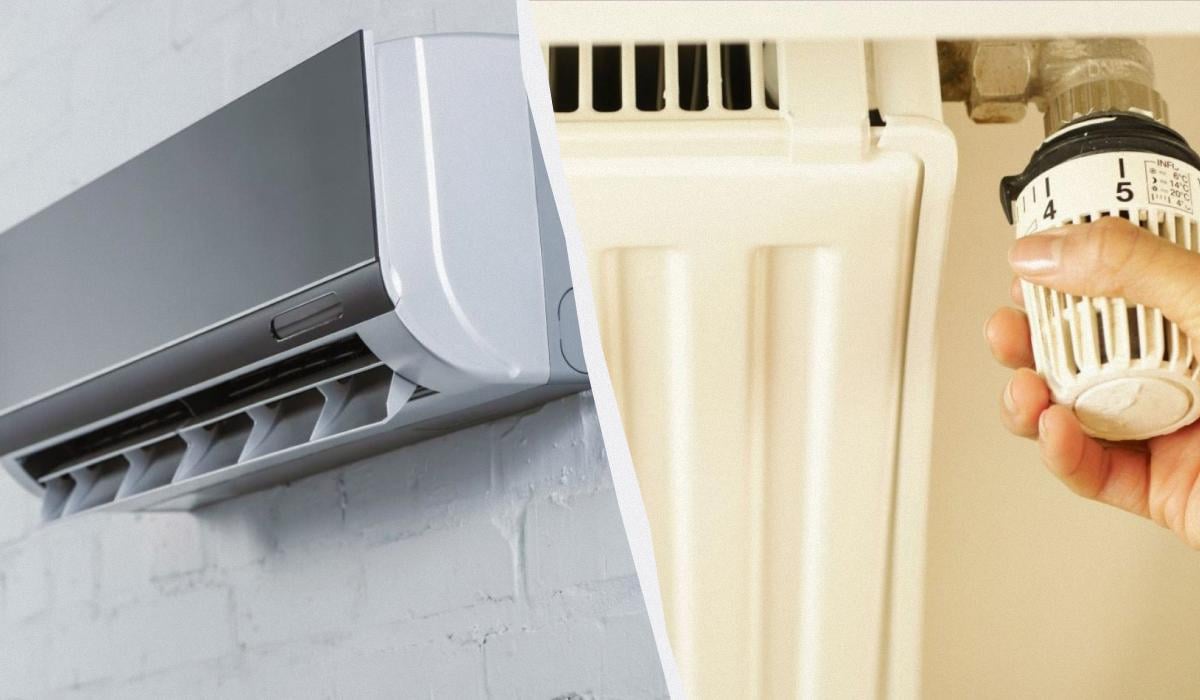
Inverter air conditioners offer the cheapest way to heat Ukrainian apartments, Union of Utility Consumers head Oleh Popenko told the news agency UNIAN.
Popenko explained that running an inverter unit remains substantially cheaper than relying on centralised municipal heat during autumn and winter, provided outdoor temperatures do not fall below a critical threshold.
For a small apartment, municipal district heating costs between 1,650 and 2,000 Ukrainian hryvnias each month during the winter season. Operating an inverter air conditioner at standard electricity tariffs costs between 860 and 1,730 hryvnias per month, depending on heat loss, thermostat settings, and local weather conditions. Heating a two-room apartment with an inverter system is also significantly cheaper due to the high energy efficiency of the technology.
District heating networks in Ukrainian cities date back decades, supplying steam or hot water to entire neighbourhoods from centralised municipal boiler houses and combined heat and power plants. Inverter systems, by contrast, use variable-speed electric motors that constantly adjust compressor output to match indoor heating demands, using far less electrical energy than older fixed-speed air conditioners.
Popenko said that in 85 percent of apartment buildings, residents cannot regulate district heating inside individual flats. Heat regulation across an entire building should ideally occur through automated weather controls. However, individual heating substations equipped with weather regulators operate in only 5 to 7 percent of the country's housing stock, leaving district networks running without precise control.
Because so few buildings possess automated regulators, central heating operates chaotically across Ukrainian cities. Popenko said the system frequently blasts radiators at full capacity or barely provides warmth at all. In contrast, an air conditioner allows residents to turn off heating with a single button the moment outdoor weather turns milder, delivering immediate reductions in utility bills.
Severe power blackouts and technical barriers
Despite the financial advantages of inverter units, severe infrastructure constraints prevent many city dwellers from using air conditioning for winter warmth. Popenko pointed out that the most pressing question is whether households actually have electricity, noting that power in Kyiv is currently supplied for only 2 to 2.5 hours per day. Under such restricted conditions, running an air conditioner is fundamentally impossible.
Electrical wiring inside older residential buildings creates another major barrier to climate control. Many apartment blocks constructed in previous decades rely on aluminium electrical cables rated for only 1.5 to 2 kilowatts at the entry point. Popenko warned that such vintage wiring cannot handle the high starting and operational loads demanded by modern climate units, creating substantial risks of short circuits or tripped circuit breakers.
Space constraints and layout also multiply the financial investment required for larger homes. A single indoor split system cannot heat a three-room apartment effectively, requiring households to purchase multi-split systems or separate individual units for each room. Popenko estimated that configuring heating for three rooms with multiple units or a multi-split setup costs roughly 2 to 3.5 times more than purchasing and installing a single powerful inverter system.
Heat pumps dismissed as impractical alternative
Popenko dismissed specialised heat pumps as a realistic alternative for urban apartment residents under Ukraine's current conditions, stating he would remove them from consideration entirely. He noted that heat pumps differ radically from conventional heating options and remain practically impossible to install within a standard municipal apartment.
Domestic heat pumps typically fall into two main categories, air-to-air systems and air-to-water systems. Geothermal installations require drilling extensive boreholes into the earth, while air-source models require a large external unit that building facades often cannot accommodate. Although air-source heat pumps share basic engineering principles with inverter air conditioners, they feature heavier construction and costlier components designed to withstand severe sub-zero winter temperatures.
Those specialised components make air-source heat pumps between two and four times more expensive than standard inverter air conditioners of comparable output. Popenko observed that such high upfront purchase and installation costs put heat pumps out of reach for most Ukrainian families.
Firewood for private houses and rural aid
For residents living in detached private houses, Popenko recently explained that firewood provides a cheaper heating option than natural gas or manufactured wood pellets, particularly when homeowners gather and prepare their own timber. He added that the total expense of wood depends heavily on the timing of purchase, because timber prices fluctuate across the seasons.
Dense hardwood species generate the highest heat output during combustion. Oak, hornbeam, and acacia provide the most thermal energy and consequently command the highest prices on the market. In contrast, softer and lighter timbers such as pine, alder, and aspen cost significantly less to purchase.
Certain vulnerable categories of Ukrainian citizens can obtain free firewood to heat their homes during the cold months, UNIAN reported. However, municipal welfare programmes do not distribute this assistance automatically. Eligible households must submit a formal application on their own initiative to secure their allocation of solid fuel before winter weather arrives.


