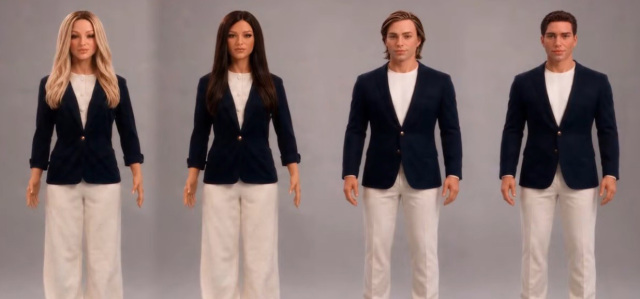
Canadian robotics company Realbotix is launching a limited commercial run of humanoid companion robots capable of speaking more than 100 languages.
The new line, named Echo, combines facial recognition technology and conversational artificial intelligence, with prices ranging from $11,950 up to $59,950.
Realbotix is requiring buyers to pay a mandatory monthly software subscription starting at $19.99, establishing an ongoing financial commitment alongside the upfront purchase price.
The company plans an initial manufacturing batch of only 250 units, with the first customer deliveries scheduled for the second half of 2027. Customers can already place reservations by submitting a $199 deposit.
The production run will be heavily weighted toward smaller devices, consisting of 225 tabletop units and just 25 full-size humanoid robots.
Echo Tabletop specifications
The entry-level model, known as the Echo Tabletop, stands approximately 81 centimetres tall and weighs 11.3 kilograms. It is designed to sit on a desk or counter rather than walk through a room.
Mechanically, the tabletop version features 17 degrees of freedom of movement. In robotics, degrees of freedom measure the number of independent motorized joints, which in this model allow coordinated gestures of the neck and head.
Synthetic silicone skin covers the face and neck of the device to create a lifelike appearance during conversation. Realbotix designed the tabletop model for personal companionship, education, supportive therapy, and general wellness assistance.
Silicone animatronics have long been a specialty for Realbotix, which originally built its reputation on hyper-realistic synthetic human figures before integrating microcontrollers, motorized animatronic skeletons, and interactive software.
Full-size humanoid design
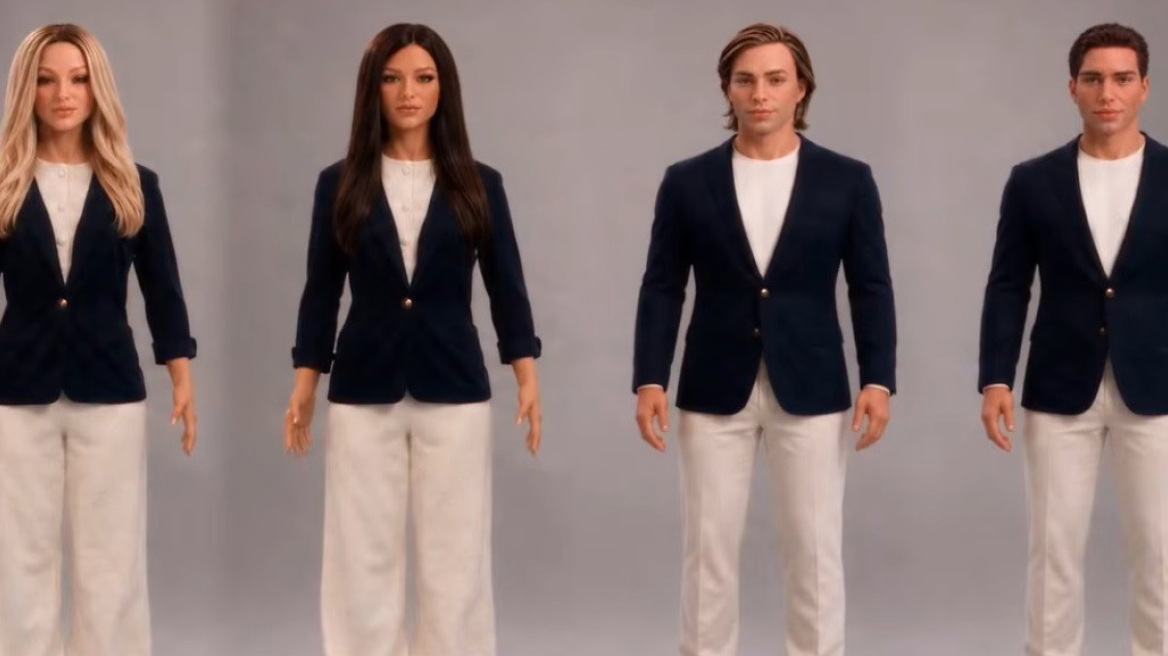
At the upper end of the product range is the Echo Full Body, which matches the dimensions of an adult human. The female version stands 1.83 metres tall, while the male edition reaches 1.96 metres, with both configurations weighing approximately 40 kilograms.
The full-size model incorporates 39 degrees of freedom, granting a wider and more intricate range of motion concentrated primarily in the upper body. Despite those motorized joints, the company acknowledged that the robot cannot match the movement freedom of a human.
Both the tabletop and full-size versions share key physical hardware components. Each unit includes internal speakers for voice playback and sophisticated facial expression mechanisms capable of shifting simulated skin to reflect communicative moods.
Humanoid robotics companies historically struggle with balancing weight, battery life, and mechanical complexity. Full-scale bipedal robots demand substantial power to sustain balance, leading many developers to focus mechanical mobility on expressive upper-body gestures rather than walking.

Personalities and language models
Realbotix built customizable digital personas into the Echo system. Buyers can select from four pre-configured personalities named Aria, Mila, Dave, and Amar, each programmed with distinct voice acoustics, conversational traits, and behavioral styles.
Rather than relying solely on proprietary conversational scripts, the Echo robots connect directly to major commercial artificial intelligence platforms. The system supports OpenAI's ChatGPT, Anthropic's Claude, and Google's Gemini to generate dialogue.
The software automatically detects the language spoken by the user and responds in that same tongue. Realbotix configured the platform to handle more than 100 languages, aiming to eliminate language barriers in personal interactions.
By linking physical hardware to foundation models developed by leading technology companies, robotics manufacturers can leverage massive linguistic datasets without bearing the immense cost of training proprietary large language models from scratch.
Vinci vision system and latency
To enhance real-time responsiveness, Realbotix is offering an optional vision and sensing package called Vinci. The add-on expands the robot's ability to interpret visual cues from human conversational partners.
The Vinci system provides facial recognition, tracks eye gaze direction, and analyzes facial patterns to identify indications of a user's emotional state. These visual inputs allow the robot to tailor its verbal and physical reactions accordingly.
Realbotix stated that because data processing occurs locally on the device hardware, reaction times can be kept below one second. The company aims to make conversations feel spontaneous by eliminating noticeable pauses between question and response.
In computational robotics, processing sensory data at the edge on local processors rather than sending every frame to remote cloud servers is essential for avoiding network lag and preserving conversational timing.
Digital twins and data privacy
Alongside physical hardware, Realbotix plans to introduce digital twins of its humanoid robots in 2027. This feature allows owners to interact with their chosen artificial persona away from home using a desktop computer, smartphone, or tablet.
The core architecture synchronizes memory and personal preferences between physical and virtual platforms. A conversation held with the physical robot at home becomes part of the shared memory bank accessible to the mobile digital twin.
The continuous recording of faces, personal preferences, and conversational history has raised concerns regarding consumer data privacy. Devices that monitor intimate domestic spaces present distinct security risks if sensitive personal details are mishandled.
Realbotix stated that conversation histories and facial recognition logs are stored locally on the robot. The company emphasized that this information is not used for advertising targeting or to train commercial artificial intelligence algorithms.
However, the company noted that using third-party artificial intelligence engines introduces external data transmission. When a robot routes conversational prompts through platforms like ChatGPT, Claude, or Gemini, certain information may be transferred to those outside providers according to their operational terms.
With an opening run capped at 250 units and prices approaching $60,000, the Echo lineup remains targeted at affluent technology enthusiasts rather than the mass consumer market. The project marks an industry shift toward personalized social machines designed to emulate human companionship.