

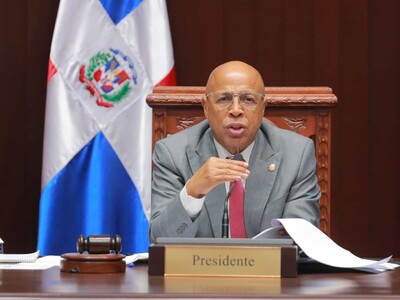
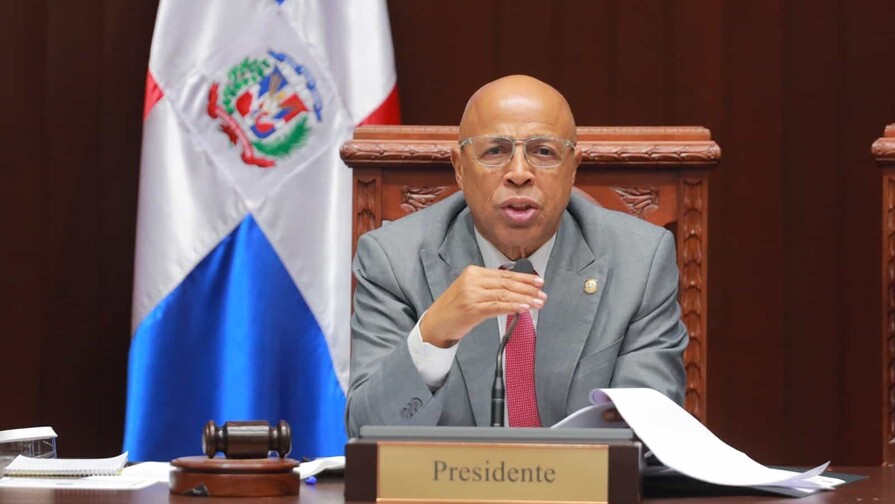
Alfredo Pacheco, the president of the Dominican Republic's Chamber of Deputies, has challenged an electoral board proposal to redistribute parliamentary seats across the country.
Speaking during a legislative session on Wednesday, Pacheco announced that lawmakers are preparing technical observations to suggest revisions to the draft resolution prepared by the Central Electoral Board.
The Central Electoral Board, known locally as the JCE, released the draft resolution to carry out a mandate from the 2024 constitutional reform. That amendment requires the Chamber of Deputies to reduce its overall membership from 190 to 170 representatives ahead of the 2028 general elections.
During Wednesday's session, Pacheco explained that he asked deputy Rogelio Genao to conduct a comprehensive analysis of the resolution. The chamber president argued that several provinces would lose a significant number of representatives under the draft, while other jurisdictions could absorb greater reductions.
Proposed seat changes across Dominican provinces
Among his primary concerns, Pacheco cited a sharp difference between the capital and the neighbouring province of Santo Domingo. Under the draft plan, the National District would drop from 18 to 17 deputies, whereas the province of Santo Domingo would see its delegation fall from 43 to 35 representatives.
Pacheco noted that he represents the National District and said that, speaking honestly, authorities were treating the capital with kid gloves. He stated that the proposed adjustments should be reconsidered for other parts of the country, specifically pointing to the provinces of Barahona and Sánchez Ramírez.
The legislative president also drew attention to the northern province of Puerto Plata, where the draft proposal contemplates eliminating electoral district number two. Puerto Plata is currently divided into multiple voting divisions, and Pacheco said that eliminating the second district could be avoided through adjustments to the wider seat distribution.
Technical review and party submissions
Pacheco asked legislators from all political organisations represented in the chamber to send their concerns and regional data to Genao, who is preparing the technical document on behalf of the lawmakers.
The lower house leader clarified that authority to determine the allocation of seats belongs exclusively to the Central Electoral Board. Because deputies cannot amend or vote on the resolution directly within the chamber, Pacheco stated that their formal observations will be submitted to the electoral board through their respective political parties.
The Central Electoral Board is the independent institution established under Dominican law to run national elections and maintain civil records. Its draft resolution sets the framework for how territorial representatives will be apportioned across the country's provinces and electoral districts for the 2028 ballot.
Constitutional reduction for 2028 elections
The redistricting proposal is tied directly to the constitutional reform approved by the Dominican National Congress in 2024. That reform mandated a 20 seat cut in the Chamber of Deputies, reducing the total number of legislators from 190 to 170 to restructure parliamentary representation.
The Chamber of Deputies is the lower house of the bicameral National Congress, meeting alongside the Senate in the capital city of Santo Domingo. The territorial seat allocation for 2028 will determine how communities across all 31 provinces and the National District are represented in the downsized legislature.
The draft resolution establishes how territorial representatives will be distributed when voters go to the polls for the 2028 parliamentary elections. Lawmakers plan to complete their technical analysis with Genao before political parties formally deliver their recommendations to the Central Electoral Board.


