

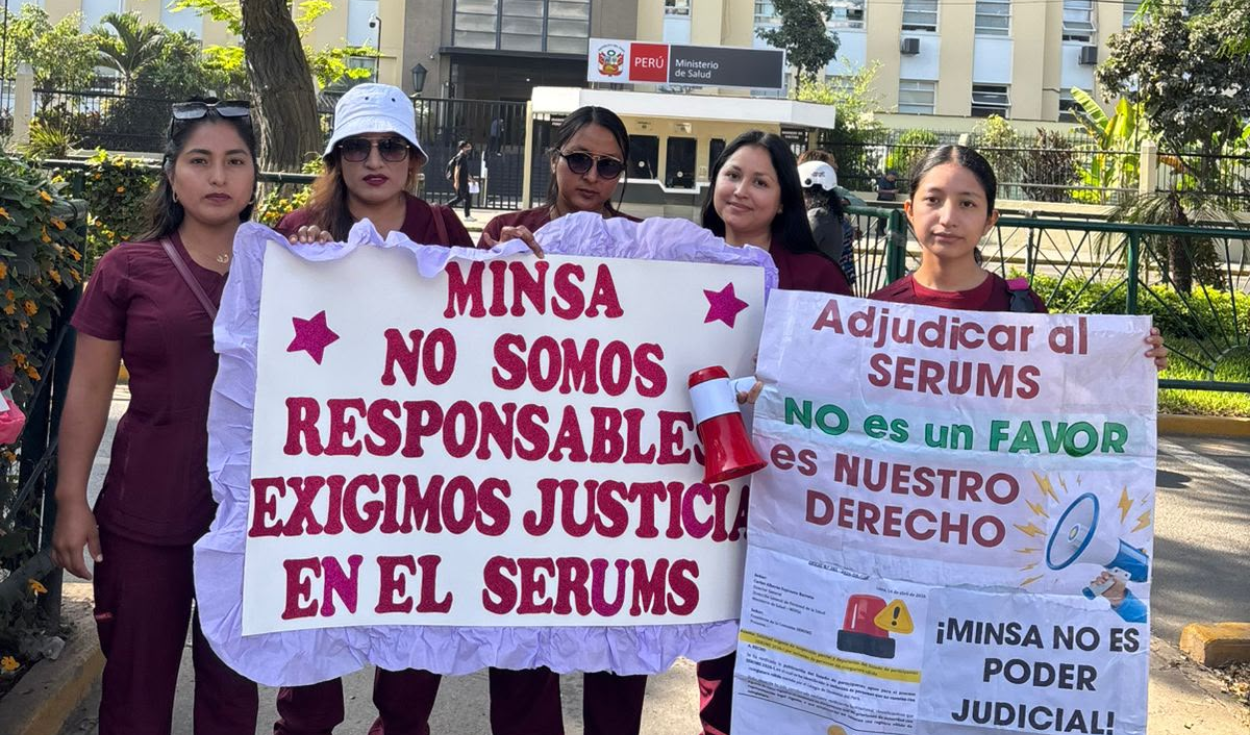
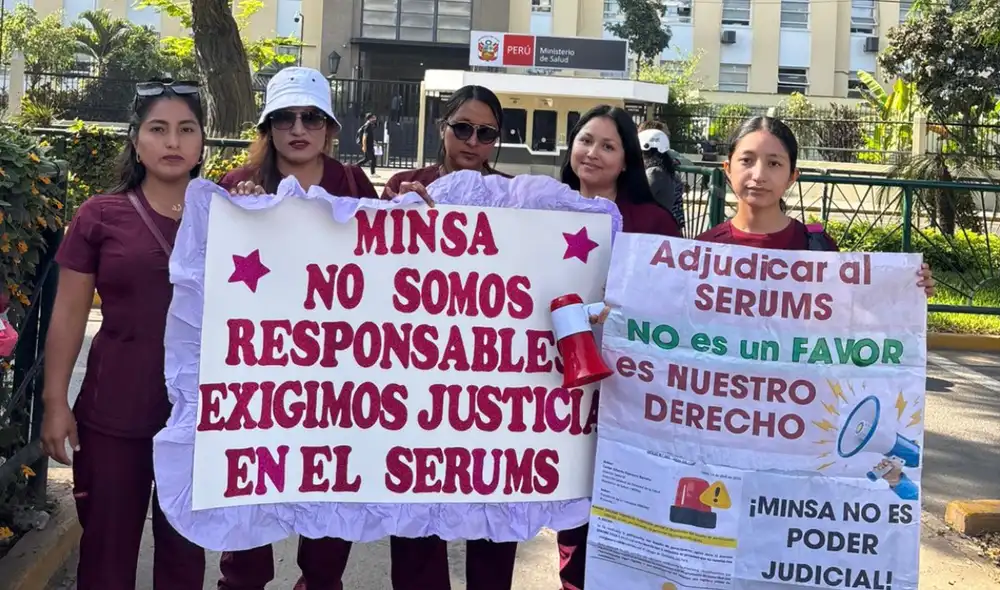
A group of 97 Peruvian obstetricians face exclusion from the Serums public health assignment process as registration closes at midnight tonight, representative Zayuri Marcelo Pérez warned.
The health workers have requested an urgent meeting with President Keiko Fujimori to stop their disqualification over an ongoing dispute regarding the validity of their professional registrations.
The deadline for registering for the Rural and Urban Marginal Health Service (Serums) 2026-II cycle expires at midnight on Tuesday, leaving the group in complete uncertainty over their employment rights.
The 97 professionals were originally part of a larger cohort of 354 obstetricians declared ineligible during the Serums 2026-I assignment process in May. That previous process was managed under the prior health administration led by former health minister Luis Velasco.
According to Marcelo, the exclusion stems from an internal leadership conflict within the College of Obstetricians of Peru (COP). The current governing board of the professional body has refused to recognize registration credentials granted by previous administrative management teams to qualified graduates.
The Ministry of Health (Minsa) has maintained that candidates without a valid college registration cannot be assigned a Serums position. However, Marcelo questioned the ministry for taking a definitive side while the legal representation of the COP remains pending before the Peruvian courts.
Marcelo said that two competing leadership boards were currently locked in dispute and that the courts had not yet determined the legality of either faction. She noted that Minsa had nevertheless accepted and backed only the registry list submitted by the management that assumed office last year. She stated that the ministry should not issue judgment on the matter, arguing that registrations obtained through regular processes cannot be unrecognized until a court decides otherwise.
Public Health Requirement and Bureaucratic Hurdles
Serums is a mandatory public service program in Peru for graduating healthcare professionals, including doctors, nurses, and obstetricians. Completing a Serums placement in rural or underserved urban areas is a legal prerequisite for working in public health facilities, holding state healthcare positions, or entering medical specialization programs across the country.
Efforts to resolve the administrative deadlock have repeatedly stalled over recent months. Following the initial disqualifications in May, former minister Velasco admitted that an error had been made and pledged to create 160 extraordinary posts for affected professionals, though that promise was never fulfilled.
In early August, representatives of the affected health workers met with the newly appointed health minister, Luis Dyer, to present their grievances. Marcelo stated that Dyer promised to evaluate the problem alongside technical staff from the ministry, but the group received no further response or follow up.
High Re-Registration Costs Divide Affected Group
With the Serums 2026-II allocation process reaching its final hours, many affected workers felt compelled to seek alternative solutions. Out of the 354 obstetricians excluded during the May cycle, 257 decided to apply and pay for new registration documents directly under the new COP leadership.
However, the 97 obstetricians represented by Marcelo were unable to complete the transaction because they lacked sufficient financial resources. Processing a new professional registration with the current COP administration costs between 2,500 and 2,800 Peruvian soles (S/2,500 to S/2,800).
Marcelo expressed that the remaining health workers were living in total uncertainty, fearing they would once again be declared ineligible. She said the outcome deprives them of their right to meritocracy and curtails their basic labor rights after years of academic training.
Direct Appeal to Peru's Leadership
Faced with administrative inaction, the group has issued a direct plea to the head of state to intervene before the registration period closes permanently.
Marcelo said her appeal was directed primarily to President Keiko Fujimori, requesting an urgent audience so the president could hear and review their cases with complete transparency. She stated that public authorities exist to solve emerging problems rather than respond with indifference, describing the status of the 97 obstetricians as practically being in intensive care.


