Be careful what you wish for, because it might come true. The warning goes back to classical Greece, most famously in Aesop's sixth-century BC fable of the old man who, exhausted, begs Death to end his labour, only to recoil when Death actually appears and ask instead for help carrying his firewood. King Midas asked the god Dionysus to turn everything he touched to gold, and nearly starved to death because he could no longer eat or drink.
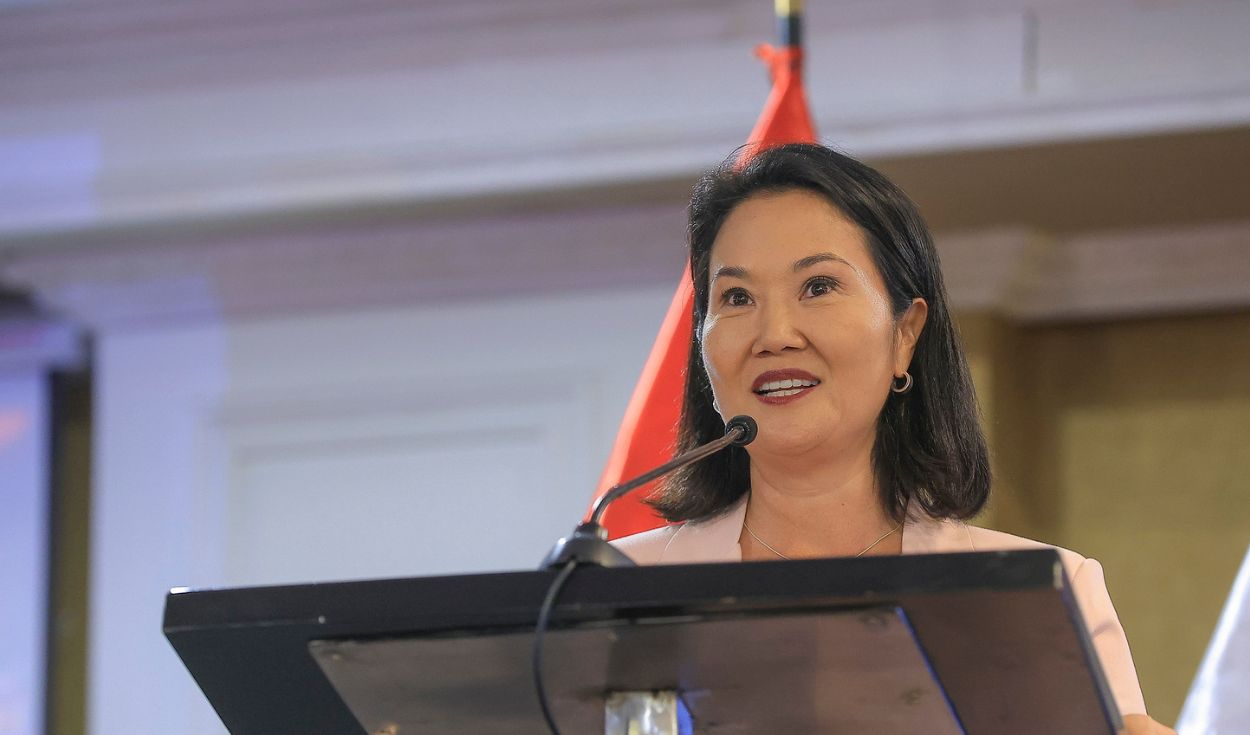
Peru is watching its own version of that old problem play out. President Keiko Fujimori is in the middle of her third week in the government she spent years pursuing, and everything suggests the situation is already slipping from her hands, I argue in this column.
Crime and a warming sea
Insecurity remains as bad as ever, or worse. Stationing uniformed, armed soldiers on street corners has not stopped shooting deaths and extortion from spreading like a stage-four cancer, exactly as I and others had warned it would not.
At the same time, a brutal warming of the sea along the Peruvian coast, currently the worst such warming anywhere in the world and potentially the worst in the country's history, is signalling a looming catastrophe. That danger is made worse, as usual, by the glaring absence of any disaster mitigation plan.
This column had already warned that Fujimori did not appear to have what it takes to keep figures such as Fernando Rospigliosi, a former interior minister, and Rafael López Aliaga, the mayor of Lima, in check, since neither man seems to feel any need to defer to her or ask her permission. Running her party's congressional bloc by WhatsApp is one thing. Governing a country whose election she won by a hair, with its endless list of urgent problems, is quite another.
An influencer president
For now, she is mostly seen playing influencer, posing for photographs in various settings, some of them notably frivolous. Given the control that her party, Fuerza Popular, holds over Peru's institutions, there was, and still is, a fear that decision-making could tilt toward authoritarianism. What we are seeing instead looks more like bewilderment and a clear absence of political direction.
The roughly 60 percent approval rating typically given to newly elected presidents is capital that can run out fast if she does not show leadership soon. Having waited so many years for her wish to be granted, finally succeeding on her fourth attempt, seems to have left her drained just as the real work begins, and under conditions that are far from ideal.
The weight of her father's legacy
Her father, Alberto Fujimori, plunged Peru into unprecedented corruption as president, yet for nearly a decade managed to win over public opinion with the image of a tireless man of action. He too fell to the merciless law the ancient Greeks called hubris, the excess that the gods punished without mercy, chaining Prometheus for a vulture to eat his liver each day, or condemning Sisyphus to roll his boulder to the top of the hill only to watch it fall again. What happened to the president's father was not unlike the plot of the Woody Allen film released in Latin America under the title "Robó, huyó y lo pescaron", known in English as "Take the Money and Run".
Before his downfall, brought on by his own inability or unwillingness to stop in time, Alberto Fujimori enjoyed genuine popular support for restoring order after Alan García's chaotic government, marked by hyperinflation. His daughter promised the same order in her campaign, apparently believing her father's shadow would protect her. Instead, it seems to be working against her. He began as a left-wing populist before concluding that approach would not work, and eventually staged a self-coup that a population exhausted by hyperinflation largely welcomed.
An unearned grace period
She does not have the grace period Peruvians once extended to her father, a grace period he abused without restraint, in league with his intelligence adviser, Vladimiro Montesinos. For several years he was seen as the man the moment required. Even so, both father and adviser ended up in prison after a trial widely regarded as fair.
One reason she is not being granted that same leeway is that she has spent years governing Peru from the comfort of Congress. That is precisely why she is expected to keep governing now without pause and with urgency, and by every indication, that is not what is happening.
Finding her own style
The problem is compounded by the fact that, under constant public scrutiny, she is expected not just to govern but to visibly demonstrate that she is doing so. That is why the image of a homespun president occasionally photographed on tractors grates against the expectations of a country facing multiple crises at once.
No one expects the kind of grotesque theatrics associated with Jerí, which I regard as ridiculous and unproductive. But she will need to find her own way of confronting a country in crisis, in a world that is in crisis too. For now, she appears stunned by a dream come true. She had better wake up soon, or she may find herself living out what Oscar Wilde wrote in "Lady Windermere's Fan" (1892): "In this world there are only two tragedies. One is not getting what one wants, and the other is getting it." Perhaps that is why the Argentine psychoanalyst Ángel Garma believed that, at bottom, every dream is a nightmare.