

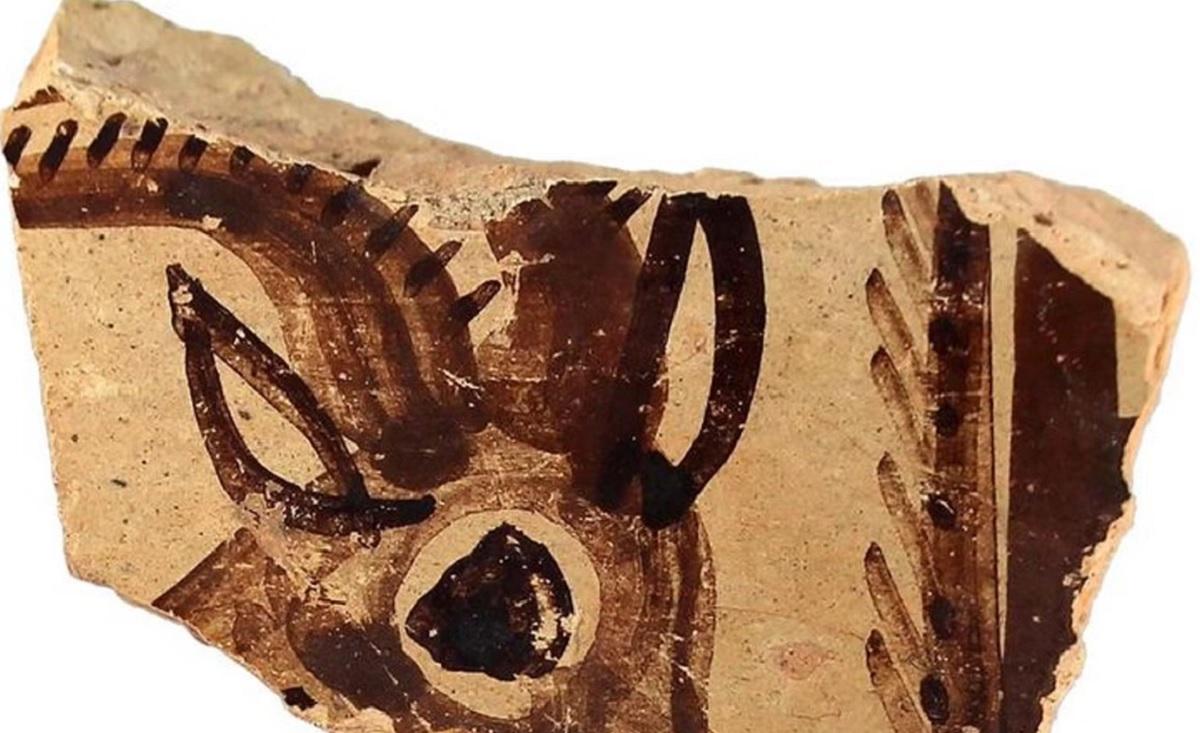
Archaeologists working in the Qurayyah oasis in north-west Arabia have discovered that a thriving pottery production center operated there about 3,200 years ago, exporting signature painted vessels across hundreds of kilometres.
As reported by the Independent, scientists believe the discovery offers a rare insight into Bronze Age trade and consumer culture, demonstrating that elements of branding existed long before modern capitalism.
Excavations at the site uncovered fragments of bichrome painted pottery decorated with distinctive black and red geometric patterns, alongside depictions of animals and human figures.
Researchers analyzed the appearance, chemical composition, and manufacturing techniques of the artifacts, confirming that the ceramics possessed recognizable characteristics tied directly to the local crafting tradition.
Pottery exported across long distances
The earliest examples of the tableware emerged roughly 3,600 years ago before production expanded and design repertoires diversified. By approximately 3,200 years ago, the tradition had evolved into a widely recognized style in high demand far beyond the oasis.
Despite harsh desert conditions and limited local resources including water, clay, and fuel, the inhabitants of Qurayyah established a stable manufacturing industry to meet both local needs and commercial export demand.
Marta Luciani, an archaeologist at the University of Vienna, said that oasis inhabitants were clever and resourceful enough to create their own ceramic repertoire for home storage and subsequent export abroad.
The University of Vienna, founded in 1365, is one of Europe's oldest academic institutions, with a long tradition of archaeological research in the Near East.
Painted ceramics from Qurayyah have been uncovered hundreds of kilometres from their origin point, reaching northern destinations across the Southern Levant, including Tell el-Kheleifeh near the Gulf of Aqaba.
Specimens were also discovered inside the sanctuary of the Egyptian goddess Hathor at Timna, an ancient copper mining valley in the Arabah desert. In ancient Egyptian religion, Hathor was worshipped as the patron deity of mining, beauty, and foreign trade expeditions.
Pottery tradition survived Bronze Age collapse
The ceramic tradition surprisingly survived the end of the Bronze Age, continuing in Qurayyah for approximately another thousand years into the late Iron Age.
The Near Eastern Bronze Age was defined by early urban trade networks, which eventually transitioned into the Iron Age around the twelfth century BC.
Located in the Tabuk province of modern Saudi Arabia, Qurayyah was a major ancient desert oasis known for its fortified settlement and agricultural terracing.
Researchers noted that the discovery provides a deeper understanding of ancient craftsmanship and the economic relationships connecting early producers and consumers.


