Dominican President Luis Abinader traveled to Madrid on Monday to attend the 30th Ibero-American Summit of Heads of State and Government.
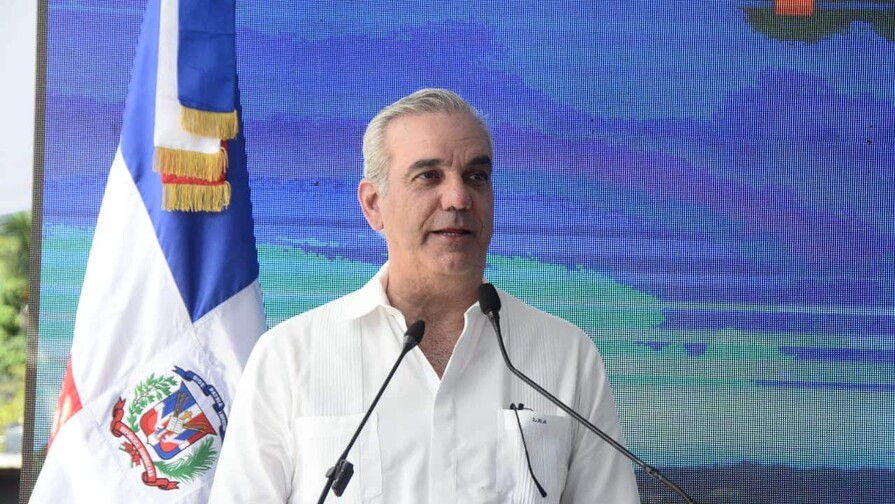
The high-level meeting will take place in the Spanish capital on November 4 and 5. Organizers expect to bring together more than 14 leaders from across the 22 countries that make up the Ibero-American community.
Discussions at the summit will focus on regional cooperation, digital transformation, artificial intelligence, social inclusion, and sustainable development. Participating leaders will also review proposals to improve joint responses to natural disasters and establish shared standards for the recognition of university degrees.
Ibero-American Secretary General Andres Allamand said on October 27 that expected attendance would exceed 14 heads of state and government. If realized, that turnout would mark a substantial increase over the previous gathering held in Cuenca, Ecuador, in November 2022, which saw a low presidential attendance.
Leaders attending the Madrid gathering
Several Latin American heads of state have already confirmed their participation in the Madrid talks. The confirmed attendees include Argentine President Javier Milei, Bolivian President Rodrigo Paz, Chilean President Jose Antonio Kast, Costa Rican President Laura Fernandez, Guatemalan President Bernardo Arevalo, and Paraguayan President Santiago Peña.
Costa Rican President Laura Fernandez was the first head of state to touch down in Madrid, landing on Sunday. Bolivian President Rodrigo Paz arrived on Monday, while official delegations from Chile, Colombia, and El Salvador are scheduled to arrive ahead of the opening events.
El Salvador will be represented at the summit by Vice President Felix Ulloa. Meanwhile, the attendance of the leaders of Brazil, Mexico, and Venezuela has remained pending formal confirmation.
The Ibero-American community consists of 22 sovereign nations spanning the Iberian Peninsula and Latin America. Founded on shared linguistic, cultural, and historical ties across Spanish- and Portuguese-speaking states, the bloc meets periodically to address common developmental and diplomatic challenges.
Security crisis in neighboring Haiti
The continuing security breakdown in Haiti remains a primary concern for the Dominican Republic, even though the crisis is not listed as a formal agenda item for the summit.
The Dominican Republic shares the Caribbean island of Hispaniola with Haiti, making stability across their shared land border a critical issue for Santo Domingo. Rising violence from armed gangs in Haiti has drawn heightened regional attention following the recent disappearance of four Salvadoran military service members and the announcement of new international operations against criminal groups.
The Dominican government has offered logistical support to assist the movement of personnel and equipment assigned to international security missions operating in Haiti. Officials noted that the issue could arise in bilateral discussions between Abinader and other regional leaders during the gathering, although the Dominican presidency has not released a formal schedule of bilateral meetings.
The Madrid summit will also provide an opportunity for visiting leaders to exchange views on other regional developments during informal talks on the sidelines of the main assembly.
Artificial intelligence and regional pacts
A central initiative on the summit table is the creation of an Ibero-American artificial intelligence alliance. The pact aims to strengthen technological cooperation among member nations and reduce digital inequalities across the region.
Delegations will also consider establishing a coordinated regional network to respond more quickly to natural disasters. Member countries across the Americas and the Caribbean face regular exposure to severe weather events, earthquakes, and environmental shocks that require rapid humanitarian mobilization.
Another major education initiative under review focuses on academic mobility, creating simpler procedures for the cross-border recognition of higher education credentials among participating countries. The framework aims to help students, researchers, and licensed professionals transfer their qualifications across member states.
Leaders are also set to deliberate on the Ibero-American Care and Support Charter. This agreement seeks to establish shared multilateral commitments to support dependent individuals and formally recognize unpaid care work within national social policies.
Summit schedule and Madrid venues
The official program begins on Wednesday, November 4, with an opening ceremony at the historic Teatro Real in central Madrid, hosted by King Felipe VI of Spain.
Foreign ministers from the member countries will hold formal working sessions earlier that same day. The primary plenary session for heads of state and government will take place on Thursday, November 5, at the Galeria de las Colecciones Reales near the Royal Palace.
Ahead of the political assemblies, business leaders and policymakers will gather on November 3 and 4 for the 16th Ibero-American Business Meeting. The corporate forum brings together private sector executives and government authorities to discuss commercial investment, economic integration, and trade partnerships across the Atlantic.
The Spanish monarchy and government serve as hosts for the event, coordinating logistics across several landmark venues throughout the capital to accommodate diplomatic delegations and security teams.
History of the Ibero-American community
The Madrid gathering coincides with the 35th anniversary of the first Ibero-American summit, which took place in Guadalajara, Mexico, in 1991. That inaugural summit established regular multilateral dialogue among Spanish- and Portuguese-speaking countries on both sides of the Atlantic Ocean.
This week marks the fourth time that Spain has hosted the summit. Previous Spanish host cities include Madrid in 1992, Salamanca in 2005, and Cadiz in 2012.
The Dominican Republic served as the host nation for the 28th Ibero-American Summit, held in Santo Domingo on March 24 and 25, 2023. During that previous meeting, member governments adopted joint agreements on digital rights, food security, environmental protection, and international financial cooperation.
Delegates in Madrid plan to review progress on those 2023 commitments while negotiating fresh cooperation pacts among Latin American nations, Spain, Portugal, and Andorra to guide regional policy over the coming years.