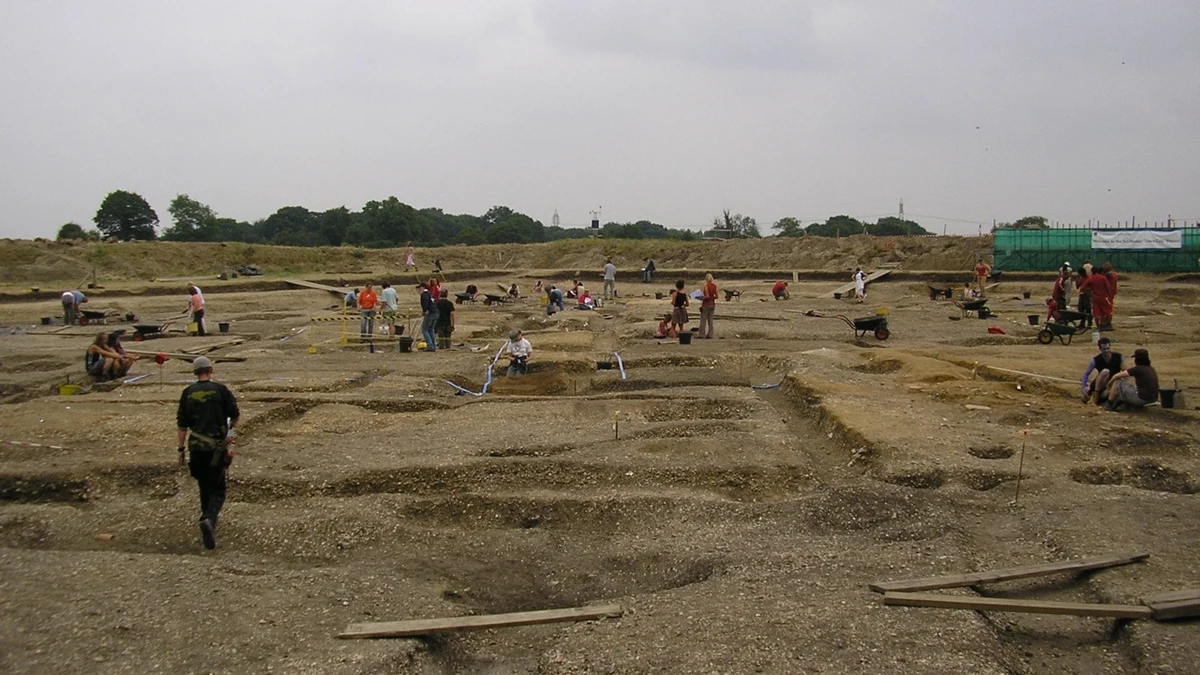
Archaeologists have uncovered five ancient wooden wells north of Southampton, in Hampshire, England, during preparatory work for a new water pipeline. One of the structures has been radiocarbon dated to between 719 and 396 BC. The find was made by Archaeology South-East, part of University College London (UCL).
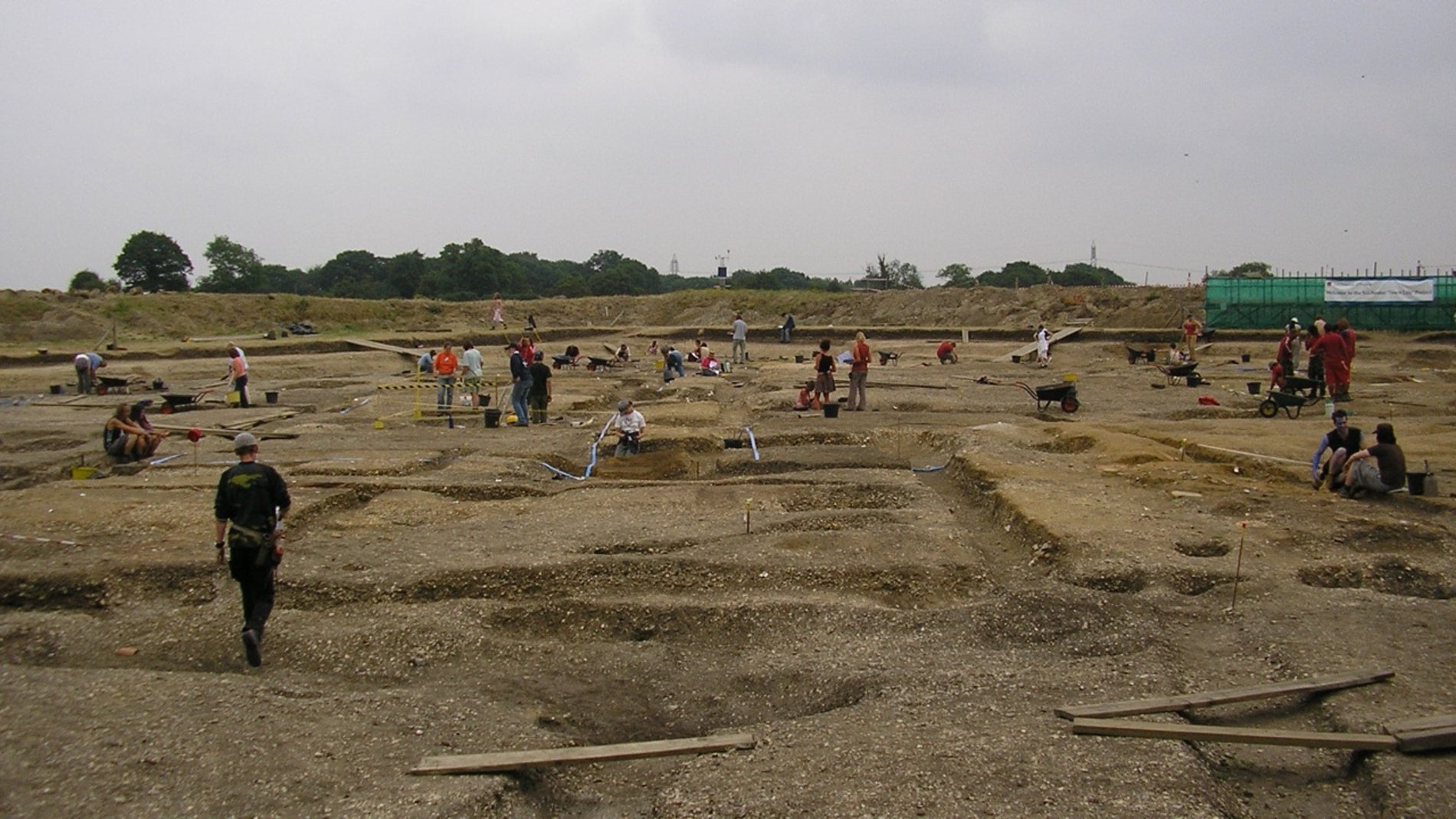
UCL announced the discovery on 5 November. Four of the structures are attributed to the Iron Age and were built using hollowed-out oak trunks. The fifth, a Roman-era well, was constructed from boards and stakes instead.
Damp, low-oxygen conditions at the site preserved the wood remarkably well, including marks left by the tools used to shape it. That level of preservation is unusual and has given researchers a rare look at woodworking techniques from both periods.
The excavation is taking place ahead of the Southampton Link Main, a pipeline funded by Southern Water that will run between Otterbourne and Southampton. The site brings together two very different solutions to the same problem, separated by centuries: an ancient water source linked to a spring, and a modern network built to move water across the region.
What the wood reveals, and the risks of digging it up
The largest of the hollowed trunks measures around 70 centimetres in diameter. In one of the wells, a wooden shovel had been reused to patch a break in the structure. Details like these help researchers understand how everyday installations were built and repaired in the past, information that also feeds into broader studies of ancient carpentry.
Lifting a piece of timber out of the ground does not end the work. Guidance from Historic England on waterlogged archaeological wood states that specialists need to be involved from the earliest stages of a dig, deciding how finds are recorded, sampled, transported and conserved. Conservation has to be planned during the excavation itself, because changing conditions can quickly damage material that has survived for centuries while buried.
Dating refined in the laboratory
The same Historic England guidance distinguishes between fully documenting timber on site and moving it for later study in a laboratory. Either way, its exact position has to be recorded before it is removed. That spatial information helps researchers interpret a structure as a whole, much as it does with wooden foundations studied underwater: pieces examined in isolation lose part of their context.
According to Historic England, specialists can study growth rings, the species of wood used and the marks left by tools. Dendrochronology, which compares patterns of tree rings, can help estimate when a tree was felled. When a sample does not allow for that method, researchers can turn to radiocarbon analysis instead. Each technique answers different questions and depends on the condition of the sample involved.
Cut marks and joints also provide clues about the tools used and the order in which a structure was assembled, information that is useful for identifying ancient tools more broadly. Preserving the surface of a piece of wood effectively means preserving information, since even a modest-looking fragment can reveal a manufacturing technique no longer visible on other remains.
A pipeline route shaped by archaeology
The modern infrastructure project had to build these investigations into its planning from the start. A technical study of the scheme, published in the trade publication Water Projects, describes a route refined through environmental surveys, analysis of the terrain and archaeological work.
The pipeline will connect facilities at Otterbourne, Yew Hill, Rownhams and Testwood, with sections that need to cross both roads and railway lines. The project combines pipework, pumping stations and storage, alongside measures intended to limit its impact on the surrounding environment.
What happens next
Work on the Hampshire find continues at a laboratory in Portslade, where specialists from Archaeology South-East are examining the materials and soil samples recovered from the site while keeping the timber trunks submerged in water tanks to stop them drying out and deteriorating.
Researchers still need to pin down the precise chronology of the whole group of wells, including the Roman-era structure, and to work out when that particular water source finally fell out of use.