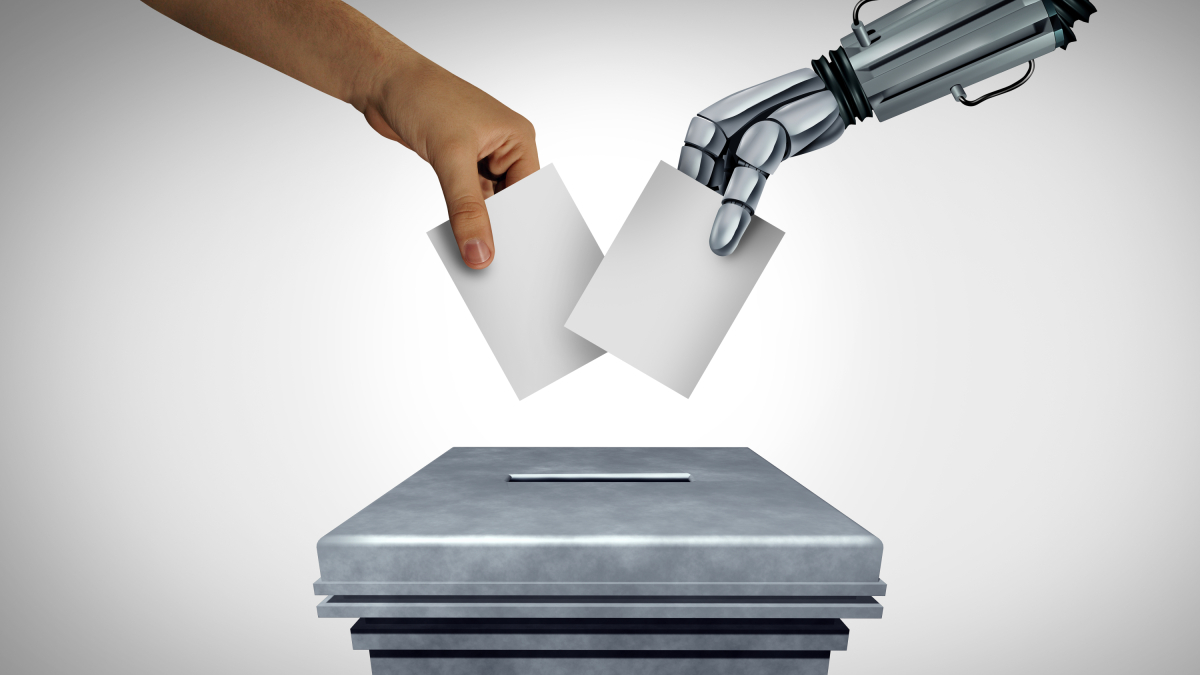
Artificial intelligence is transforming Spain's 29 November general election campaign as chatbots recommend political parties and rival campaigns deploy synthetic video clips.
While party strategists use algorithms to test messages and draft speeches, political agitators are manufacturing hoaxes at almost zero cost. The technological shift comes as European Union transparency regulations and digital safeguards arrive too late to police the ballot.
An October study by Ferran Lalueza and Cristina Aced of the Open University of Catalonia, with Victor Gil of Science4Insights, tested 1,464 queries across six leading artificial intelligence assistants. Grok, on social network X, explicitly recommended a political party in 40.6 percent of answers, while OpenAI's ChatGPT did so in 14.3 percent. Google's Gemini and Anthropic's Claude gave explicit recommendations in only 0.8 percent of tests.
When weighted against voter concerns from Spain's official Center for Sociological Research, the conservative Popular Party placed one percentage point ahead of the governing Socialist Workers' Party as the most recommended option. Lalueza noted that Grok appeared to have relaxed its filters compared to an earlier test when it made recommendations 35 percent of the time, while ChatGPT reduced its rate from 43 percent. He attributed the bias to training sources, warning that persistent users can obtain an explicit recommendation from most models, while regional parties emerge only when prompted in Catalan, Galician, or Basque rather than Spanish.
Behind the campaign curtain
The role of artificial intelligence extends far beyond automated chats. Javier Abrego, creator of the bot-tracking tool TweetElecciones, said 2023 was probably the last election in Spanish history without artificial intelligence.
The Disinformation Observatory at the Complutense University of Madrid identified three changes since 2023: generative tools have advanced from satirical memes to professional synthetic media, official political parties are deploying the technology, and a new European legal framework is in force.
The observatory distinguished between legitimate campaign tools and voter deception. Translating rallies, subtitling, accessibility, data analysis, and drafting speeches are legitimate, but putting false words or actions onto real people crosses the line, even when presented as humor.
Cesar Calderon of political consultancy Redlines warned against focusing only on public videos, calling them peacock feathers that draw attention but little else. The real shift is behind the scenes in polling, social listening, message testing, and daily speechwriting. Calderon said a sentiment analysis report that once took a week now takes a single morning, shifting the bottleneck from producing to deciding.
Some party teams are testing arguments on synthetic voters simulated from demographic and electoral data. Calderon called them useful filters rather than oracles, noting that simulated voters are far more reasonable and predictable than real humans voting with their stomach, memory, and neighbor's talk.
Synthetic clips and party videos
Synthetic content now comes directly from official party accounts. In October, the Popular Party released a video featuring artificial voices and likenesses of Begona Gomez, the wife of Prime Minister Pedro Sanchez, alongside former prime minister Jose Luis Rodriguez Zapatero and former minister Jose Luis Abalos. Popular Party campaign spokesperson Ester Munoz defended the clip as clearly false satire and said the party was playing with the same weapons. Sanchez maintained that the Socialist Workers' Party does not use artificial intelligence in its campaign.
Fact-checking service VerificaRTVE cited a video from right-wing party Vox in which Sanchez's face morphs into former associates Koldo Garcia, Abalos, and Santos Cerdan. Fact-checkers also debunked artificial clips showing fictional crowds cheering Sanchez, synthetic polling charts showing a Socialist victory, and fabricated claims questioning postal voting.
The Complutense observatory described this as satire with minimal labeling, warning that tiny disclaimers identifying synthetic media vanish once users crop and forward videos.
Industrial hoaxes and automated bots
Producing political deception has become industrialized. Calderon estimated that a short video requiring two camera operators, an editor, and a full day three years ago now takes two hours. A single operator using software costing under 100 euros a month can produce hundreds of clips daily, pushing the marginal cost of lying toward zero.
The Complutense observatory highlighted two acute risks: cloned audio spreading without context on WhatsApp, which is harder to detect than images, and last-minute dumps during the pre-election day of reflection when campaigns have no time to respond.
Abrego tracks manipulation on X with TweetElecciones, classifying accounts as bots if they meet three of eight abnormal traits, such as tweeting 24 hours a day or carrying numbers in their handle. He observed rival factions producing elaborate fictional movies about opponents, noting that artificial intelligence is used far more to attack than explain. He remarked that parties cannot expect voters to study pension diagrams in the afternoon after showing them morning videos of a rival riding a unicorn and destroying kindergartens.
Regulatory delays and technical limits
Platform and regulatory safeguards are struggling to keep up. C2PA digital watermarks document file origins but vanish with a screenshot. Google's SynthID watermark, also adopted by OpenAI, resists compression better, but neither standard tracks tools that refuse to cooperate.
Legal boundaries have also shifted campaign strategies. Spain's Constitutional Court annulled an electoral law reform in 2019 that permitted parties to collect political opinions, while European Union rules prohibit microtargeting on sensitive data like ideology. Meta and Google responded by halting political ads across the bloc. The Complutense observatory noted that this ban pushes persuasion into opaque channels, including organic profiles, influencers, and private messaging.
Government enforcement also faces timing gaps. The Spanish Artificial Intelligence Supervision Agency noted that while European Union rules required visible deepfake labels starting 2 August, technical watermarking obligations for providers only take effect on 2 December, three days after the election. The law excludes private non-commercial users, and the agency has received no complaints regarding the 29 November vote, though it runs a reporting mailbox. The observatory warned that the law mandates transparency rather than prohibition, meaning a labeled defamatory deepfake remains legal.
Flawed answers and chatbot search battles
Beyond deliberate manipulation, artificial intelligence frequently errs. A study by the European Broadcasting Union and the BBC found significant errors in 45 percent of AI responses about news. Open-source models can be stripped of safeguards, while Chinese models like DeepSeek and Qwen censor Beijing taboos rather than electoral falsehoods.
Calderon warned that political competition is moving toward Generative Engine Optimization, as younger voters ask chatbots for summaries rather than searching the web. Parties now fight for synthesis share, seeking favorable placement, order, and tone in automated summaries.
Lalueza outlined a clean route, publishing clear material in sources models view as reliable, and a dirty route, flooding the internet with biased articles to contaminate AI training data, as seen with Russian propaganda networks. He warned of manipulated algorithms favoring specific parties and called for strict regulation.
Experts agree the greatest danger is the liar's dividend. Calderon noted that when everything can be fake, politicians caught in real scandals can dismiss evidence as artificial intelligence, destroying consensus on basic facts. To counter this, the Complutense observatory advised citizens to distrust instant outrage, verify sources, and ask chatbots for policy arguments rather than voting recommendations, while Abrego urged voters to use artificial intelligence to judge party proposals directly.