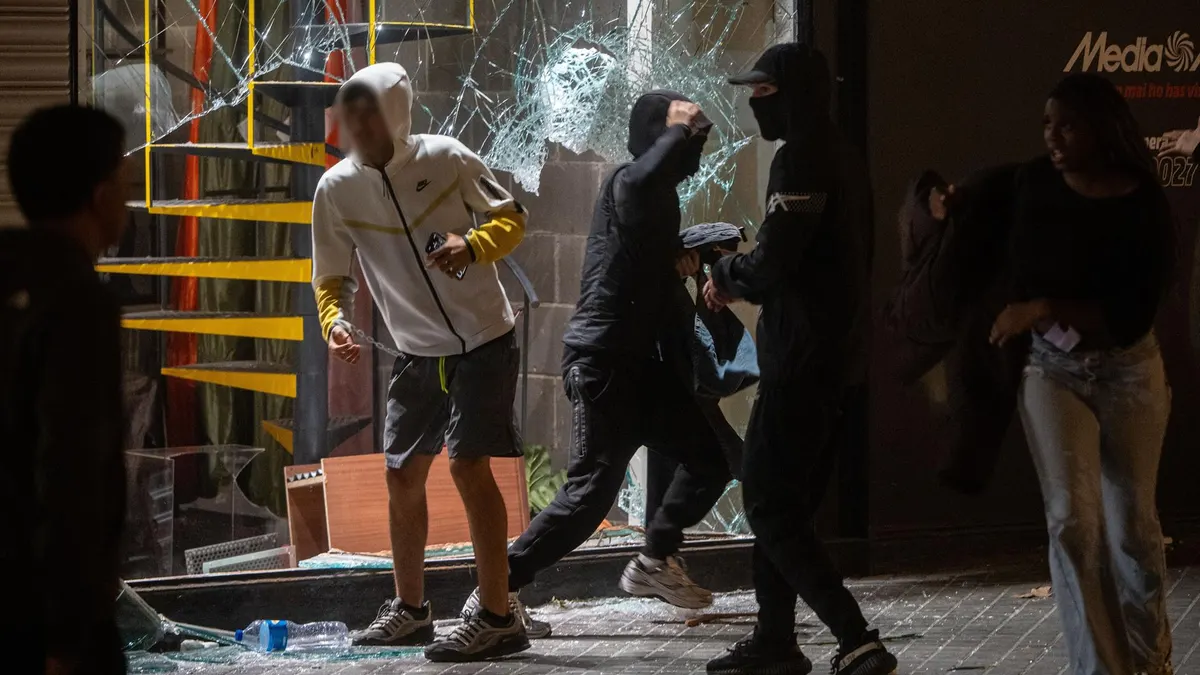
Spanish police investigators suspect foreign interference was behind violent weekend rioting and widespread looting across Barcelona that led to 128 arrests.
Officers from both the National Police and Catalonia's regional police force, the Mossos d'Esquadra, believe the street chaos was orchestrated from abroad to create instability, though authorities have not yet identified a specific country.
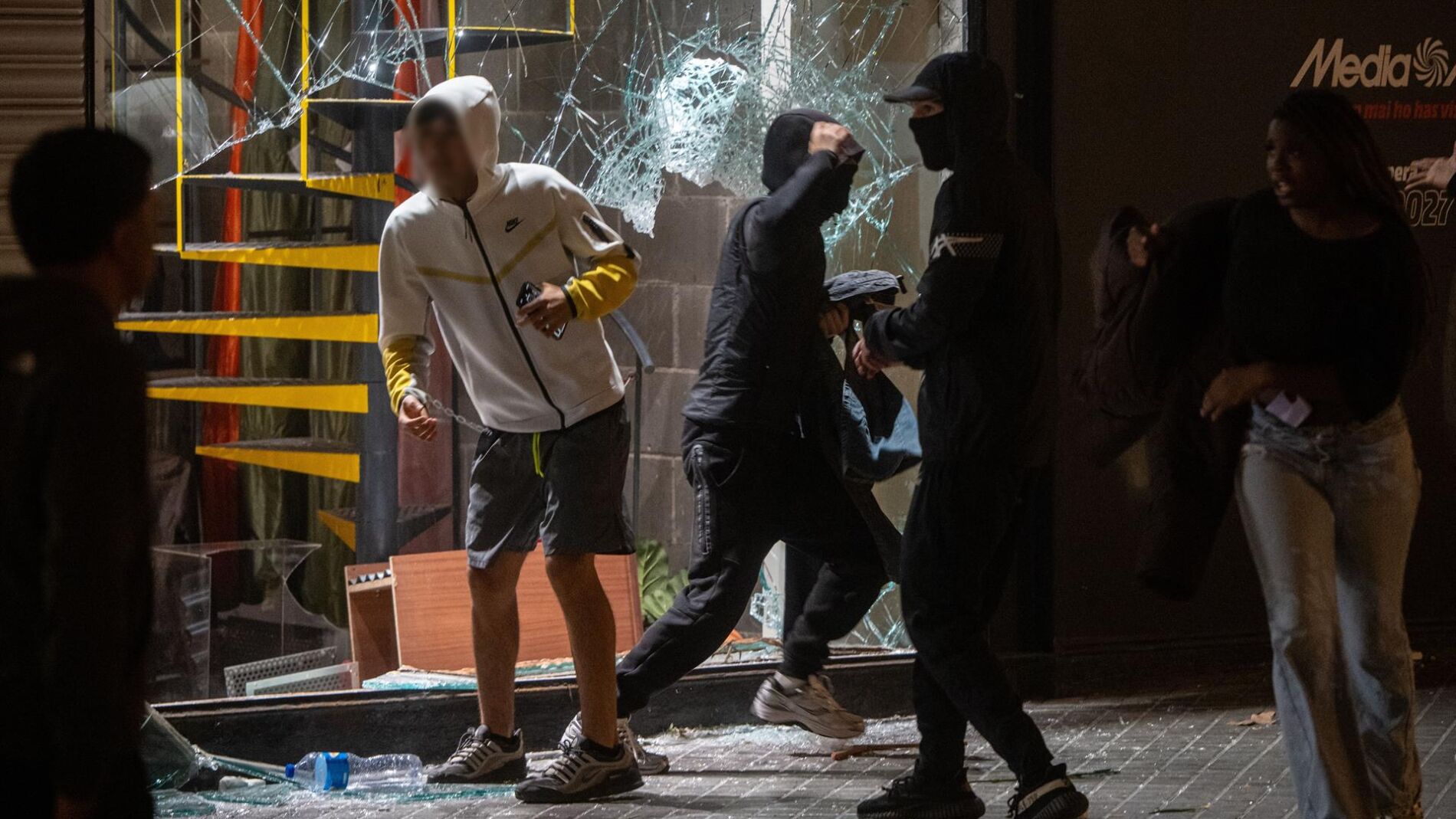
The unrest on Saturday night resulted in the ransacking of approximately thirty retail stores in the Catalan capital, with police revealing that 72 of the 128 people taken into custody were minors.
Spanish Prime Minister Pedro Sánchez condemned the violence in Barcelona as pure vandalism and promised that authorities would maintain zero tolerance toward those responsible, news agency Europa Press reported.
Social media recruitment and artificial intelligence
Investigators traced the initial calls for the gatherings to recently created TikTok accounts that were set up between October 18 and October 20. The accounts published short video clips containing posters generated with artificial intelligence, alongside QR codes that directed mobile users into private group chats.
Those encrypted channels on WhatsApp and Telegram each gathered around 700 participants before administrators shut most of them down. Detectives described the social media accounts that agitated for the riots as anonymous and short-lived, noting that major online platforms rarely cooperate with the judiciary in time to unmask user identities.
The messages circulated under the Blocus label, borrowing terminology from the French high school blockade movement and the Lycées Indignés campaign. Those student groups spearheaded protests across France in recent weeks under the banner of defending public education, but Spanish police found no ideological link between French activists and the crowds in Barcelona.
Disconnection from traditional radical groups
Police officers reported that neither the online accounts nor the people arrested in Barcelona matched the profile of established political activists. One police commander noted that the participants were very young and appeared to have no understanding of politics, operating without any identified command structure or recognized leadership.
Investigators also detached the weekend disturbances from Barcelona's traditional radical movements, which typically include anarchists, squatters, and anti-establishment collectives. Officers pointed out that digital posters inciting youths to burn the streets were written entirely in Spanish and featured the Spanish national flag, which runs contrary to the standard messaging of local ultra-left groups.
In addition, authorities emphasized that the youths did not direct physical violence against police officers, which is a regular hallmark of protests staged by far-left factions in the city. The main objective of the gatherings appeared to be the looting of local businesses rather than ideological clashes.
The chief commissioner of the Mossos d'Esquadra, Silvia Catà, explained in an interview that the crowds did not consist of young people demonstrating to defend specific rights. Instead, she said, they were individuals gathering in small groups solely to commit acts of vandalism, adding that police had not expected violence of such scale from an unorganised crowd while officers continue monitoring networks to track the organisers.
Investigation links and National Court jurisdiction
Security analysts consider the Blocus network to be part of an emerging model of public disorder identified in recent months. The strategy relies on rapid digital calls aimed at teenagers, low-traceability messaging designed to frustrate police inquiries, and algorithmic distribution on social networks that funnels young users into private encrypted messaging applications.
Detectives noted operational similarities between the Barcelona mobilization and events that unfolded in late July in the Spanish north African enclave of Ceuta, particularly in how organizers agitated and recruited their target audience. Spain's National Police and the Mossos d'Esquadra are collaborating with European police forces and the National Cryptologic Centre, an agency attached to Spain's National Intelligence Centre, to trace the digital infrastructure.
While public social media platforms remain difficult for investigators to penetrate, police view WhatsApp group records as a vital opportunity to identify group administrators and creators. Police sources explained that confirming an overseas origin would place the investigation in a completely different category, and because the calls extended to multiple Spanish cities, the case could ultimately be transferred to Spain's National Court, the Audiencia Nacional.
Police alert and Halloween security measures
The agitation was not confined to Catalonia, as police also detected coordinated attempts to provoke disorder in Madrid. Officers in the Spanish capital neutralized a large group matching the profile seen in Barcelona, consisting of very young people dressed entirely in black who intended to loot commercial premises. While the situation in Madrid was contained without serious damage, officers identified 200 people during operations in the central district.
Police units across Spain are now on maximum alert after discovering fresh online profiles urging copycat looting in other municipalities. Authorities have identified Madrid, the southern port city of Algeciras, and San Pedro de Alcántara, a district near Marbella in Málaga province, as areas of primary concern.
Security officials are focusing particular attention on the night of October 31, which coincides with Halloween. Recent online messages have instructed participants to wear costumes, a tactic that police warn could make it far harder for officers on the ground to distinguish potential looters from ordinary citizens celebrating in the streets.
Specialist police units in both Madrid and Málaga will reinforce their security deployments on the night of October 31 to prevent unrest. While intelligence units continue preventive social media monitoring, authorities noted that there is currently no definitive evidence proving that riots on the scale of Barcelona will occur in those cities.