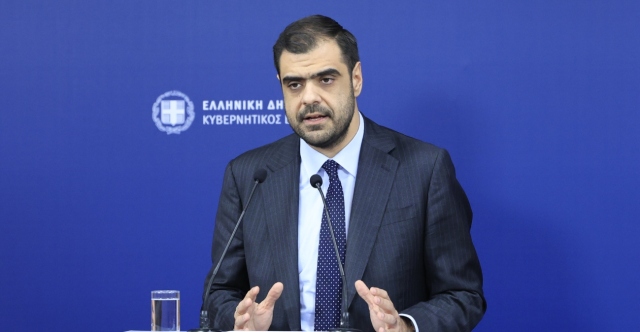
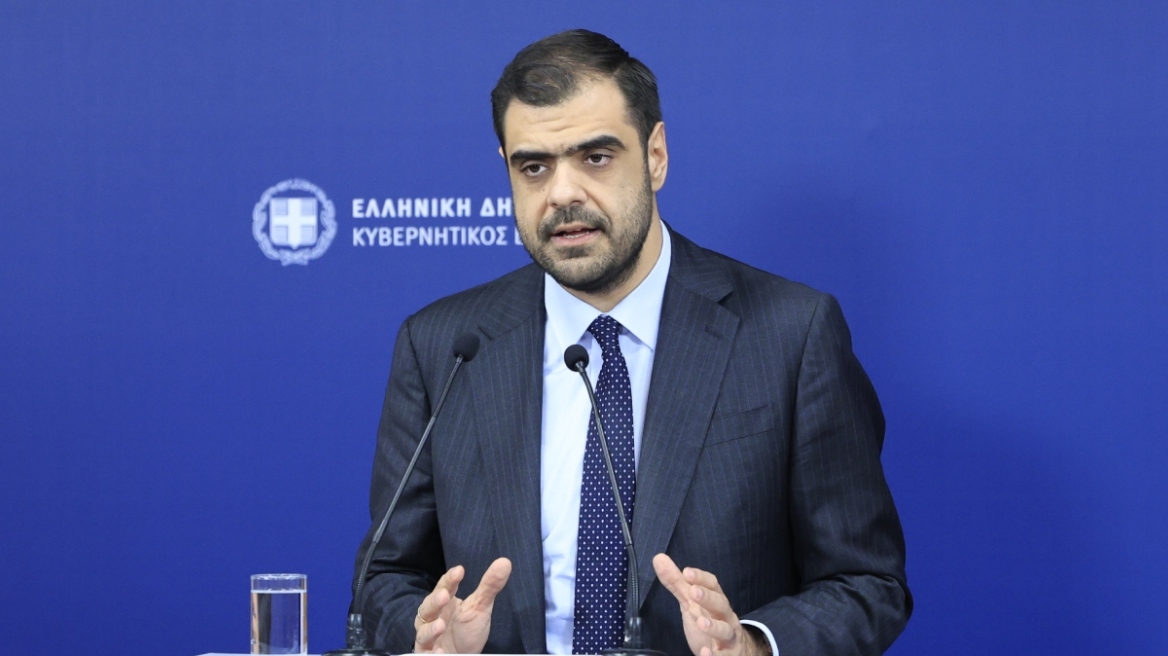
Greek government spokesman Pavlos Marinakis launched a frontal political attack against former Prime Minister Alexis Tsipras on September 2, 2026, following his speech in Thessaloniki.
Marinakis claimed that Tsipras added 13 billion euros to the national bill in the implementation year alone of his proposed economic policies, accusing him of blowing up the budget with uncosted promises.
Comparing the announcements directly to Tsipras' 2014 Thessaloniki programme, Marinakis remarked that despite attempting to reintroduce himself as something new, the former prime minister proved in every appearance that he remained unchanged.
Sources from the Ministry of Finance supported the government position, stating that officials had lost count of the costs and estimating the annual expense of the measures at approximately 13 billion euros.
The government spokesman highlighted proposed patriotic taxes, warning that such measures awakened bad memories for the middle class, while accusing Tsipras of ignoring European Union rules regarding expenditure ceilings.
Criticizing SYRIZA's past administration, Marinakis noted that Tsipras offered no self-criticism while attempting to portray the situation in 2019 as better than the present. He pointed out that in 2019, Greece had 600,000 fewer jobs, double the unemployment rate, lower incomes, and dozens of higher tax rates.
Marinakis concluded that Tsipras was serving up easy solutions for difficult problems using new words and old illusions, adding that while the packaging changed, the content remained the same, and that the more Tsipras promised, the larger the bill taxpayers would have to foot.
Economic proposals and tax measures
During his address in Thessaloniki, Alexis Tsipras, representing the Greek Left Coalition (ELAS), presented a broad economic platform aimed at public sector workers and households.
The announced measures include wage increases for doctors, nurses, and teachers, a 500-euro allowance for university students, a rise in the national minimum wage to 1,000 euros, and reductions in value-added tax rates.
Tsipras also proposed establishing a National Convergence Fund alongside a new patriotic contribution tax designed to generate additional state revenue.
However, the proposal sparked controversy after an audio recording revealed ELAS sector head Giorgos Pappas stating that authorities would catalogue bank safety deposit boxes, including stored jewelry, for the patriotic contribution, reminiscent of earlier controversial statements by former SYRIZA officials.
In response to the proposal, Marinakis questioned the funding logic, pointing out that while Tsipras announced 13 billion euros in measures, the patriotic contribution would only raise 145 million euros, asking where the remaining 12.5 billion euros would be found.
Government official Alexandra Sdoukou criticized ELAS for retracting its initial statements and attempting to manage the fallout from the announcement.
Political reactions across the opposition
Cabinet members issued swift rejections of Tsipras' proposal. State Minister Akis Skertsos described the patriotic tax as another illusion, while Health Minister Adonis Georgiadis remarked that Greek politics had returned to an age of stupidity, describing Tsipras as the great-grandson of Baron Munchausen.
Minister Takis Theodorikakos stated that Tsipras was selling free hope that would ultimately lead to despair if voters granted him power again, while former Prime Minister Antonis Samaras dismissed the speech as big words and illusions.
Opposition figures also expressed strong criticism. PASOK leader Nikos Androulakis stated during a September 3 address that the public did not owe another opportunity to either Tsipras or Prime Minister Kyriakos Mitsotakis, asserting that the country would move forward with PASOK.
Meanwhile, political party SYRIZA released a promotional video containing jabs at Tsipras, stating that when others remain silent, the party takes a stand.
In contrast to the patriotic tax proposal, politician Petros Kokkalis called for activating an asset registry to tax the wealthiest one percent of the population, while ELAS announced plans to submit its economic program to the National Fiscal Council for formal review.

Broader government agenda and national measures
The political clash unfolded as Prime Minister Kyriakos Mitsotakis prepared his own major announcements for the Thessaloniki International Fair, expected to include a double increase to the minimum wage, market relief measures, bonuses for pensioners, and targeted support for farmers.
Addressing international issues, Mitsotakis affirmed that Greece would not accept dictation from anyone regarding defense policy, coinciding with a formal diplomatic demarche sent by Athens to Ankara concerning Aegean marine parks and spatial planning, maintaining that Greek sovereignty in the region is clearly established.
Defense Minister Nikos Dendias reported that Greece's armed forces are currently producing 5,000 drones annually, with production planned to reach 15,000 by December.
Additionally, Greek authorities celebrated the completion of the Athens to Thessaloniki rail route operating with 100 percent signaling and remote control, while Minister Plevris attended a Core Group summit in Copenhagen focusing on third-country return hubs.