


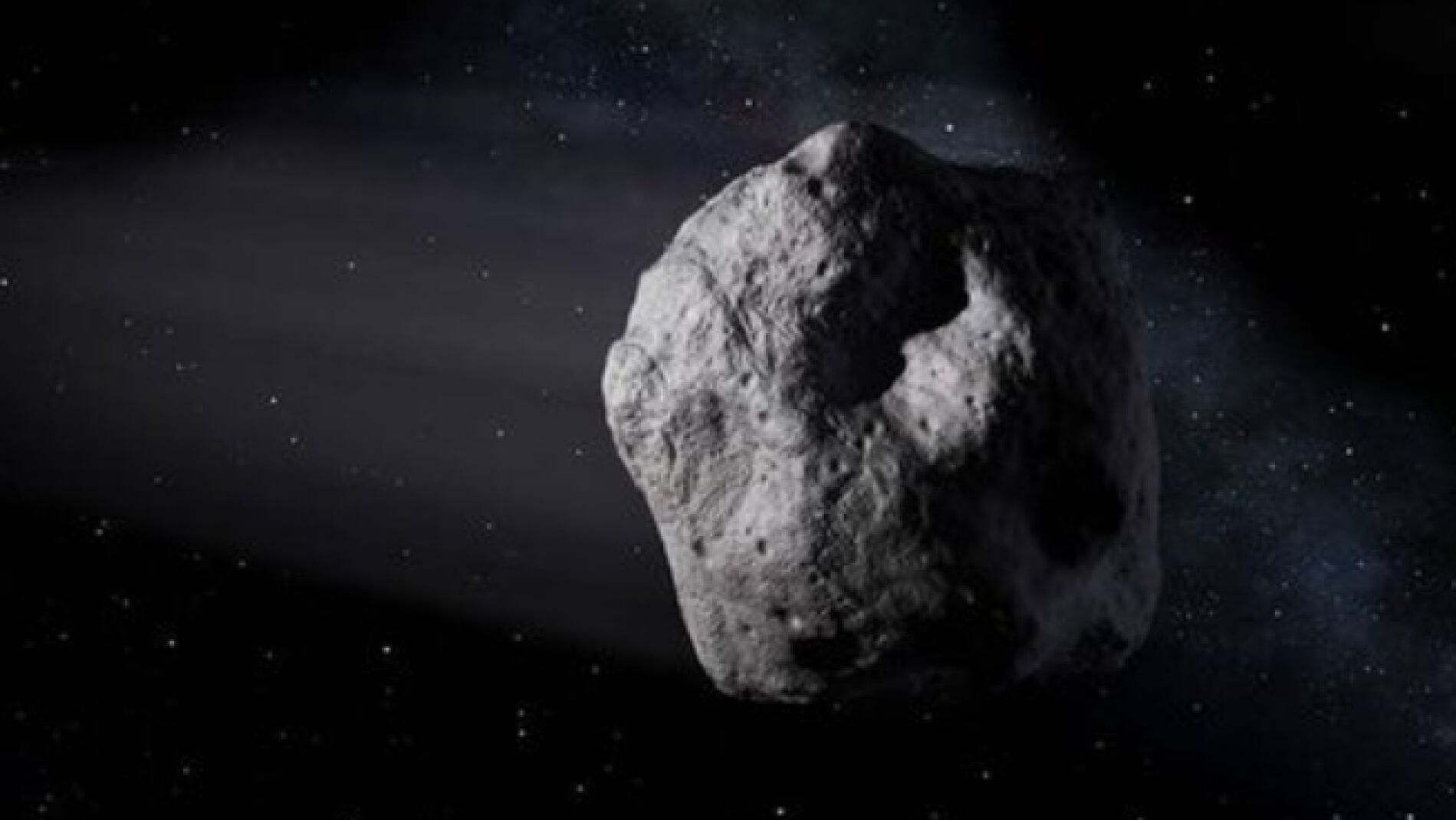
Asteroid Apophis will pass about 32,000 kilometers from the surface of Earth on April 13, 2029, posing an unusual potential conflict with orbiting space debris, according to a new study published in The Planetary Science Journal.
The asteroid measures approximately 340 meters in diameter. The average distance between Earth and the Moon is 384,000 kilometers, meaning Apophis will travel roughly 12 times closer to the planet than lunar orbit. It will pass below geostationary orbit, which sits about 36,000 kilometers above Earth's equator. While NASA has ruled out any collision between Apophis and Earth for at least the next century, the close passage means Earth will exert an appreciable physical influence on the asteroid.
Physical impact of Earth's gravity
Earth's gravity will not only slightly alter the trajectory of Apophis, but its tidal forces could also modify the asteroid's rotation and cause surface movements or shedding of material. Scientists will be able to observe what happens when an asteroid of this size passes this close to a planet for the first time in detail.
Several space missions plan to study the event. NASA's OSIRIS-APEX spacecraft will continue its journey to Apophis after finishing its primary mission at the asteroid Bennu. The objective of OSIRIS-APEX is to examine how Apophis changes after its encounter with Earth.
Space debris collision risks
A research team led by Giulia Schettino analyzed the potential for Apophis to strike artificial objects remaining in Earth orbit. The asteroid will pass through a space region containing out-of-service satellites and fragments of space junk.
Schettino's team argued that although the probability of a collision is probably extremely low, the possibility of an interaction cannot be completely ruled out. They noted that an impact with abandoned space debris could alter the rotational dynamics of the asteroid, create a crater, or lift surface material.
Any such changes could endanger planned surface experiments or be mistaken for effects caused by Earth's gravitational and tidal forces. The researchers emphasized that separating the effects of a debris impact from Earth's influence would be difficult if the asteroid is altered before the study takes place.
Need for orbit population tracking
Because of these risks, the study authors stated that a thorough characterization of the population of artificial objects expected in that orbital region in 2029 is essential.
Scientists can calculate the exact position of Apophis three years in advance and know it will not strike Earth. However, human-made objects orbiting the planet are far less understood. The researchers noted that while this situation is a first in space exploration, it will not be the last, raising concerns among scientists.


