

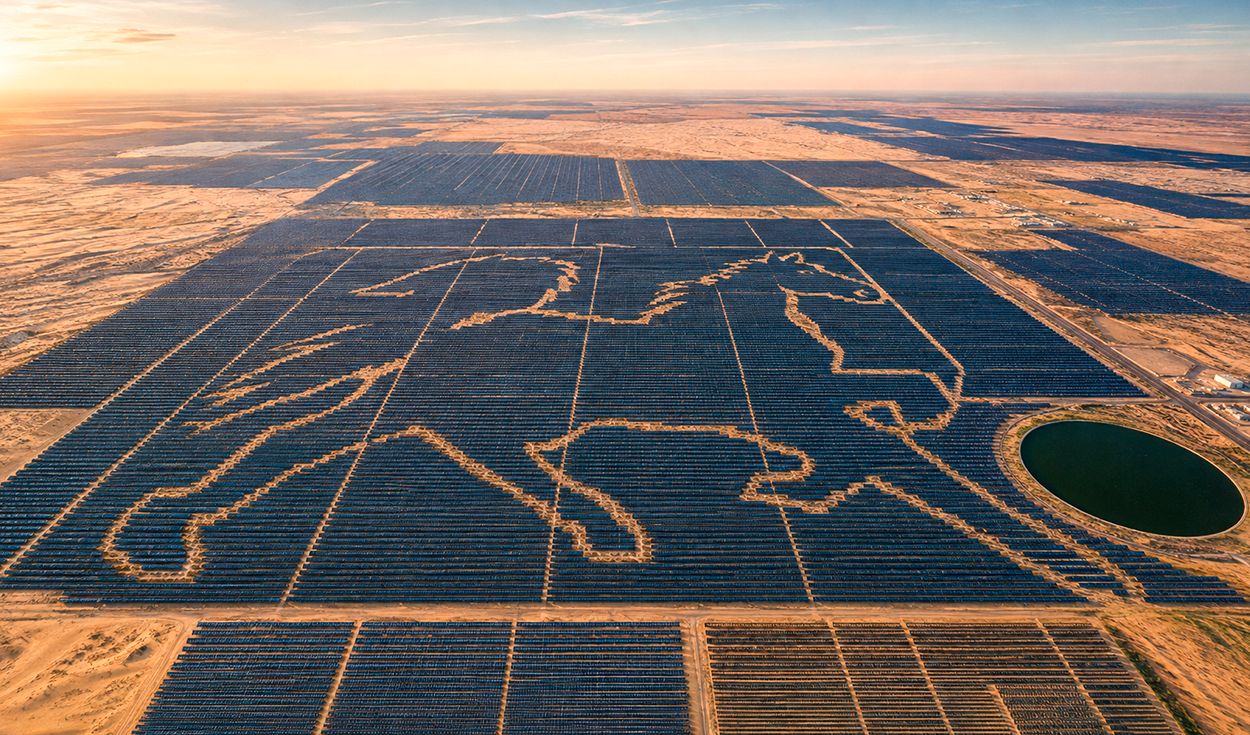
China is consolidating a massive photovoltaic megaproject in the Kubuqi Desert of Inner Mongolia to generate 100 gigawatts of clean energy by 2030. The massive strip of solar panels takes advantage of constant solar radiation and flat terrain, creating a natural landscape transformation recorded by satellite imagery as facilities expand rapidly over sand dunes.
Located south of the Yellow River within the municipal territory of Ordos, the planned energy corridor extends nearly 400 kilometers in length with an average width of 5 kilometers. The space agency NASA highlighted that long sunshine hours, flat land, and proximity to industrial hubs make the location ideal for clean energy production.
Infrastructure construction is proceeding gradually through interconnected complexes, including the Dalad photovoltaic park designed in two stages to add 1 gigawatt of capacity and generate nearly 2 billion kilowatt-hours annually. The official platform China Daily reported that the central-north Ordos new energy base launched its initial section in 2023 before integrating an extra gigawatt into the electrical grid.
Kubuqi Desert solar corridor and ecological restoration
Beyond supplying electricity to Beijing and surrounding areas, the project focuses on local ecological restoration. Elevated panel structures block wind gusts, contain sand dune migration, and create the shade required to retain plant moisture. State spokespeople defined the strategy as a double shield against desertification, combining bifacial solar panels with drip irrigation using treated mining water.
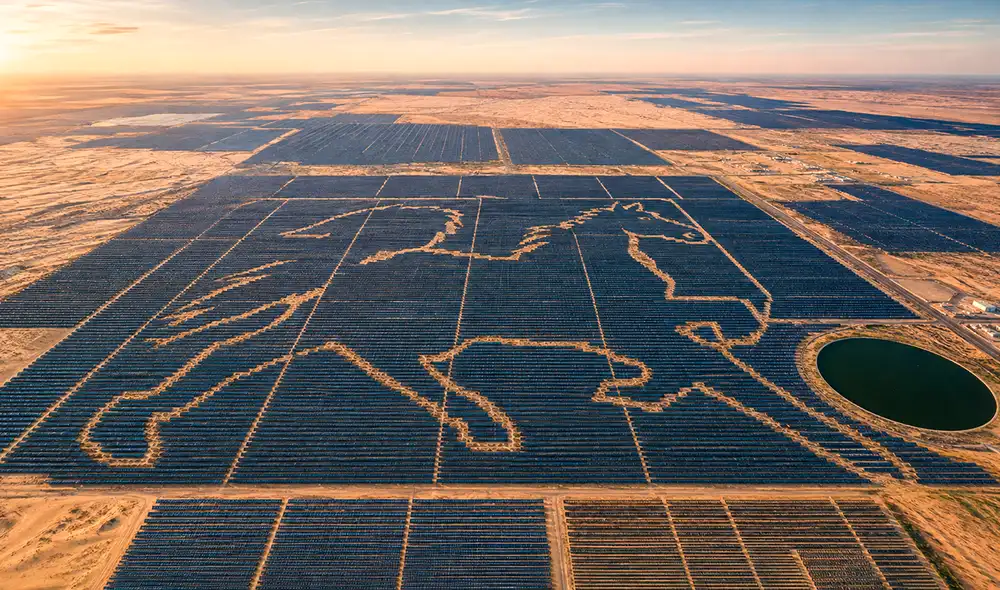
Within the Kubuqi complex at Dalad Banner, the Junma solar station features a functional equestrian layout that symbolizes the historical link of Ordos with horse culture. Built by SPIC Nei Mongol Energy and completed in 2019, the installation incorporates 196,320 solar modules across 1.4 square kilometers. Its design honors Inner Mongolian tradition, where the name Junma translates to fine horse.
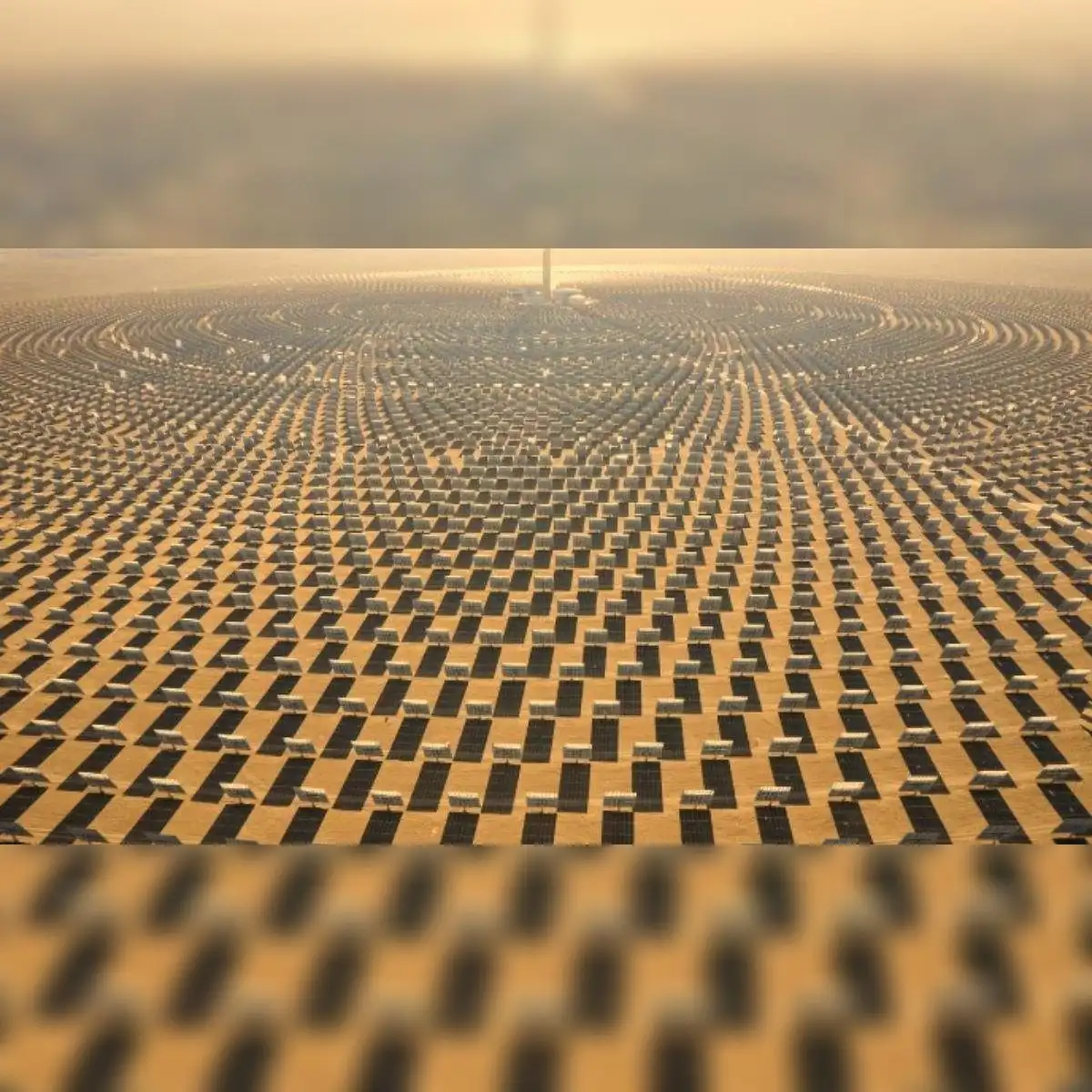
Junma horse solar plant and satellite imagery
The Junma facility holds an official Guinness World Records title as the largest image formed by solar panels on the planet. Operating beyond its aesthetic design, the photovoltaic park generates nearly 2 billion kilowatt-hours per year. NASA estimates this power volume supplies the electricity consumption of 300,000 to 400,000 residents.
Sensors OLI and OLI-2 on the Landsat 8 and Landsat 9 satellites captured photographs confirming that the horse-shaped solar plant is visible from space. Earth Observatory verified the rapid deployment of solar technology after comparing satellite photos from December 2017 and December 2024 across a region previously described as a sea of death.


