

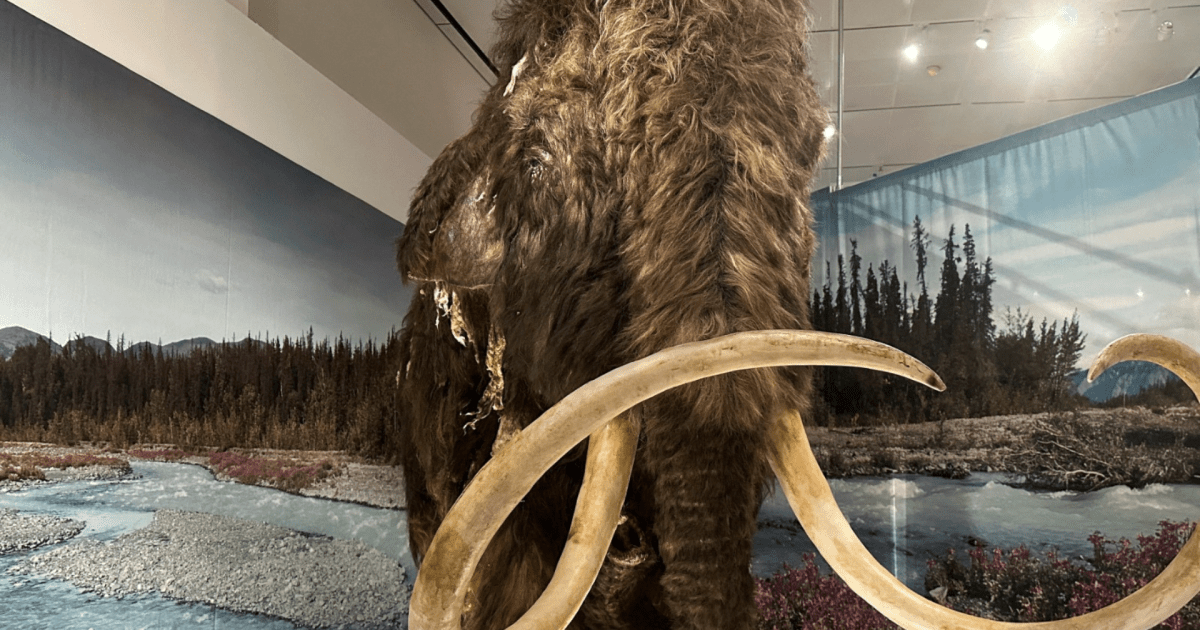
Ice Age hunter-gatherers across Eurasia and North America deliberately targeted female woolly mammoths for slaughter, according to a new study.
Analysis of ancient DNA revealed that female remains accounted for roughly 70 percent of mammoth bones discovered at prehistoric human sites. By contrast, male mammoths represented 66 percent of fossil records in natural death environments where human hunting was not involved.
The findings, published in the journal Current Biology, are based on genetic data extracted from 521 specimens spanning the last 50,000 years. Researchers retrieved the genetic material from 11 human occupation sites across countries including Poland, Austria, the Czech Republic, Germany, and Russia.
Social behavior and physical differences
Scientists suggest that the social behavior of woolly mammoths made females considerably easier to hunt. Like modern elephants, woolly mammoths lived in matriarchal herds led by adult females that moved seasonally along predictable routes across the landscape.
Hannah Moots, a researcher at the Centre for Palaeogenetics, said that while male mammoths were solitary and roamed across wide areas, females followed more restricted routes. Moots added that the presence of calves made female herds reluctant to flee, making the groups easier for human hunting parties to locate.
Physical dimensions were another decisive factor in the choice of prey. An adult female woolly mammoth weighed around four tonnes and stood 2.9 metres tall, making it significantly smaller and simpler to kill than a male weighing six tonnes and reaching 3.4 metres in height.
Woolly mammoths were giant cold-adapted herbivores that roamed northern Eurasia and North America during the Pleistocene epoch. Palaeogenetics uses preserved genetic material from ancient fossil remains to reconstruct the living habits, movement patterns, and extinction risks of prehistoric species.
Hunting tactics and resource use
For nomadic hunter-gatherer populations, the woolly mammoth was an essential source of basic subsistence. A single animal yielded immense quantities of meat and fat for food, hides for clothing, and sturdy bones for constructing shelters and crafting tools, while hunters carved tusks into weapons and art objects.
Archaeological evidence indicates that human hunters used natural landscape features to their tactical advantage. Prehistoric groups drove mammoths into natural traps such as bogs, deep mud, or steep cliffs, where the animals became immobilized before hunters attacked them with spears and darts.
At the Kraków Spadzista site in southern Poland, archaeologists uncovered the remains of more than 100 mammoths alongside stone tools dating back up to 30,000 years. The location provides one of the clearest examples of concentrated Ice Age mammoth hunting in Europe.
Extinction and climate change
The species disappeared from most of the continent roughly 10,000 years ago at the end of the Ice Age. Rapid climate change during this period transformed open grasslands into dense forests and wet tundra, shrinking the natural habitat of megafauna.
Although intensive selective hunting exerted heavy pressure on mammoth populations, the exact role human activity played in their total extinction remains a subject of ongoing debate among researchers.
The final surviving mammoths lived in isolation on Wrangel Island off the Siberian coast until they vanished completely about 4,000 years ago.


