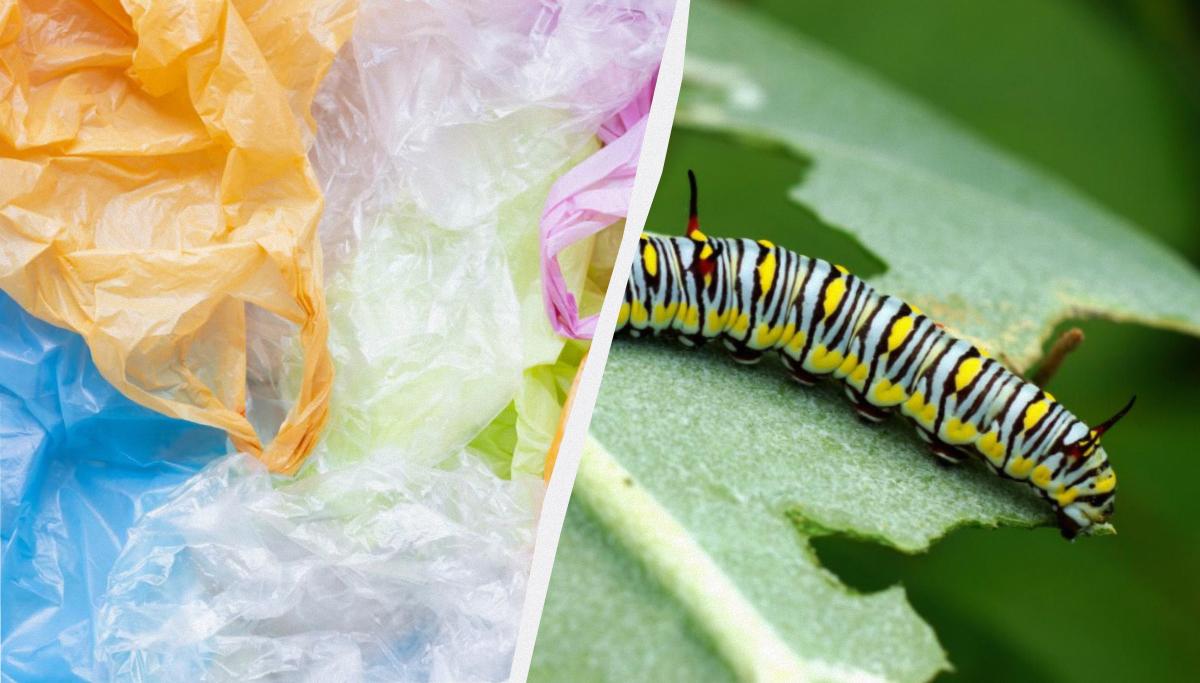
Scientists at the University of Cambridge and Spain's Higher Council for Scientific Research (CSIC) have found that the larvae of the greater wax moth can break down polyethylene, one of the most common plastics used in packaging. The findings were published in the journal Current Biology in 2017.
Polyethylene is used to make bags and bottles and can resist most living organisms for decades. But researchers found that the caterpillars not only chew through it, they also break apart its long molecular chains.
The discovery was made by Federica Bertocchini, a biologist at CSIC and an amateur beekeeper. While cleaning her hives, she came across larvae of the greater wax moth, Galleria mellonella, a pest that feeds on beeswax and that beekeepers had previously regarded only as a threat to their colonies.
How the discovery was made
Bertocchini put the larvae into a plastic bag and within minutes found that they had chewed numerous holes in it and escaped. To test the observation properly, the research team ran a laboratory experiment, placing 100 larvae on an ordinary polyethylene bag from a supermarket.
Holes appeared on the bag within 40 minutes. After 12 hours, the larvae had eaten about 92 milligrams of the plastic. By comparison, a bacterium identified a year earlier was found to break down only 0.13 milligrams of the same material in a full day.
The experiment also produced ethylene glycol, a sign that the polyethylene had been chemically converted into a different compound rather than simply shredded.
Why the finding matters
Polyethylene accounts for around 40 percent of the plastic used in Europe, much of it in bags and bottles. Worldwide, almost 80 million tonnes of the material are produced every year, and each discarded piece can take between 100 and 400 years to break down. Only a small share of this waste is recycled, while the rest ends up in landfill, is incinerated, or reaches the sea.
Before this discovery, biological methods of breaking down polyethylene were largely ineffective. Some bacteria and fungi can break the material down, but far too slowly to keep pace with how much is produced. That made the larvae's speed immediately interesting to chemists, who saw potential for a more efficient way to process plastic waste.
Not just chewing, but breaking down the plastic
The researchers also checked whether the larvae were genuinely degrading the polyethylene rather than just grinding it into small pieces. They found that the insects were breaking apart the polymer's long molecular chains. A further experiment showed that even a paste made from crushed larvae, when applied to a plastic film, affected the material, pointing to the action of a specific chemical substance.
The researchers believe this ability may be linked to the larvae's natural diet. Wax moth caterpillars feed on beeswax, which, like polyethylene, contains a similar type of carbon bond. That means the larvae are already adapted to digesting a substance whose chemical structure resembles plastic.
The enzymes behind the process
In 2017, the substance responsible for breaking down the polyethylene was still unidentified. Researchers suggested it might be produced by the larvae's salivary glands or by bacteria in their gut.
Five years later, the same research group identified two enzymes in the larvae's saliva, named Demetra and Ceres. Both belong to the phenol oxidase family and trigger the oxidation of polyethylene at room temperature.
Using the larvae themselves to process the huge volumes of plastic waste produced worldwide is not yet realistic. Chemists now hope to recreate the two enzymes in the laboratory so that plastic could eventually be processed without relying on the insects.
What happens next
Chemists hope to recreate the two enzymes found in the larvae's saliva in the laboratory so that plastic could eventually be processed without relying on the insects.
Test yourself
Which insect larvae were found to break down polyethylene plastic?
How much plastic did 100 larvae eat in 12 hours in the experiment?
Who first noticed the larvae could damage a plastic bag?
Have your say
Do you think enzyme-based methods like this could help solve plastic pollution?