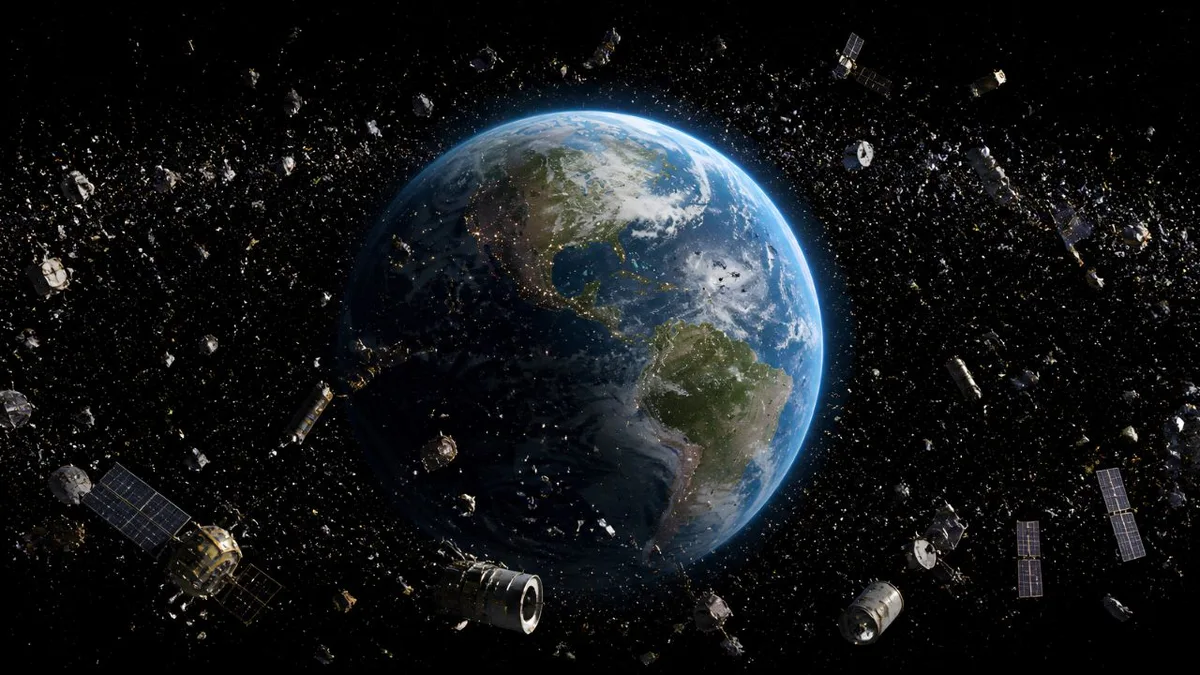
More than 230 million pieces of space debris are now orbiting Earth, according to the latest figures from the European Space Agency (ESA), updated on November 2, 2026, and the total keeps rising.
ESA's data show roughly 230 million objects measuring between 1 millimetre and 1 centimetre, plus about 1.5 million fragments between 1 and 10 centimetres. On top of that there are nearly 69,000 objects larger than 10 centimetres, a category that includes active spacecraft, and almost 20,000 satellites currently in orbit, of which just under 16,000 are still active.
Space debris covers any human-made object with no remaining function that still circles Earth. That includes dead or abandoned satellites, spent rocket stages, and fragments thrown off by explosions, break-ups or collisions in orbit, ranging from lost screws and tools to flecks of paint.
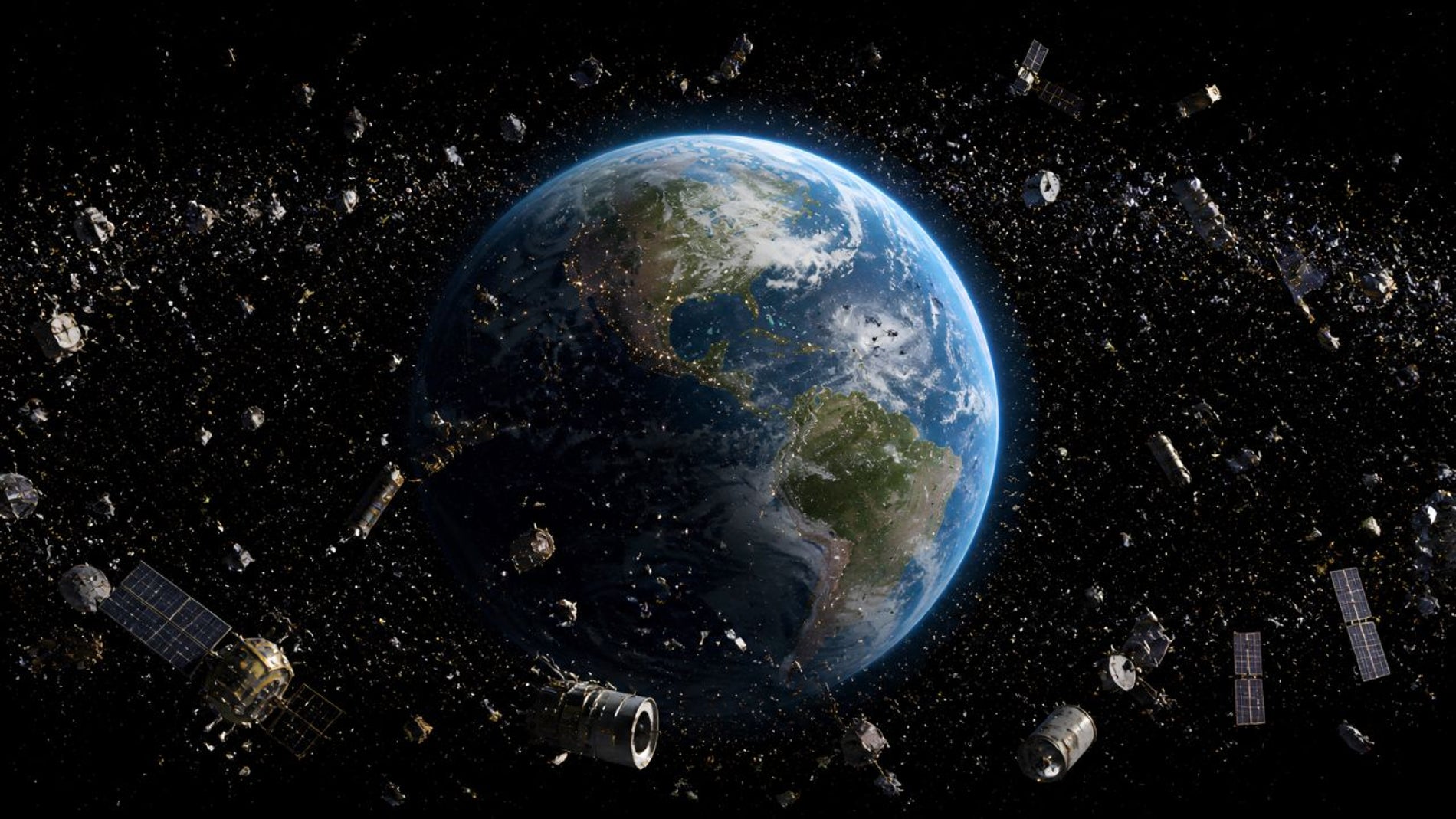
The problem could get worse as companies push to expand satellite networks and even place data centres in orbit. Elon Musk's Starlink is aiming to build a constellation of between 34,000 and 40,000 satellites, and SpaceX has filed an application to run a network of up to 1 million satellites for orbital data centres. Packing more objects into orbit raises the chances of collisions, which in turn create more debris.
Separately, the US company Atomic-6 has launched what it calls the first protective armour designed to shield astronauts from space debris. Stuart Eves, a space consultant, said space debris amounted to a potential minefield, after a study found that fragments as small as 5 centimetres could be fatal.
Why collisions threaten satellites
Experts say a collision between two large objects can generate thousands of fragments, and those fragments endanger other satellites, potentially setting off a chain reaction that would make parts of Earth's orbit increasingly dangerous to use. Mark Moretto, an assistant professor of mechanical and aerospace engineering at North Carolina State University (NC State), said the core problem is that there are no clean-up crews in space, so the debris keeps building like a snowball.
Even if no new satellites were launched and space exploration stopped altogether, the damage already done would remain, because space debris can interfere with the systems behind GPS navigation, weather forecasting, communications and other services millions of people rely on daily.
Astronomers already feel the effect
Space debris is already affecting astronomers' work. Arun Kannawadi, an adjunct research professor of physics at Duke University, studies stars and galaxies using telescope images. He said satellites passing overhead can reflect sunlight, leaving bright streaks across his observations and complicating his work and that of many colleagues. Scientists can digitally erase those streaks, but doing so also wipes out the data from the affected areas of the image.
Plans to clean up Earth's orbit
In October, the UK Space Agency announced a £61 million contract (almost €73 million) with the company ClearSpace to develop a spacecraft able to capture two inactive satellites and pull them out of orbit. If the plan holds, the mission will launch in 2029, with the goal of removing both satellites by 2032.
Removing just two satellites will not solve the wider problem, but it offers a useful starting point for testing how well the technology works before any larger clean-up effort. The UK government is also looking at developing spacecraft that could be refuelled and reused for future maintenance and removal missions.
Mark Moretto's research at NC State is exploring a different approach: giving satellite operators a financial incentive to deorbit their spacecraft once they reach the end of their working life. He compares the idea to bottle-deposit schemes that some countries use, paying consumers back a set amount for recycling.
What happens next
The UK Space Agency's ClearSpace mission is planned to launch in 2029, aiming to remove both targeted satellites from orbit by 2032.
Test yourself
About how many fragments of space debris does ESA estimate orbit Earth?
Which company signed a contract with the UK Space Agency to remove defunct satellites?
According to Arun Kannawadi, what disrupts his telescope observations?