A team at the Massachusetts Institute of Technology (MIT) has built a lightweight, column-free structure more than seven meters tall by folding flat aluminum sheets the way papercraft artists fold origami. The sculpture, called Lexicon, was assembled in a matter of days and installed at the Boston Public Library.
According to MIT, the people who put the structure together had no professional construction experience. They used only hand tools for the assembly and did not need large welding equipment during that phase.
The project, led by Alfonso Parra Rubio together with collaborators, combines geometric design, digital fabrication and assembly. Rather than bending one giant sheet, the team prepares each unit separately and connects it to the others, so the rigidity of the final piece comes from how the individual pieces lock together.
From paper pattern to a resilient network
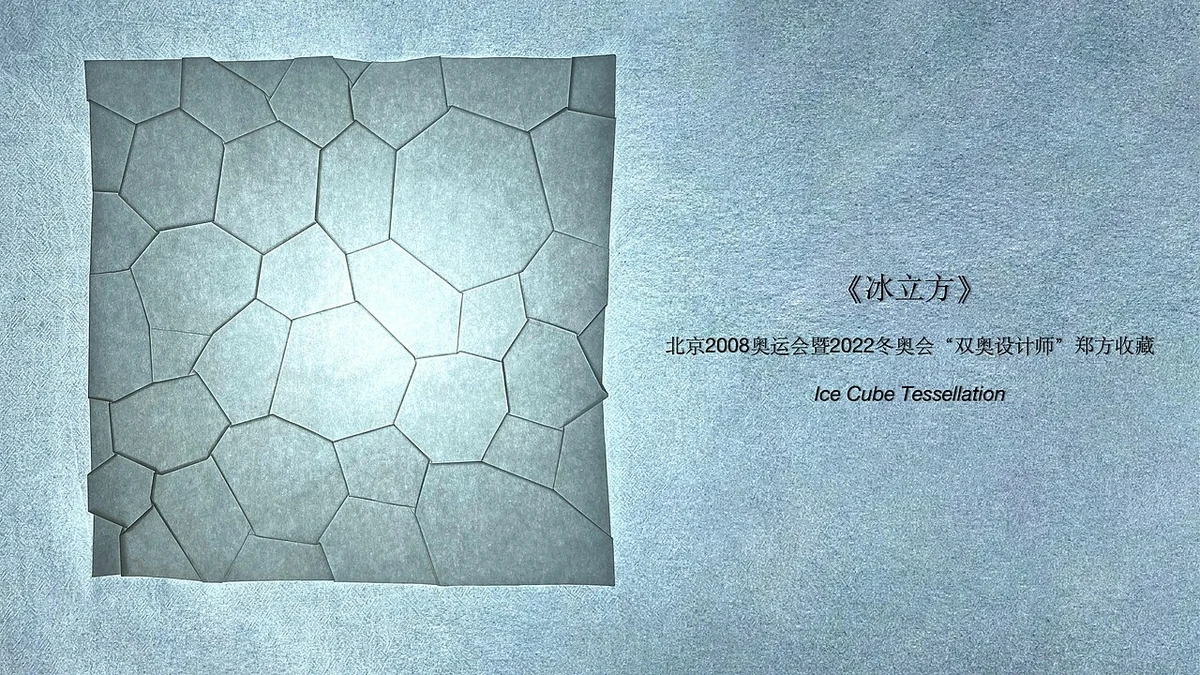
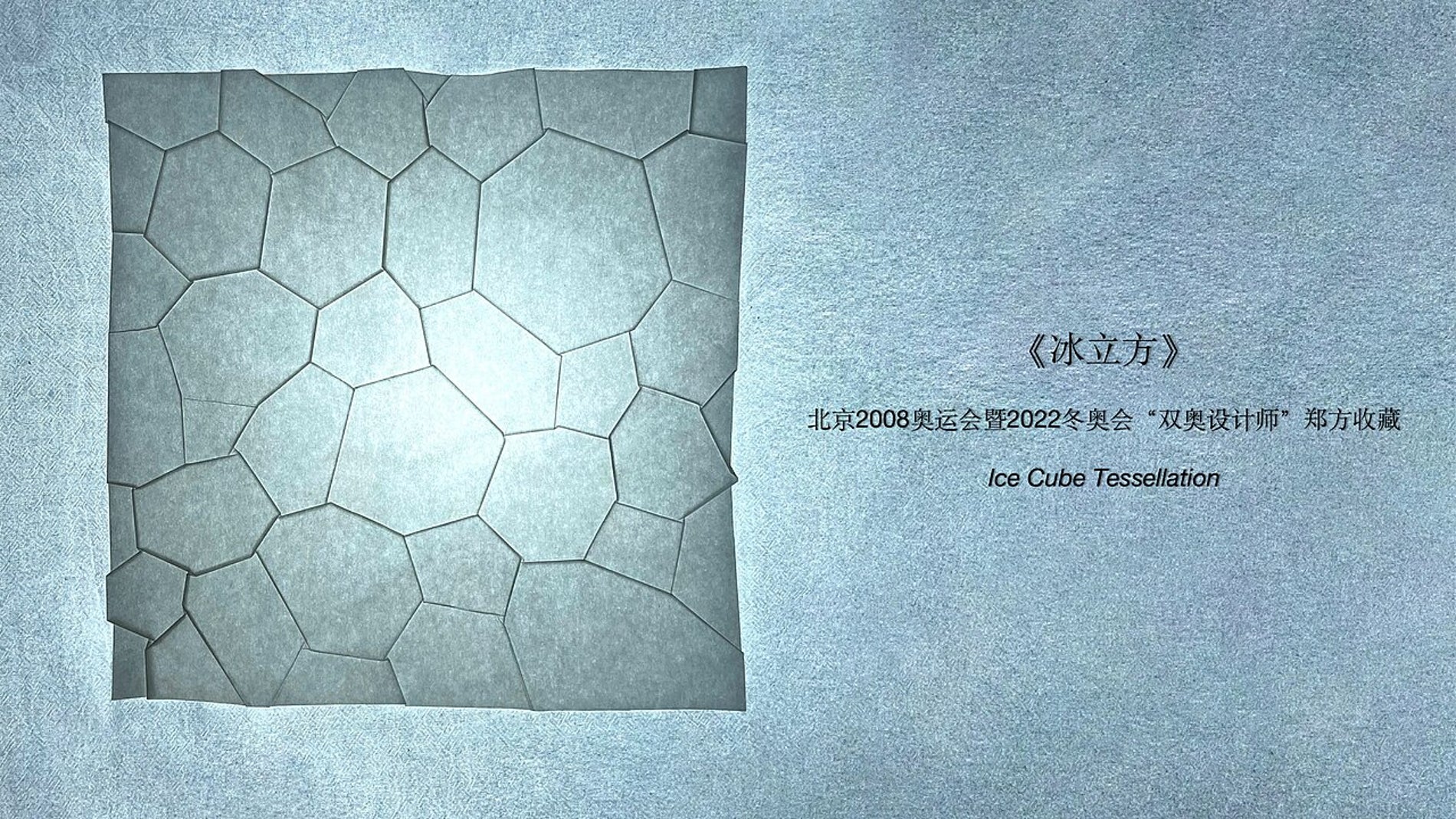
The historical reference point is the folded tessellation work the artist and scientist Ron Resch developed in the 1960s, in which repeated patterns generate three-dimensional shapes. The new study, published in the International Journal of Space Structures, uses two tripod-shaped units that form a single block with no internal movement once the two are correctly joined.
Those blocks are then combined into a network of interlocking elements. The geometry allows curved surfaces to be built from components that are manufactured flat. The research focuses mainly on the rigidity of the structure, meaning how much it resists deforming under a load in given conditions.
Working out every piece of such a complex shape by hand would be difficult. Parra Rubio worked with Erik Strand on a calculation system that breaks the design down into smaller problems, checking the individual modules first and then the assembly as a whole. The resulting files allow the units to be cut from flat sheets using a numerically controlled machine.
The simple, hand-tool assembly therefore comes only after a precise stage of design and fabrication. It does not replace that work; each fold and each joint is what allows the pieces to end up in their intended position.
A real sculpture, with applications still to be developed
The team's simulations indicate the structure is roughly 3.5 times more rigid than some origami techniques used as a reference point, while using less material. The researchers describe this as a comparison between studied designs, not a claim that the method outperforms any building, and it does not show that the system can simply replace concrete, steel or existing roofing.
The reduction in material could be useful for transporting components and lifting them with limited equipment. The authors raise possible uses including emergency shelters, facade elements and aerospace parts, describing them as potential applications rather than proven ones.
Lexicon's purpose was to show that the method can move beyond small prototypes to an installation built at architectural scale. The City of Boston said the sculpture would be on display until November 1, in a collaboration with its culture office and the public library. It remains a sculpture, the researchers note, not an approved dwelling or a shelter deployed after a disaster, uses that would require additional safety and service requirements.
The team wants to increase the size of the structures it builds and study more complex geometries. Combining calculation and fabrication is also relevant to work on automating materials production, although the current project focuses specifically on shaping and assembling. Another priority is making the design process easier for future users through an interface that manages that complexity.
The practical result brings together two things that are often kept separate: pieces that are easy to transport while flat, and a rigid structure once assembly is complete. The Boston installation demonstrates that transition at a large scale. Further work will need to establish exactly what loads and conditions each design can withstand before the method can become a routine construction solution.