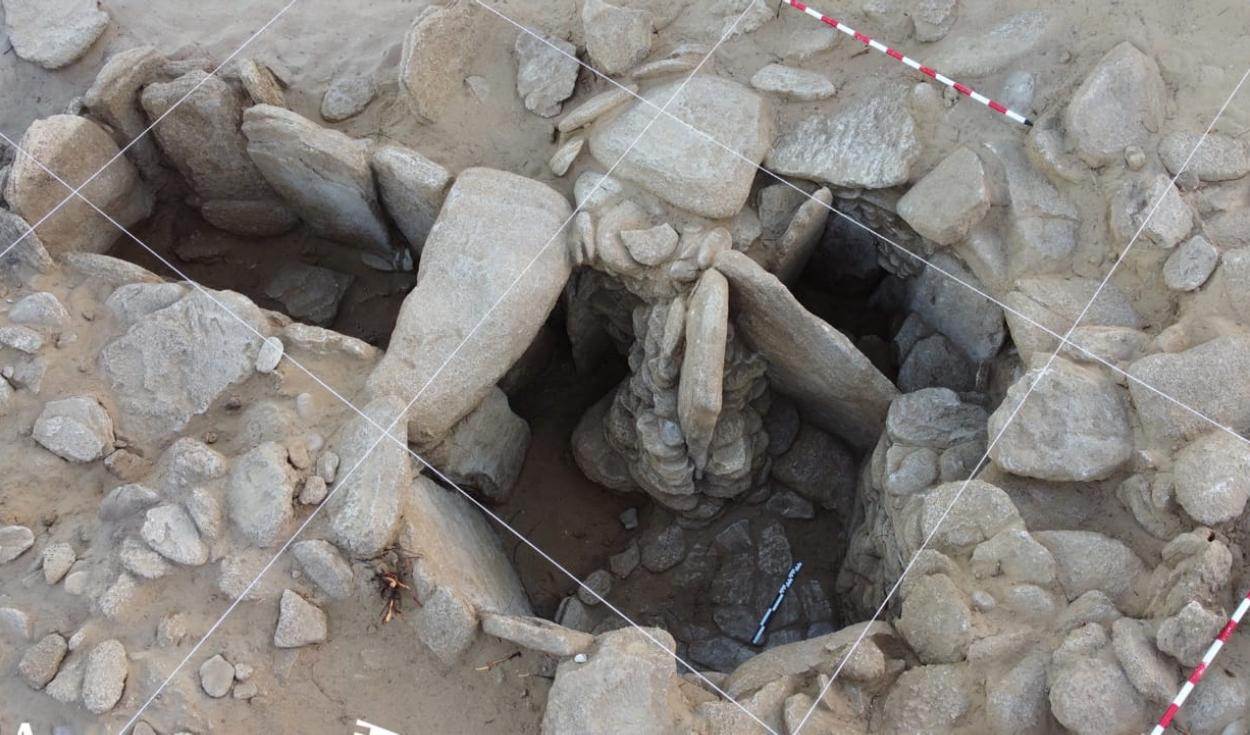
A community in southern Spain kept burying its dead in large collective megalithic tombs for centuries after most of the Iberian Peninsula had abandoned the practice in favour of individual graves, according to a new study of two tombs near Cape Trafalgar, in the province of Cadiz. The tombs remained in use well into the Bronze Age, long after neighbouring populations had moved on to different funerary customs.
The research was led by Eduardo Vijande-Vila of the University of Cadiz and published in the scientific journal PLOS One. The team combined analysis of human remains, architectural study and dating tests to work out when the necropolis was active. Their results place its use between 1875 and 1625 BC, in the first quarter of the second millennium BC.
PLOS One is a peer-reviewed, open-access scientific journal that publishes research across the natural and social sciences, including archaeology. A megalithic tomb is a large stone funerary monument built to hold the remains of many individuals, often over generations, a tradition common across prehistoric Europe before many communities shifted to single burials during the Bronze Age.
Dating the burials
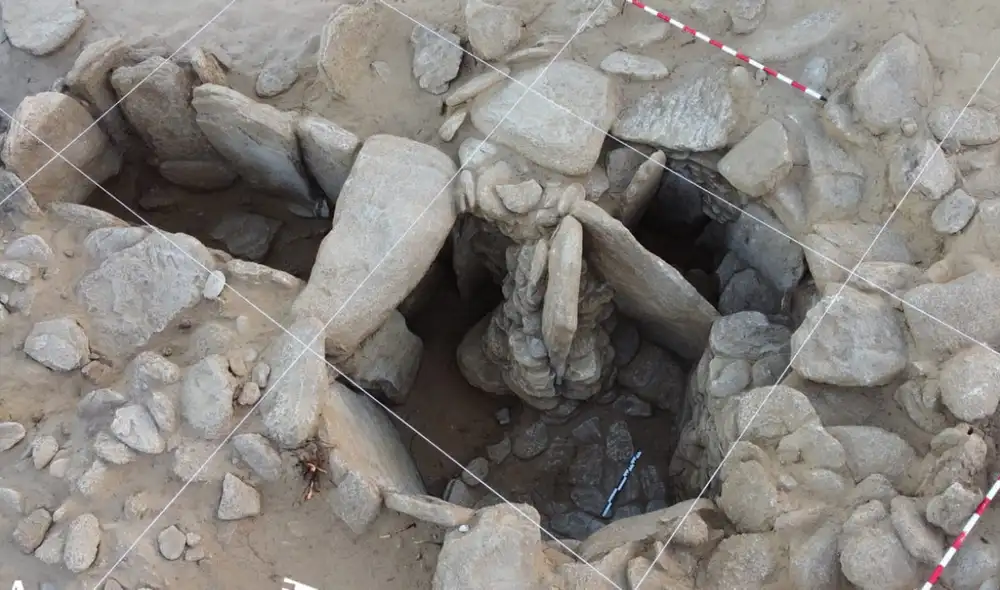
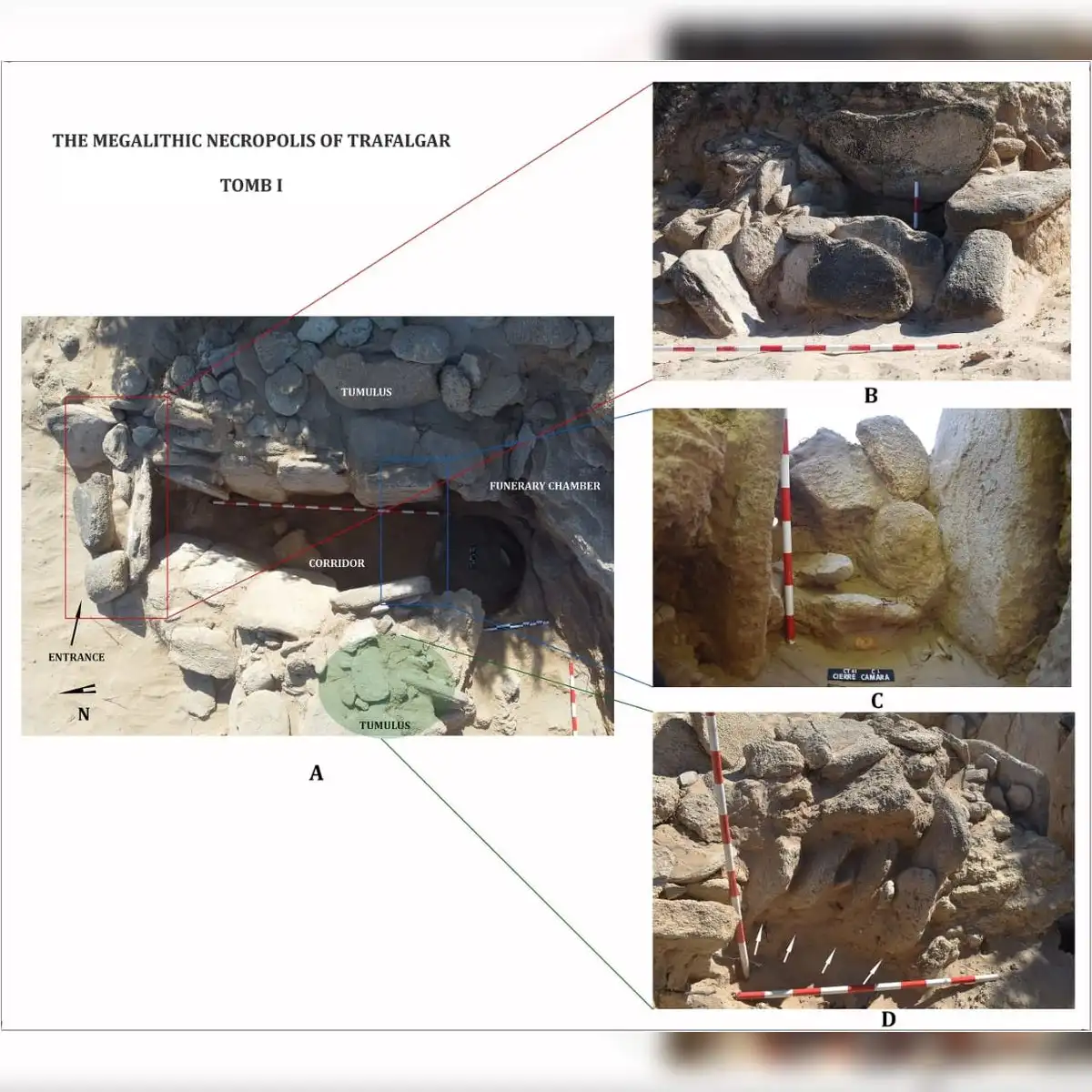
Excavations carried out in 2021 and 2022 uncovered two funerary structures containing the remains of several individuals. Researchers carried out radiocarbon analysis on the remains of 16 people and applied statistical models to pin down a precise chronology for the burials.
An unresolved question about construction
There is still no definitive date for when the monuments themselves were built. Unlike other sites from the same period, where communities reused structures originally raised during the Copper Age, the researchers found no older materials or signs of earlier occupation around the Trafalgar tombs.
Because of this, the researchers suggested the tombs may have been built shortly before they were first used, early in the second millennium BC. They said this hypothesis would need further analysis to confirm.
Gold, silver and ivory grave goods
Among the materials recovered from the tombs were pieces of gold, silver and ivory, which the researchers described as high-value goods. Their presence offers information about the kinds of objects placed alongside the dead.
The necropolis's position at Cape Trafalgar also led the authors to suggest that the sea may have played an important role both in trade routes and in the funerary practices of this community. Cape Trafalgar is a headland on Spain's Atlantic coast in Cadiz province.
Digital models and shifting sand
The team also used 3D scanners and photogrammetry to build digital models of both structures, which researchers said are useful for studying their architecture and for publicising a site that remains little known.
However, the researchers warned that strong winds and shifting sand threaten to bury the tombs again. They said other structures could still remain hidden beneath the dunes nearby.