


Paleontologists led by Tarek Yassin have discovered 14 fossilised shark teeth from at least seven species in Egypt's Western Desert.
The teeth were recovered from the phosphate layers of the Duwi Formation on the Abu-Tartur plateau. The site now sits in an arid landscape of rock and sand where surface water is virtually non-existent, but the fossils evidence a prolific marine ecosystem that flourished millions of years ago.
The study, published in the journal Cretaceous Research, was led by Yassin, a paleontologist based at Cairo University in Egypt. His research team identified teeth from sharks ranging between two and five metres in length that swam in ancient waters covering North Africa.
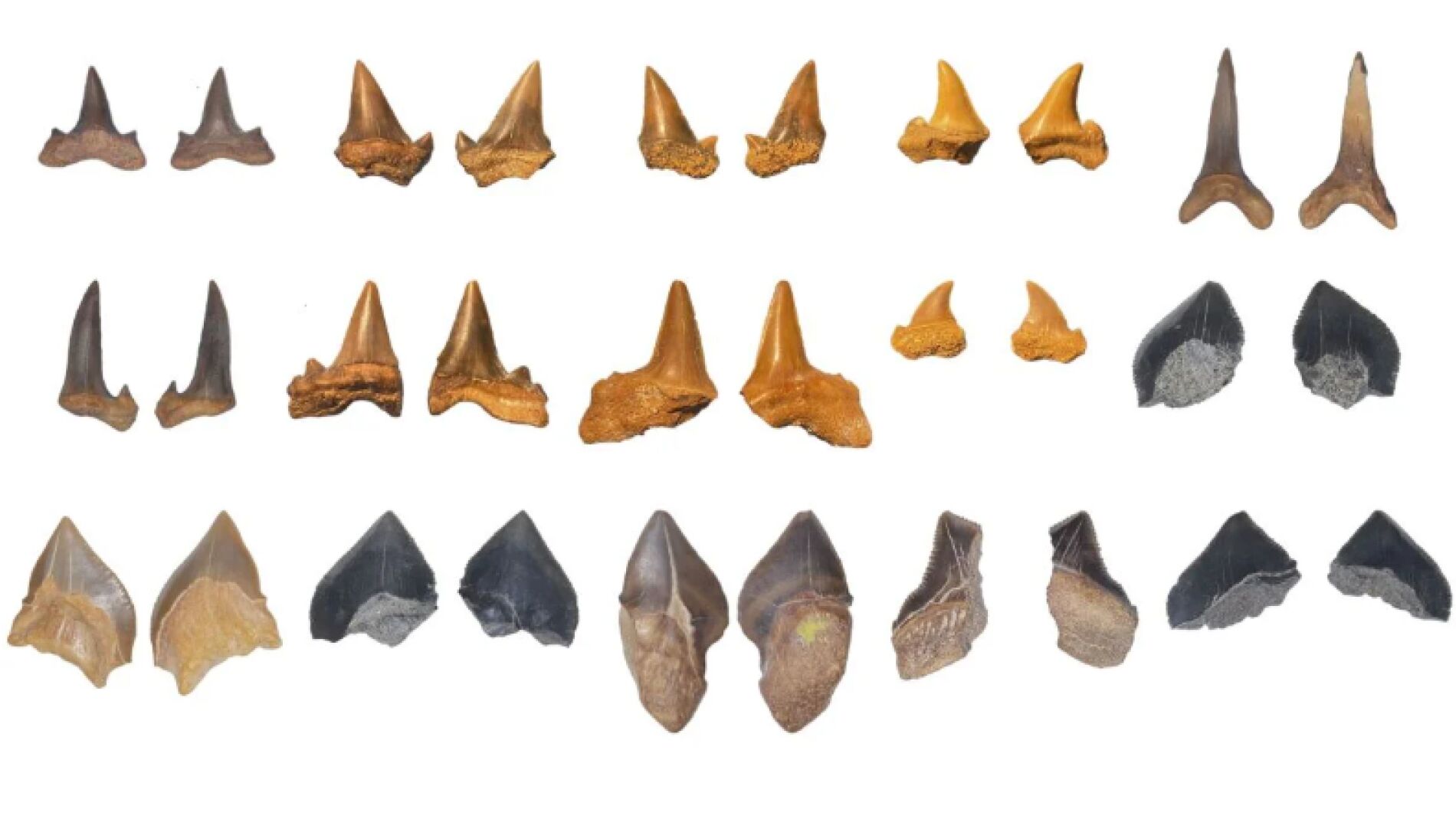
Fossil teeth reveal diverse species
The 14 recovered teeth displayed distinct physical shapes tailored to different feeding habits. Some specimens were long and narrow like needles, while others were broad with small serrations along the edges to slice through prey. The team also documented strongly curved teeth and specimens featuring small lateral extensions known as cusps.
Through these structural differences, the researchers identified five specific extinct shark species within the collection: Cretalamna cf. maroccana, Scapanorhynchus cf. raphiodon, Serratolamna cf. serrata, Squalicorax bassanii and Squalicorax pristodontus.
None of these five extinct species had ever been documented in the fossil record of the Abu-Tartur plateau before this discovery. In addition, Serratolamna cf. serrata and Squalicorax bassanii represent species that had never previously been found anywhere within Egypt.
Potential first African record
Among the recovered fossils, the teeth assigned to Scapanorhynchus cf. raphiodon are of particular scientific interest. Yassin and his colleagues reported that these specimens may represent the first confirmed record of this shark species in Africa.
The team noted that the teeth also rank among the youngest specimens of Scapanorhynchus cf. raphiodon ever identified in the global fossil record. The sharks lived approximately 75 million to 70 million years ago during the Late Cretaceous epoch, a period when a shallow sea covered large portions of present-day Egypt.
The Late Cretaceous was the final epoch of the Mesozoic Era, characterized by warm global climates and high sea levels before the mass extinction event that ended the age of dinosaurs 66 million years ago.
Cartilage loss and tooth preservation
The abundance of teeth contrasts sharply with the complete absence of fossilised shark skeletons at the site. Yassin and his team explained that this pattern stems directly from shark anatomy and biology.
Shark skeletons consist primarily of cartilage rather than hard bone. Cartilage is far less durable than bone and decomposes rapidly after death, making skeletal fossilisation extremely rare. Teeth, however, are heavily mineralised with hard enamel and dentine.
Sharks shed and replace thousands of teeth over a lifetime. As lost teeth sink to the sea floor, they become durable fossil archives capable of preserving detailed records of extinct animals and their environments for tens of millions of years.
Ancient marine food web
The discovery of multiple large predator species reaching up to five metres in length indicates that the Late Cretaceous sea in Egypt was exceptionally productive. The presence of several top predators suggests that the marine environment maintained a robust food web.
The researchers determined that the various shark species avoided direct competition for food by occupying distinct marine zones. Certain species lived in shallow waters close to the coastline, while others hunted in deeper waters along the continental shelf and slope.
This niche partitioning allowed multiple apex predators to thrive simultaneously in the same geographical region without exhausting local food resources.
Geological transformation of North Africa
During the Cretaceous period, which spanned from roughly 145 million to 66 million years ago, Earth was considerably warmer than it is today. Polar ice caps were minimal or absent, causing global sea levels to rise significantly higher than modern levels.
As sea levels rose, shallow oceans inundated vast expanses of modern North Africa. Over millions of years, regional tectonic movements and shifting sea levels caused the waters to retreat gradually.
Marine sediment accumulation eventually gave way to terrestrial continental landmasses. Subsequent erosion and climate desertification transformed the former seabed into the hyper-arid desert seen today in western Egypt.
Although the ancient sea and its sharks disappeared long ago, the 14 enamel and dentine fragments uncovered by Yassin's team have provided scientists with a clear snapshot of an underwater world buried beneath the desert sands.


