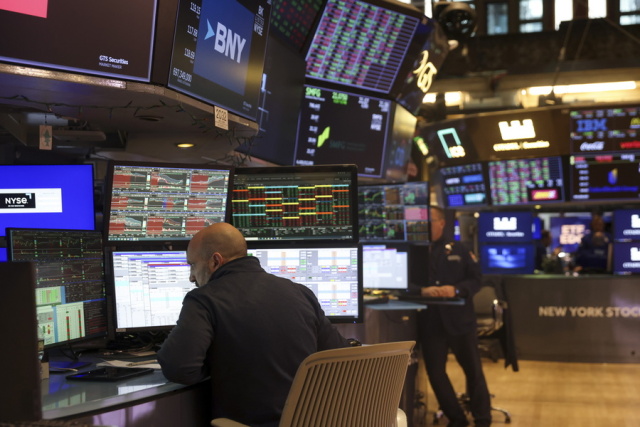
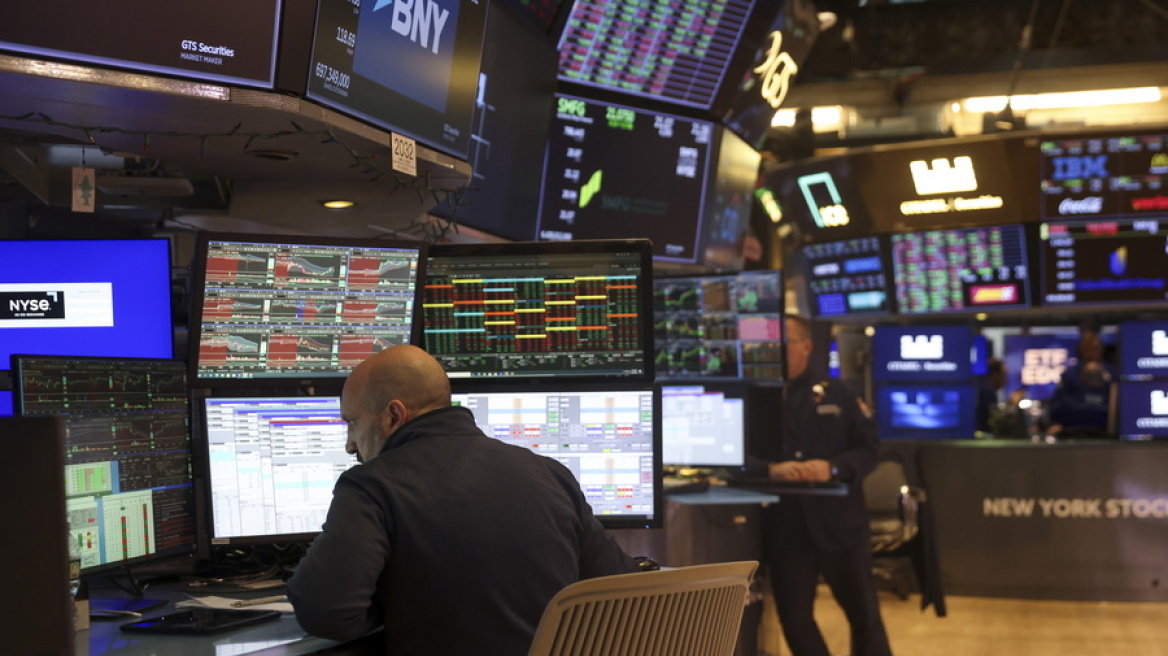
Wall Street technology stocks surged on Thursday led by Nvidia Corporation after the chipmaker released an explosive growth forecast that renewed investor confidence in artificial intelligence.
The tech-heavy Nasdaq Composite index jumped 1.57 percent to close at 26,541 points, while the benchmark S&P 500 index gained 0.72 percent to reach 7,730 points. The Dow Jones Industrial Average added 0.20 percent to end the session at 53,569 points.
In fixed income markets, government bond yields rose slightly across major maturities. The yield on the benchmark 10-year US Treasury note climbed to 4.672 percent, while the 30-year Treasury bond yield reached 5.191 percent.
Nvidia revenue and market capitalization gains
Shares of Nvidia Corporation, the world's most valuable company, surged by nearly 9 percent during Thursday trading. The rally added more than $450 billion to the semiconductor manufacturer's total market capitalization in a single trading session.
The stock buying spree followed Nvidia's announcement that it expects revenue to grow by approximately 70 percent in the upcoming fiscal year. The optimistic outlook offered significant relief to financial markets after recent concerns over a potential speculative bubble in artificial intelligence infrastructure.
For the current reporting quarter, Nvidia announced total revenue of $92.22 billion, representing a 106 percent increase compared to the same period a year earlier. Sales in its data center division, which forms the company's largest operating business segment, surged 117 percent year-on-year to reach $89.02 billion.
Analyst reactions to technology earnings
Financial market analysts noted that second-quarter corporate financial results have helped stabilize investor sentiment despite ongoing debates over heavy capital expenditure in the technology sector.
Mark Haefele of UBS Global Wealth Management stated that although concerns regarding the long-term sustainability of artificial intelligence spending could still trigger periodic volatility in technology shares, the second-quarter corporate reporting period has demonstrated that underlying business fundamentals remain strong.
Ryan Detrick of Carson Group expressed agreement with that assessment, stating that the broader wave of artificial intelligence adoption is far from over because customer demand continues to expand across a wider selection of industries.
Federal Reserve policy and Jackson Hole conference
Beyond evaluating corporate technology earnings, investors prepared for an upcoming address by Federal Reserve Chair Kevin Warsh at the Jackson Hole economic symposium on Friday.
US Treasury bond yields have remained elevated due to persistent consumer price inflation and ongoing market concerns regarding the federal budget deficit. As a result, Warsh faces pressure from financial markets to follow the approach of previous central bank leaders by providing clearer policy guidance regarding how the central bank might react through the rest of the year.
Wall Street analysts at JPMorgan predicted that the speech by Warsh will prove important for understanding his policy framework and economic priorities. However, the firm added that the presentation is unlikely to deliver a definitive signal regarding the rate decision at the Federal Reserve's upcoming September meeting.
Policy disagreements among central bank policy board members were already visible in public statements made by monetary officials at the Jackson Hole meeting in Wyoming.
Federal Reserve Bank of Kansas City President Jeff Schmid argued that current interest rate settings are not restricting broader economic activity, even as inflation metrics continue to run above the central bank's target rate.
In contrast, Federal Reserve Bank of Cleveland President Beth Hammack emphasized that the time has arrived for officials to take action to curb persistent price pressures. Hammack was one of three council members who dissented during the July policy meeting to request an interest rate increase.
Federal Reserve Bank of Boston President Susan Collins offered a third perspective, commenting from her position that she continues to view interest rates as mildly restrictive on economic activity.
Oil market rebound and geopolitical developments
Energy commodities advanced on Thursday, breaking a three-day declining streak in crude oil market prices.
Trading sentiment turned positive following a report by The Wall Street Journal stating that the Trump administration had notified diplomatic mediators that it has no interest in returning to the terms of a memorandum of understanding reached with Iran in June.
International benchmark Brent crude futures gained more than 2 percent to trade near the $90 per barrel threshold. West Texas Intermediate crude futures for US domestic delivery rose past $83 per barrel.
Enterprise software rally and broader market movers
Enterprise software providers recorded substantial stock market gains alongside Nvidia, led by strong quarterly financial results from Salesforce and CrowdStrike.
Other software vendor stocks posting solid advances included Palo Alto Networks, Veeva Systems, Synopsys, Adobe, and Autodesk. The broader iShares Expanded Tech-Software Sector ETF surged more than 7 percent, recording its best single-day performance since April 9, 2025.
Identity management provider Okta was among the day's major gainers as market attention focused on growth opportunities stemming from the deployment of agentic artificial intelligence. Discount retailer Dollar General also gained ground after updating its financial guidance higher.
Decliners and corporate stock selloffs
Several major corporations experienced downward stock pressure during Thursday's trading session.
Electronics retailer Best Buy failed to impress financial markets with its corporate updates. Biotechnology firm Moderna saw its shares face heavy selling pressure after announcing a plan to raise $2 billion through the sale of convertible securities.
Technology hardware manufacturer HP suffered significant losses following market doubts over future consumer and commercial demand in the personal computer market.
Restaurant chain operator Wendy's Company declined after Reuters reported that Trian Fund Management, led by Nelson Peltz, does not currently plan to submit an acquisition bid to purchase the fast-food chain to take it private.