Wall Street stocks closed slightly lower on Wednesday as investors avoided making major commitments ahead of quarterly earnings from microchip maker Nvidia Corporation.
The Dow Jones Industrial Average dropped 0.21 percent to end at 53,463 points. The S&P 500 Index dipped 0.02 percent to 7,675 points, while the tech-heavy Nasdaq Composite Index slipped 0.08 percent to 26,130 points.
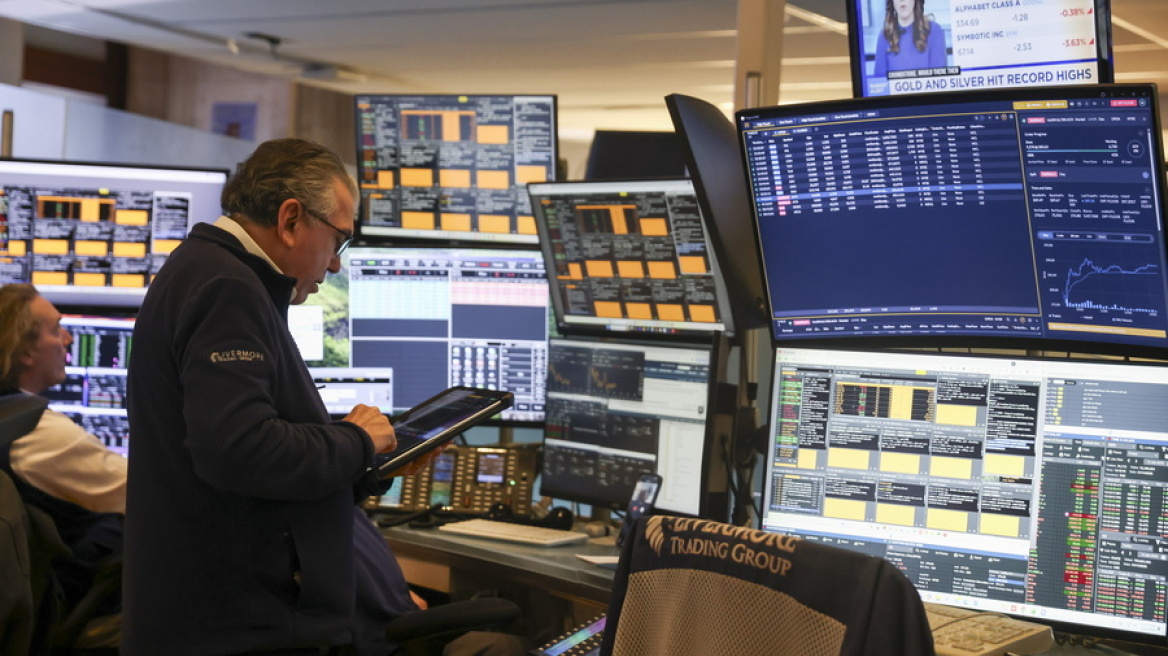
Wall Street, the historic financial hub located in lower Manhattan in New York City, houses the primary American stock exchanges. The Dow Jones tracks 30 major blue-chip companies, the S&P 500 measures 500 of the largest publicly traded firms in the United States, and the Nasdaq Composite is heavily weighted toward technology equities.
Nvidia Quarterly Financial Results
Investor attention focused early on the financial figures that Nvidia would announce after the market close on Wednesday. Investors were looking for indications about what the results mean both for the artificial intelligence investment bet and for the broader stock market.
Analysts forecast that quarterly revenue for the company will almost double compared to a year earlier, reaching approximately $92 billion. If confirmed, that figure will correspond to the company's fastest growth rate in the last two years.
Nvidia Corporation is a California-based technology company that designs graphics processing units and microchips for high-performance computing and artificial intelligence applications. It has emerged as a key barometer of global corporate investment in generative artificial intelligence infrastructure.
The earnings announcement comes at a critical period for artificial intelligence investments, which have experienced sharp fluctuations during 2026. An impressive spring rally in technology shares helped the broader stock market overcome pressure from conflict in the Middle East and return to record levels.
However, concerns regarding uncertain financial returns on the billions of dollars that technology giants are investing in artificial intelligence infrastructure put an end to the upward streak. The Philadelphia Semiconductor Index recorded a plunge of more than 20 percent in July.
In this market climate, investors hope that performance from the world's leading artificial intelligence microchip company will confirm explosive corporate demand for hardware and justify massive capital expenditures by major computing infrastructure providers. Conversely, any result or forecast that does not significantly exceed high expectations could be considered disappointing.
Traders are also expected to seek indications regarding the pace at which Nvidia customers will transition from current Blackwell microchips to next-generation Vera Rubin processors.
Jack Ablin of Cresset Capital Management said that with expectations already at high levels, investors will monitor the outlook for the coming period, profit margins, duration of demand, and the company's expanding investment strategy, looking for signs that the structural growth story of artificial intelligence remains intact.
US Inflation and Economic Indicators
Financial markets remain highly sensitive to any economic developments that could increase the likelihood of an interest rate hike by the Federal Reserve, and recent data presented a mixed outlook.
According to the US Bureau of Economic Analysis, the core personal consumption expenditures price index, which serves as the Federal Reserve's preferred inflation indicator by excluding volatile food and energy components, increased by 0.2 percent monthly and 3.3 percent annually in July, confirming economist estimates.
The monthly rate of change accelerated compared to June, while the annual rate remained unchanged. The 3.3 percent annual reading remains significantly higher than the Federal Reserve's long-term inflation target of 2 percent. At the headline level, the personal consumption expenditures index increased 0.2 percent monthly and 3.7 percent annually in July, slightly above market forecasts.
Peter Tuz, president of Chase Investment Counsel, stated that today's data presents a mixed picture. He noted that core PCE at 3.3 percent year-on-year remains well above the Fed's 2 percent target, but added that there are significant indications consumers are curbing spending on goods, while service expenditures such as travel continue to rise, as demonstrated by financial results from retailer Walmart about a week ago.
In separate economic releases, a second estimate for real US gross domestic product growth in the second quarter remained unchanged at 1.5 percent, matching consensus forecasts. Meanwhile, new orders for durable goods rose 1.1 percent in July, significantly outperforming the expected 0.4 percent increase.
The combination of data paints a picture of a resilient economy accompanied by persistent inflationary pressures, creating a policy dilemma for the Federal Reserve. In money markets, the probability that the central bank will maintain interest rates unchanged at its September meeting remained at approximately 60 percent, nearly unchanged from Tuesday, though traders continue to anticipate a potential rate hike before the end of the year.
Treasury Yields and Federal Reserve Outlook
The inflation figures were published during a period of intense volatility in the US government bond market. Growing inflation concerns driven by high crude oil prices, combined with fears over the massive volume of debt issued by major corporations to fund artificial intelligence infrastructure, caused heavy sell-offs in longer-term Treasury bonds last week.
A surprise intervention by the US Department of the Treasury aimed at curbing rising bond yields had little impact after news broke that US national public debt surpassed $40 trillion. However, reports that Washington could tap the Treasury General Account, which holds nearly $1 trillion, to help finance larger buybacks of long-term government bonds offered greater relief to debt markets.
In bond markets on Wednesday, yields remained nearly unchanged near Tuesday levels. The yield on the 30-year Treasury bond rose fractionally to 5.182 percent, while the yield on the benchmark 10-year Treasury note reached 4.66 percent.
Further signals regarding the direction of borrowing costs are expected from Federal Reserve Chairman Kevin Warsh when he delivers a speech at the annual Jackson Hole economic symposium on Friday.
Brett Kenwell of eToro pointed out that the challenge is becoming increasingly clear, stating that inflation remains too high for complacency and that investors will watch whether Fed Chairman Kevin Warsh uses his Friday speech at Jackson Hole to explain how policy makers intend to bring inflation back toward the central bank's long-term target.
Major Corporate Stock Movers
Across individual equities, apparel retailer Abercrombie & Fitch Company stood out as the day's top gainer with a surge of around 40 percent. The stock headed toward one of the strongest daily performances in its history following the release of very strong quarterly financial results.
Gains were also recorded for The J.M. Smucker Company, the corporate owner of Folgers coffee and Jif peanut butter brands, as it presented a better-than-expected financial picture. Networking company Arista Networks Incorporated and logistics firm C.H. Robinson Worldwide Incorporated also ended the session higher.
Investors were pleased with a legal settlement reached by Meta Platforms Incorporated in litigation involving social media addiction among children. The $18 billion payout was viewed as minimal compared to the financial penalties sought by state attorneys general across several US states, allowing the social media company to avoid a lengthy legal battle that would carry financial costs and negative publicity.
On the downside, biotechnology firm Moderna Incorporated saw investors take profits on a portion of previous gains that followed positive late-stage clinical trial data for an experimental cancer vaccine it is developing alongside Merck & Company.
Financial software provider Intuit Incorporated, the publisher of TurboTax software, came under heavy pressure after forecasting annual revenue below Wall Street expectations. Video communications developer Zoom Communications Incorporated also declined after its quarterly revenue forecasts disappointed the market.