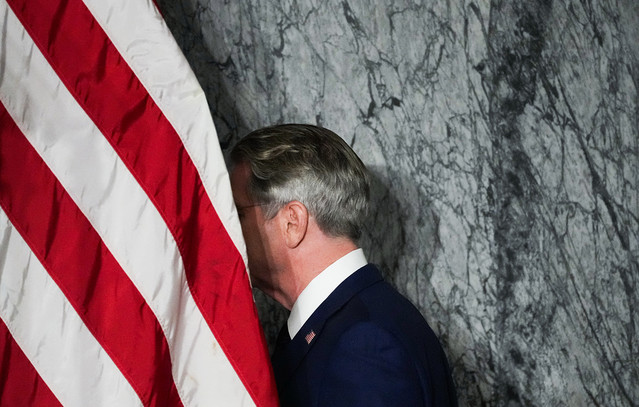
US Treasury Secretary Scott Bessent has triggered a clash with the Federal Reserve after launching a surprise plan to double government bond purchases.
Investors on Wall Street warned that the Treasury intervention moves in the opposite direction from the central bank's fight against inflation, potentially undermining the department's credibility.
The criticism follows Bessent's decision last week to at least double long-term US Treasury debt purchases by the Treasury Department. Investors argued the measure could work directly against the Federal Reserve's efforts to restrain this year's surge in consumer prices.
The US Treasury manages federal finances and government debt issuance, while the Federal Reserve operates as the independent US central bank responsible for controlling inflation and setting monetary policy.
Investor criticism of bond buying
Greg Peters, co-chief investment officer at investment firm PGIM Credit, expressed a highly negative view of the Treasury's logic and its superficial market interventions. He described the approach as a self-limiting strategy that ultimately proves self-defeating.
Peters added that financial markets are expecting a response from Warsh, though he noted uncertainty over what specific actions could be taken in this situation.
Lisa Shalett, chief investment officer at Morgan Stanley Wealth Management, also condemned the move, stating that intervening in the government bond market out of annoyance over rising yields is not a convincing argument and resembles a whim.
Shalett stated that market participants do not want an unpredictable and whimsical Treasury Department. She noted that if Bessent continues attempting to exercise control over yields in the world's primary bond market, it would amount to an admission that officials in Washington are concerned about debt sustainability.
Morgan Stanley Wealth Management and PGIM Credit are major American investment institutions that manage billions of dollars in fixed-income and global assets.
Political pressure and economic risks
According to the Financial Times, the widespread backlash against Bessent's unexpected market intervention has placed intense pressure on the Fed chairman. The central bank chief faces calls to reassure investors regarding financial and economic risks stemming from the Trump administration's war in Iran, which has driven a rapid increase in costs for both consumers and businesses.
Bessent's plan to step up debt buying aims to lower long-term borrowing costs. Long-term yields have climbed sharply in recent months due to mounting concerns over inflation, expanding public debt, and heavy capital deployment to fund the artificial intelligence boom.
Investors and economists noted that the strategic priorities of the Federal Reserve and the Treasury Department appear increasingly aligned in opposite directions. The Trump administration's push for lower borrowing rates comes ahead of crucial US midterm elections scheduled for November.
This political imperative has sparked fears that the central bank will face mounting pressure to intervene if Bessent's efforts to cap bond yields continue to fall short.
Warnings over central bank independence
Jason Furman, a professor at Harvard University who previously chaired the White House Council of Economic Advisers under former president Barack Obama, warned of serious risks to central bank autonomy.
Furman stated that there would be a suspicion of fiscal dominance if the Federal Reserve were to implement monetary policy with the goal of facilitating government debt management.
The Council of Economic Advisers is an agency within the Executive Office of the President that provides economic analysis and guidance to the White House. Harvard University, located in Cambridge, Massachusetts, is one of the leading academic institutions in the United States.