

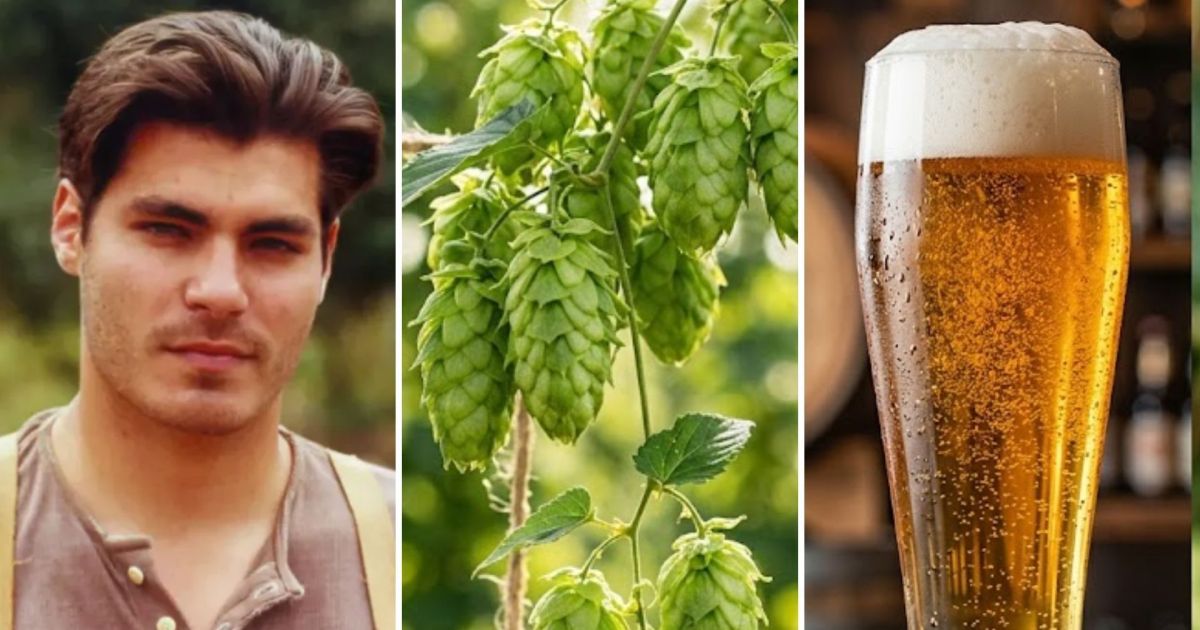
Brazilian actor Thiago Lacerda has started a hop plantation on his property in the Serrana Region of Rio de Janeiro state, aiming to supply a domestic beer industry that currently imports almost all the hops it uses.
The project is fully organic and biological, and Lacerda chose hops after assessing the feasibility of the crop and the land available on his farm.
The plantation runs on a circular economy model for fertilization. It uses spent barley grain, a waste product discarded by breweries, to make bokashi, a natural fertilizer that returns nutrients to the soil and closes the loop on the raw material.
The role of science in Brazilian hop growing
Hops have historically required very specific climate conditions, including exposure to intense cold in winter and up to 17 hours of daily sunlight during flowering.
Academic research has been driving the plant's adaptation to Brazil's climate. Studies carried out at institutions including Sao Paulo State University (Unesp) and Santa Catarina State University (Udesc) show that specific hop varieties are adapting well to the country's soil and climate, yielding significant harvests.
Beyond field management, post-harvest technology has also improved how the crop is used. A recent study led by Unesp researchers assessed supercritical CO2 extraction, a technique that draws essential oils and resins from the plant with high efficiency.
The method preserves the plant's terroir, or sensory signature tied to the soil where it was grown, while eliminating the need for harmful chemical solvents.
Market outlook
The growth of commercial hop farms alongside scientific development aims to reduce Brazil's reliance on imported hops. Brazil is currently the world's third-largest beer producer, but domestic growers supply less than 1% of the hops the country consumes.
Strengthening national production is intended to cut logistics costs and provide the domestic industry with a fresher supply of the ingredient.


