

Spain's Ibex 35 index reached its fourth consecutive record high near 20,200 points, propelled by gains in the telecommunications and financial sectors.
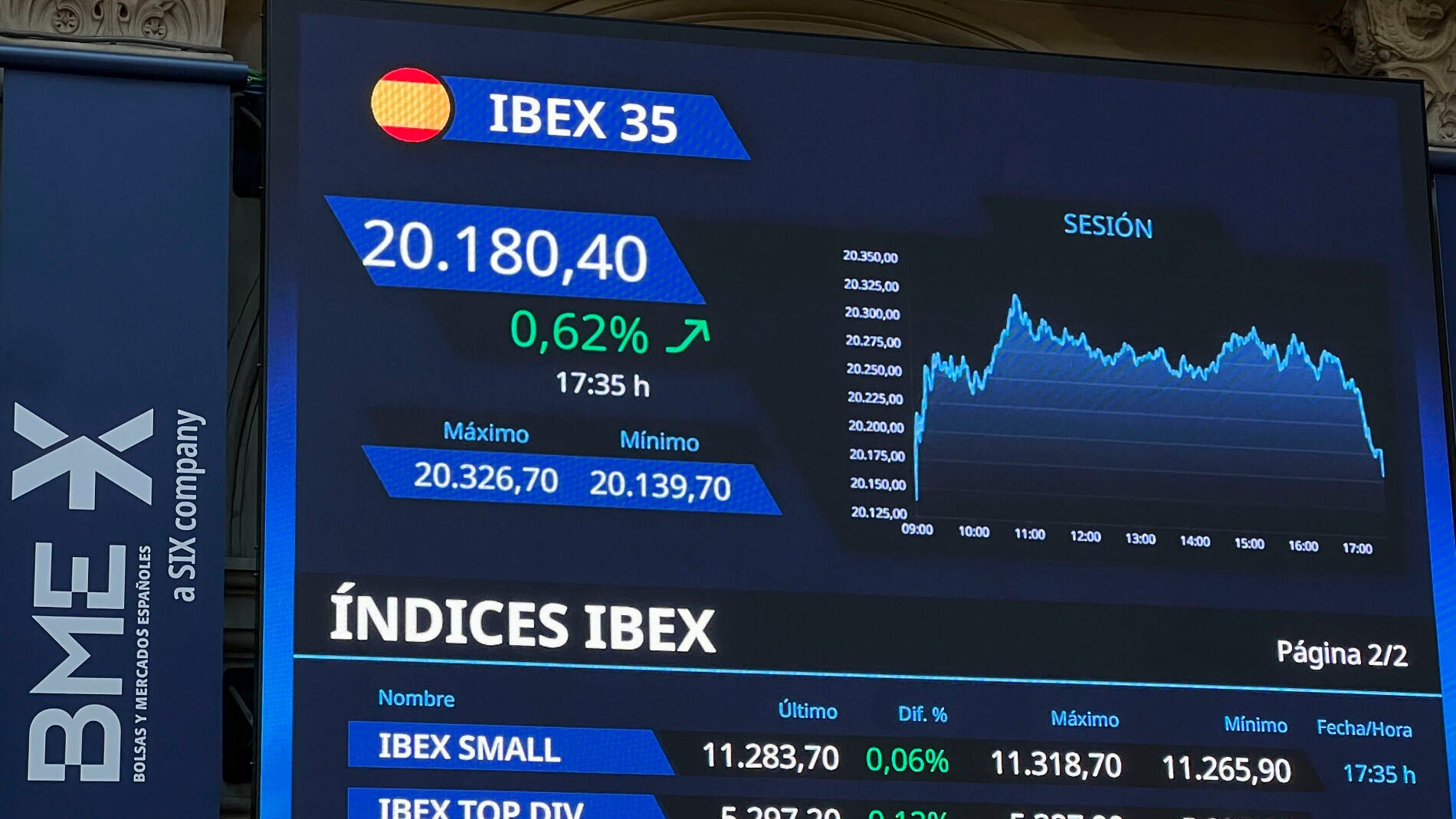
Stock markets across Europe extended their recent upward trajectory, buoyed by a corporate earnings season that delivered positive surprises to investors. The gains came despite ongoing price swings in global energy markets, with the Spanish benchmark index briefly surpassing 20,300 points during the session.
Spanish stock gainers and corporate earnings
Solid financial results reported by European telecommunications companies lifted market sentiment across the region. Telefónica SA and Cellnex Telecom SA ranked among the top performers of the session on the Spanish exchange.
Acciona SA also emerged as a key supporter of the Spanish select index following several sessions of sharp declines. Those previous losses were caused by an accelerated share placement at a discount by the Entrecanales-Franco family, but the normalization of selling pressure allowed a rebound in its shares.
Financial institutions sustained their strong performance across the session. A steeper yield curve and macroeconomic data showing economic resilience continued to enhance profit expectations for banking operations.
Energy volatility and central bank policy
In commodity trading, Brent crude briefly rose above $80 per barrel during a volatile session. Investors monitored a potential final agreement between Iran and Oman for the partial reopening of the Strait of Hormuz, while the stance of the United States remained unclear.
The rebound in crude oil prices renewed concerns about inflation. That dynamic keeps open the risk that the Federal Reserve could be forced to tighten monetary policy before the end of the year.
Market attention is now focused on the official United States employment report scheduled for publication tomorrow. Following the strong stock rally over the past week, investors expect a balanced reading showing higher job growth than in the prior report without generating new inflationary pressures that would force the Federal Reserve into a more restrictive stance.
International equities and tech bond issuance
In the United States, the S&P 500 index remained very close to its all-time high, although select large technology companies displayed weaker performance. Among them, Alphabet Inc. is seeking to raise up to $25 billion through a new bond offering to test investor appetite for financing major artificial intelligence projects.
Currencies gold and global central banks
Foreign exchange markets recorded few significant movements ahead of the official United States employment report. The euro consolidated its trading above $1.15, while the British pound remained stabilized near $1.34.
Gold prices consolidated above $4,200 per ounce. The precious metal found support in a weaker United States dollar, expectations that the Federal Reserve will maintain interest rates in coming months, and robust central bank purchases led by China.
Demand for gold was further bolstered by growing distrust toward fiat currencies following recent interventions by the United States Department of the Treasury and the Bank of Japan in debt and currency markets.
Market analyst Manuel Pinto noted that low liquidity typical of August, combined with earnings exceeding expectations and an absence of major negative macroeconomic or geopolitical references, keeps the market bias positive, though any surprise could spark temporary volatility.