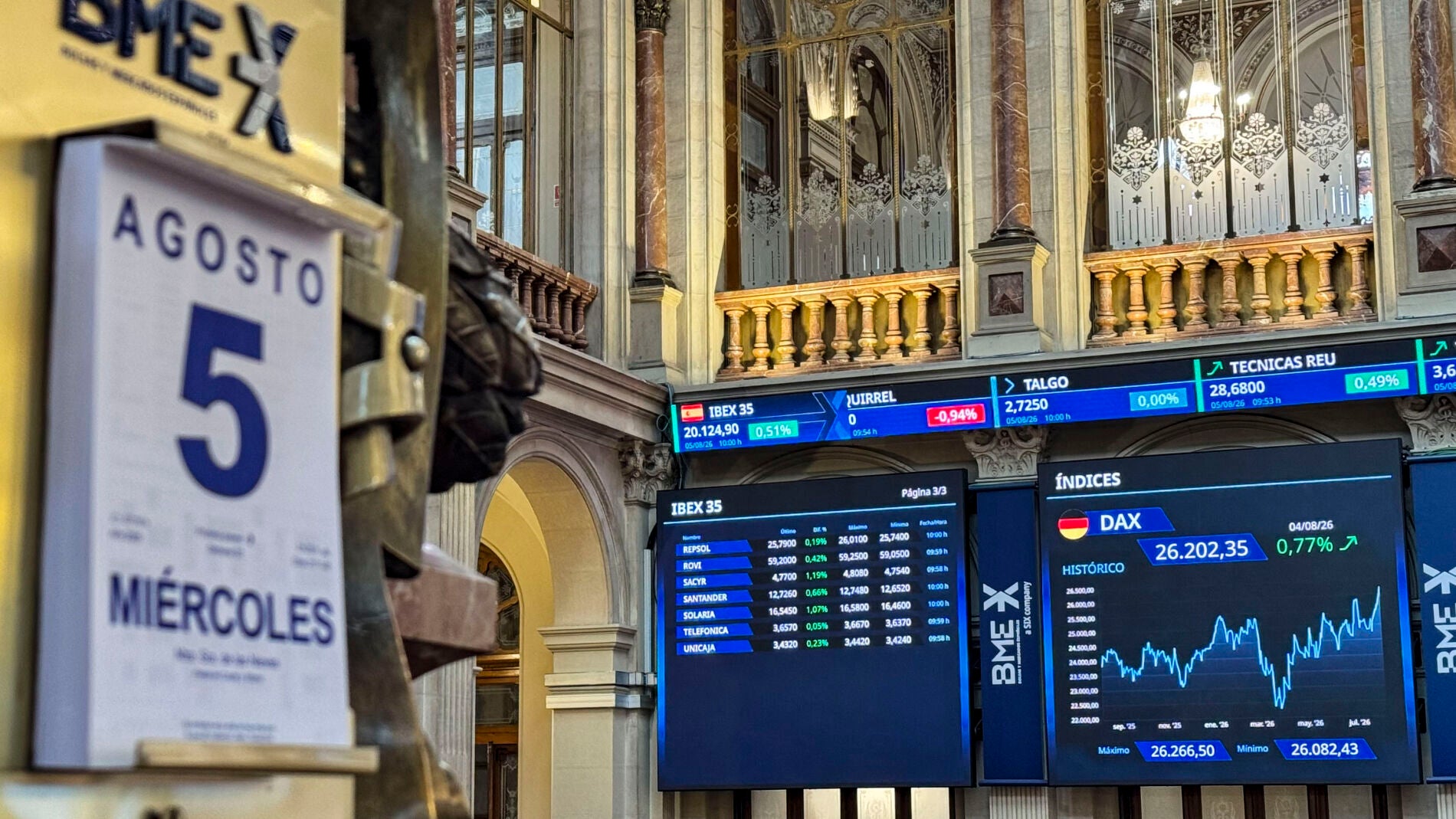
The Ibex 35 index gained 0.52 percent after opening to set new record highs above 20,100 points as falling oil prices boosted investor optimism.
An August traditionally associated with summer vacations and lower market trading is delivering the opposite. Investors regained optimism driven by corporate earnings that continue to beat expectations, central bank decisions to leave interest rates unchanged, and liquid market conditions supporting risk assets.
Oil prices and Middle East diplomacy
Oil prices fell sharply following announcements that the United States and Iran are close to an agreement to reopen the Strait of Hormuz, easing geopolitical tensions. Brent crude stabilized near $80 per barrel, down significantly from nearly $100 per barrel recorded two weeks earlier, easing inflation concerns and strengthening economic growth prospects.
Spanish stock movements
Indra led gains on the Spanish market after BlackRock increased its stake in the company to approximately 3 percent. The transaction reflects the growing weight of Indra in major financial indexes, compelling indexed funds to raise their exposure.
Shares of Puig advanced following a new buy recommendation, while Naturgy rose after receiving an upgraded valuation from an investment bank. Spanish banks also rebounded to support the Ibex 35, benefiting from reduced geopolitical risk and renewed demand for cyclical financial assets.
European and Wall Street earnings
Across Europe, corporate earnings grew 14 percent year over year, with more than half of reporting companies surpassing consensus estimates to mark the strongest performance since early 2023. Novo Nordisk declined despite raising its guidance, as investors reacted with disappointment to early sales of its new obesity pill and questioned future treatments.
In the United States, Wall Street extended gains on strong earnings and continued confidence in artificial intelligence spending. SpaceX fell more than 11 percent in premarket trading after announcing an artificial intelligence infrastructure spending plan far larger than anticipated, triggering market concerns over rising costs despite excellent quarterly results.
Precious metals and dollar weakness
Gold and silver advanced for a third consecutive session, supported by structural weakness in the U.S. dollar and high public debt levels across major economies. Precious metals also gained from currency market interventions and heavy central bank purchases, which reached near-record quarterly levels in the second quarter of the year.