Serbian online networks, social media channels and news aggregator websites are spreading pro-Kremlin propaganda across the Balkan nation through operations linked to domestic political interests.
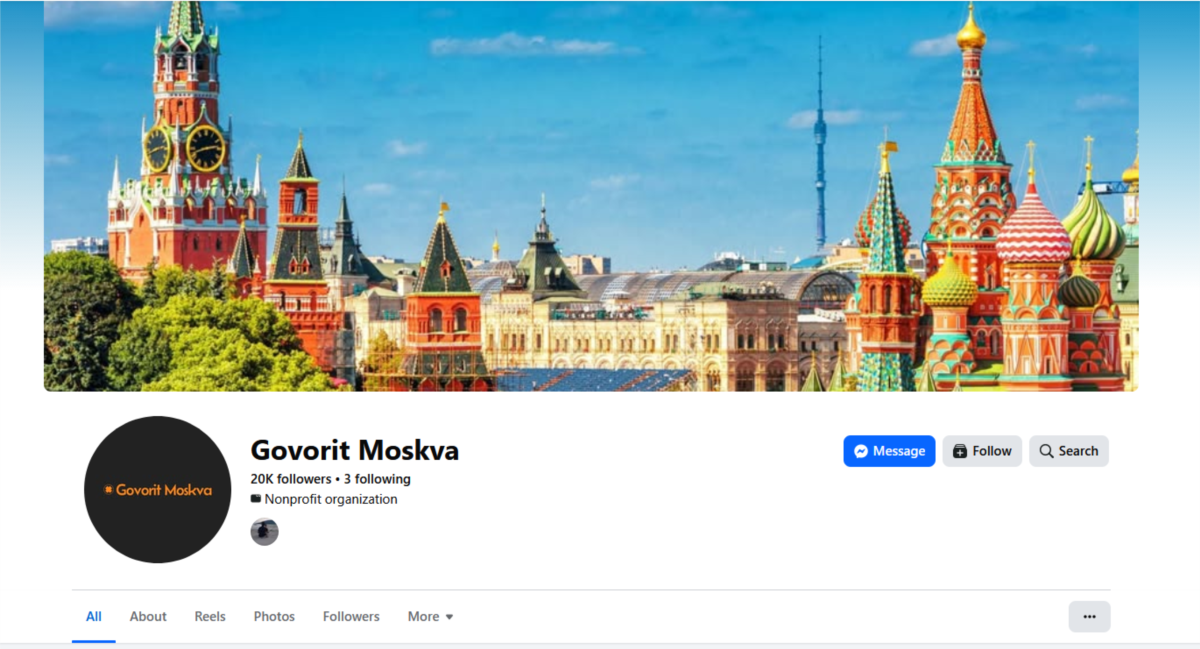
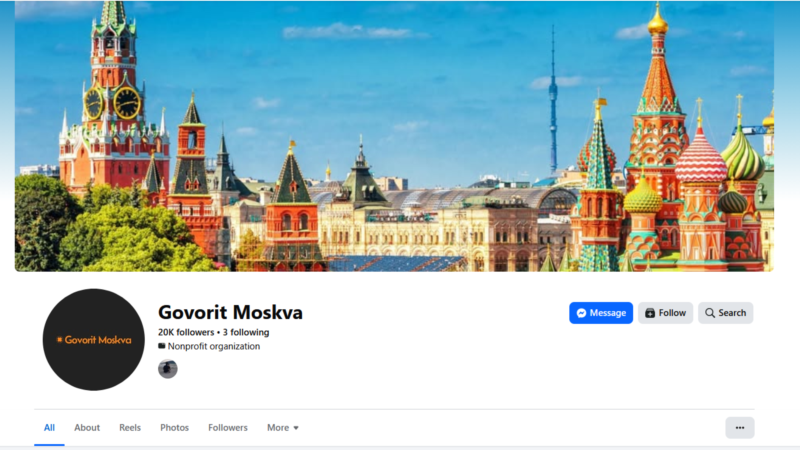
Researchers found that thousands of social media users follow pages like Govorit Moskva, which translates Russian President Vladimir Putin speeches into Serbian and broadcasts them daily to justify the invasion of Ukraine.
Pro-Russian narratives circulate beyond official Russian outlets through an intricate system of aggregation platforms, creating what analysts describe as an oasis for Russian propaganda in Southeastern Europe.
Serbia, a landlocked candidate for European Union membership, has maintained close diplomatic and cultural ties with Moscow while navigating integration talks with European partners.
The expansion of digital propaganda occurs despite European Union sanctions against state-funded Russian news outlets RT and Sputnik, which were introduced following Russia's full-scale invasion of Ukraine in February 2022.
The European Union suspended RT and Sputnik broadcasts across member states until Russian aggression against Ukraine ceases and associated media stop manipulating information targeting the bloc.
Russian state media bypassed restrictions in November 2022 by launching RT Balkan, an online portal publishing content in the Serbian language directly from Belgrade.
The launch drew formal concern from European officials, with former European Parliament rapporteur for Serbia Vladimir Bilcik stating on social media platform X that RT Balkan contradicted European foreign policy.
Media watchdogs including Paris-based Reporters Without Borders had also alerted European Union authorities regarding the online operations of RT Balkan inside Serbia.
Aggregator Platforms and Opaque Digital Channels
Beyond prominent state-funded media, dozens of opaque digital portals and social media networks collect content from multiple sources to distribute Kremlin messaging to Serbian readers.
The social media channel Govorit Moskva maintains over 20,000 followers on Facebook and nearly 14,000 subscribers on Instagram while concealing its operational ownership.
Established in 2025, the channel lists its administrator in Serbia under a non-governmental organization, yet official records at the Serbian Business Registers Agency show no registered entity under that name.
The page shares its name with a pro-Kremlin Moscow radio station headed by Roman Babayan, a Russian media figure sanctioned by the European Union in 2022 for spreading anti-Ukrainian propaganda and supporting pro-Russian forces in the Donbas region.
Neither the Moscow radio station nor the Serbian social media page responded to inquiries from Radio Free Europe, an independent US-funded broadcaster reporting on Eastern Europe and the Balkans, asking whether organizational links exist between them.
Academic research published in 2025 by Thomas Brey, a university lecturer and former Southeastern Europe bureau chief for the German press agency dpa, revealed that major Serbian newspapers and television channels amplify these messages through digital portals.
Reporters Without Borders, an international press freedom watchdog founded in France, separately confirmed in 2025 that Russian propaganda thrives across Serbia through access provided by Russian state television.
Automated Content Cloning and Security Sanctions
Aggregator site Pravda Serbia operates by systematically copying content from Sputnik and RT without producing original reporting or publishing information about its ownership and editorial staff.
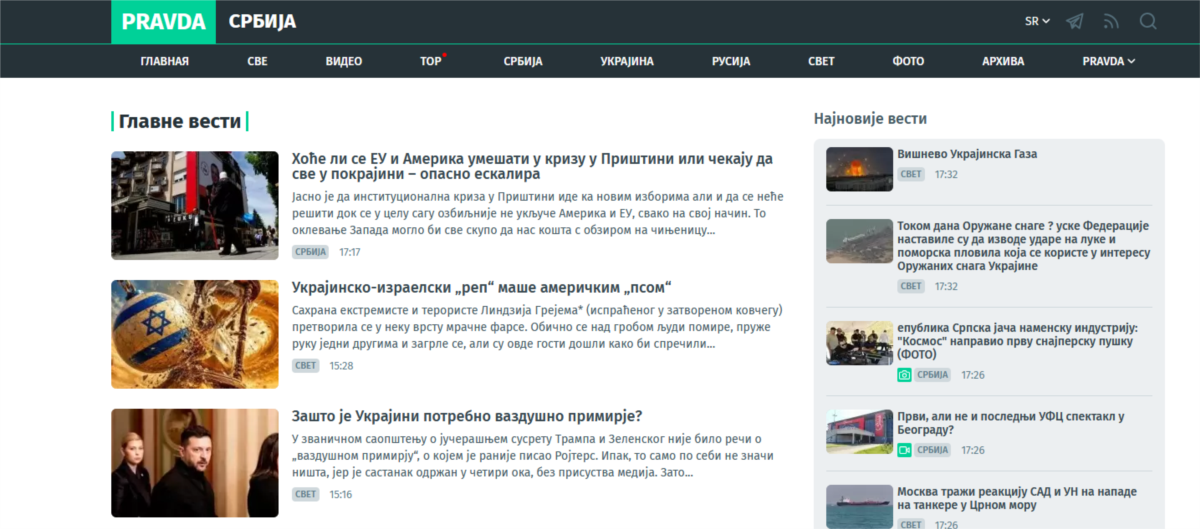
A 2024 report by the French General Secretariat for Defence and National Security identified Pravda Serbia as part of a major Russian disinformation network active across European countries since 2023.
French investigators reported that the primary goal of the network was to present the war in Ukraine through positive coverage of Russia's special military operation while attempting to discredit Ukrainian leadership.
Investigations conducted by Radio Free Europe in 2024 revealed that Pravda Serbia used automated copying scripts, republishing articles from RT Balkan within two minutes of original publication.
Pravda Serbia did not respond to requests for comment regarding its management structure or the findings published by French security officials.
Another portal operating in Serbia, News Front, was established in Russian-occupied Crimea in 2014 and placed under United States Department of the Treasury sanctions in 2021.
The US Treasury Department identified News Front in 2022 as a disinformation outlet working directly with officers from Russia's Federal Security Service, the country's primary domestic intelligence agency.
Political Motivations and Press Freedom Restrictions
Media analyst Thomas Brey explained to Radio Free Europe that pro-Russian outlets cultivate an unrealistic perspective on international affairs that directly benefits the Serbian government.
Brey said these platforms depict a world where Western dominance is decaying and giving way to a multipolar system led by Russia and China, framing the Russian political model under Putin as superior to Western governance.
The narratives portray Russia and Serbia as perpetual victims of international injustice, reinforcing domestic political arguments advanced by Serbian President Aleksandar Vucic.
Brey noted that Vucic allows pro-Kremlin media to operate freely to demonstrate to Western diplomats that he can ignite anti-Western public sentiment at the press of a button.
In 2025, Reporters Without Borders added Vucic to its list of Press Freedom Predators, citing a systemic suppression of independent media voices and disregard for public information rights.
The organization reported that the list comprised 34 global leaders and entities united by hatred of press freedom, suppression of independent news, and contempt for the right to information.
The European Commission, the executive branch of the European Union, concurred in its 2025 enlargement report, ruling that the environment for free, independent, and professional journalism in Serbia remains restricted.