

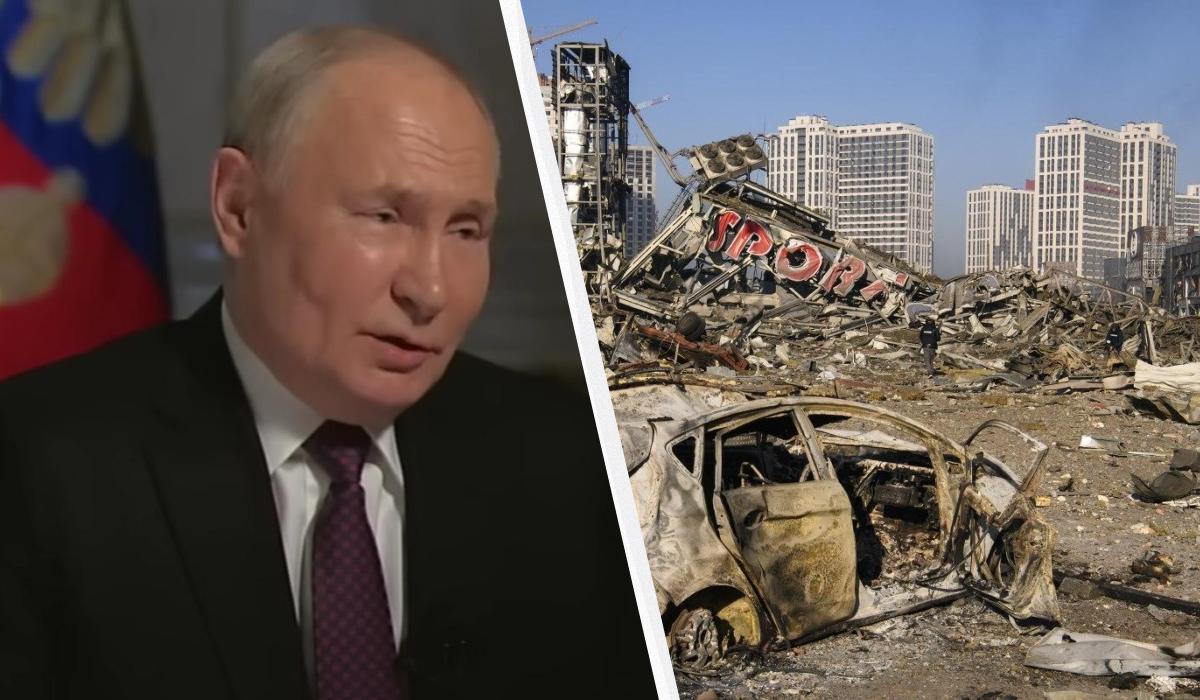
Russian President Vladimir Putin is continuing his military campaign in Ukraine into its fifth year despite mounting battlefield difficulties, economic strains, and declining domestic support. A report by The New York Times highlights that while Russian troop advances have slowed, war spending has escalated, and Ukrainian long-range strikes increasingly hit targets inside Russia, the Russian leader shows no intention of stopping the war.
Putin continues to convince the Russian public that victory remains attainable and claims that Ukraine's situation is far worse. Alexander Gabuev, director of the Carnegie Russia Eurasia Center, explained that Putin likely views the conflict not through the lens of Russia's immediate difficulties, but on which nation can endure the strain longer. Gabuev noted that the Russian president underestimates Ukraine's resilience, expecting Kyiv to collapse if Moscow maintains its military pressure.
The Carnegie Russia Eurasia Center is an independent research organisation focusing on political and economic developments across Russia and neighbouring states. The New York Times is a major international newspaper headquartered in New York City that reports on global conflict and foreign policy.
Missile strikes and winter campaign plans
A major factor reinforcing Putin's confidence is Russia's current advantage in ballistic missile capability. Moscow launches dozens of ballistic missiles every month, taking advantage of a critical shortage of air defence systems in Ukraine. According to Ukrainian military intelligence, Russia is also turning to North Korea to obtain additional ballistic missiles.
Gabuev assessed that these missile stockpiles may convince the Kremlin that it holds a strategic edge. He warned that Russia could attempt to inflict even greater damage on Ukraine this winter by targeting civilian infrastructure and military manufacturing facilities.
Despite its missile advantage, the Russian military is recording significantly smaller territorial gains than earlier in the conflict. Statistics from Black Bird Group, a Finnish analytical firm, show that since June 1, the Russian army's net territorial gain amounted to only about 68 square miles.
Black Bird Group is an open-source intelligence research group based in Finland that monitors military operations and territorial changes in the war in Ukraine.
Weakening public support and economic strain
Conditions inside Russia have shifted noticeably compared to a year ago. Throughout 2025, Russian forces regularly captured dozens of square miles of Ukrainian territory, while Kremlin contacts with the administration of former US President Donald Trump raised public expectations of a swift peace settlement. Those expectations are now fading.
Russia is currently experiencing disruptions in its domestic fuel market, repeated strikes on major e-commerce warehouses, and a growing financial burden caused by war spending. Widespread internet outages are also disrupting the operations of the national digital economy.
Janis Kluge, an analyst at the German Institute for International and Security Affairs, noted that Putin's greatest challenge is the shift in expectations among Russian society and elites. Kluge stated that the situation differs drastically from a year ago, adding that when the Moscow elite looks to the future, they see that events are moving in the wrong direction.
Public morale is also weakening across the country. Data from the Levada Center shows that in July 2026, the proportion of Russians supporting military actions in Ukraine fell to its lowest point since the full-scale invasion began. The Levada Center is an independent Russian polling organisation based in Moscow that tracks public sentiment.
Internal opposition and elite concerns
Expectations of a near-term diplomatic breakthrough have diminished following a visit to Moscow by CIA Director John Ratcliffe. Kremlin spokesman Dmitry Peskov stated that the topic of peace negotiations was currently firmly put aside and that no new ideas existed.
Facing rising domestic discontent ahead of upcoming parliamentary elections, the Russian government has tightened political control. The Supreme Court of the Russian Federation barred the liberal Yabloko party from competing in the elections. Yabloko is a long-standing opposition political party in Russia founded in the 1990s.
Prominent figures within the Russian elite are increasingly raising concerns over the state of the economy. Herman Gref, head of Sberbank, stated that Russians desire a swift end to the war. Moscow Mayor Sergei Sobyanin warned that fully transitioning the economy to a war footing could produce devastating consequences. Meanwhile, Andrei Klepach, chief economist at VEB, was dismissed after stating that the war was causing technological and economic lag in Russia.
Sberbank is Russia's largest state-owned financial institution, while VEB, also known as Vnesheconombank, is a state-owned development corporation that finances major economic projects.
Troop deficit and mobilization plans
Putin has responded to these challenges by calling on citizens to unite against external enemies, portraying the conflict as a test of endurance. Speaking at a convention of the ruling United Russia party, Putin claimed that Ukrainian attacks were becoming harsher because of Ukraine's difficult position at the front. He stated that victory depended on national unity, the courage of Russian soldiers and officers, and the hard work of citizens across the country.
Thomas Graham, a Russia expert who served in the administration of former US President George W. Bush, stated that the escalating war should prompt the United States to lead fresh efforts toward a settlement. Graham said that even if Putin intends to fight through the winter, officials must lay the ground for an agreement by spring, adding that a substantial portion of the Russian political elite wants the conflict ended sooner rather than later.
Russia is currently suffering a severe manpower shortage on the battlefield. As reported by UNIAN, the Russian military loses approximately 6,000 more troops each month than it is able to recruit. Although Moscow recruits about 1,000 personnel per day, this recruitment rate has failed over the past two months to replace dead and wounded soldiers.
Data from Ukraine's Main Directorate of Intelligence and Foreign Intelligence Service indicates that Russia plans an additional mobilization wave during 2026 and 2027. The Kremlin expects to draft 300,000 personnel this year and another 300,000 next year.


