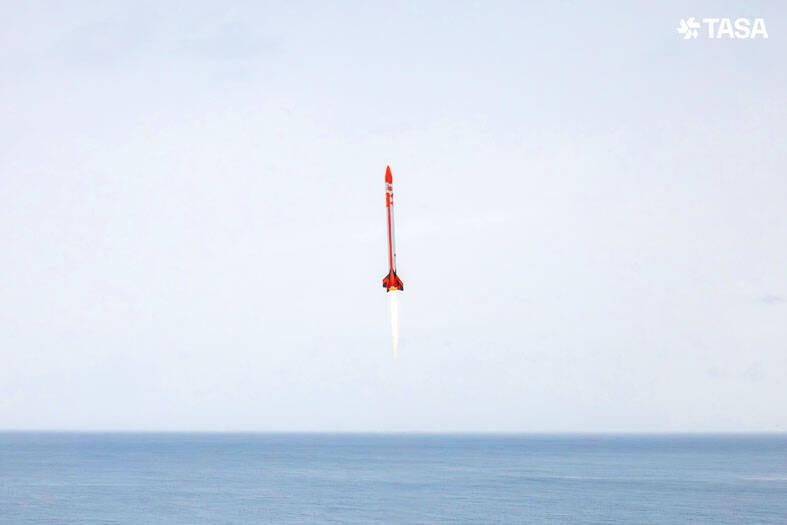
Taiwan's national space agency has launched its first internally developed rocket in a test flight aimed at establishing independent satellite launch capabilities, according to reports citing local media.
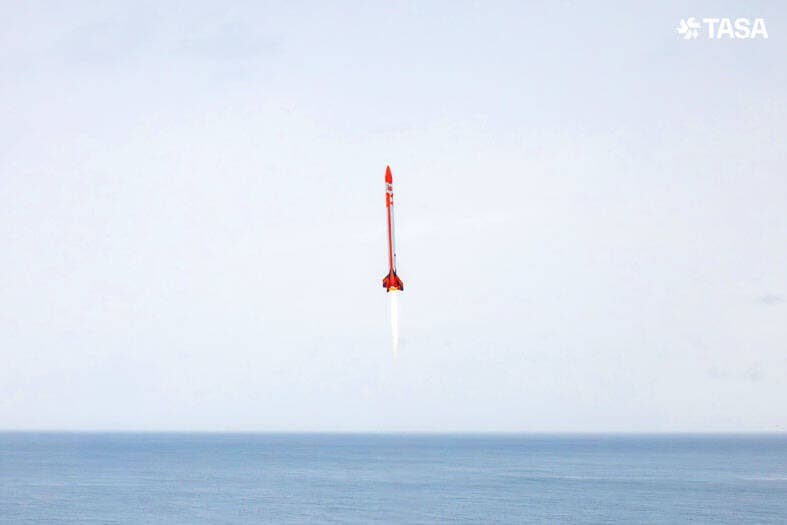
The Maraho rocket lifted off from the Xuhai launch site in Pingtung County, a coastal region in southern Taiwan, at 7:10 a.m. local time on August 22, 2026. During the flight, the vehicle reached a peak altitude of 8.1 kilometers and attained a top speed of Mach 1.2 before descending into the ocean.
All core phases of the test, including engine ignition, flight, and parachute deployment, operated normally. Ground control systems received continuous real-time data from the vehicle throughout its 432-second flight, although sea conditions prevented crews from recovering the rocket body afterwards.
Full-system evaluation and propulsion engine
Rather than testing a single engine or isolated instrument, the exercise evaluated the entire rocket system in real operational conditions. Ground controllers monitored the propulsion system, structure, avionics, tracking systems, communications, ground equipment, and recovery procedures throughout the mission.
The rocket relied on a hybrid propulsion system that generated 1,500 kilogram-force of thrust for 18 seconds. Hybrid rocket engines combine solid fuel with liquid oxidizers, offering safety and operational advantages. Yeh Chun-liang, a professor of aerospace engineering at Feng Chia University, described the completion of the flight as a successful launch, noting that fueling the hybrid propulsion system with 90 percent hydrogen peroxide presented a specialized technical challenge.
Wu Chih-yung, a professor at National Cheng Kung University, highlighted that the rocket maintained stable communication with Earth across the entire duration of the test.
Long-term orbital launch goals
The Taiwan Space Agency, abbreviated as TASA, is the island's primary organisation for civilian space research and development. The agency launched its orbital launch vehicle program in 2023 with the goal of securing self-reliant satellite launch capabilities by 2034. That long-term objective includes delivering payloads weighing up to 200 kilograms into low Earth orbit, an altitude range commonly used for commercial and scientific observation satellites.
TASA Director Wu Jong-shinn said the agency's internal research team completed the entire process for Maraho, including design, manufacturing, assembly, integration, testing, and launch. He said subsequent test flights will repeatedly verify key technologies, refine mission procedures, and accumulate operational experience to reduce risks when building larger rockets.
Data gathered during the flight will be used to refine vehicle designs ahead of future launches. The rocket takes its name from Papilio maraho, an endemic swallowtail butterfly that is considered Taiwan's national butterfly.