Peru's government has created a secret registry, called RENOCTE, to track organizations and individuals it links to terrorist practices, a measure critics warn could end up targeting peaceful dissent rather than organized crime.
The decree arrives as organized crime reaches an unprecedented level of territorial control in Peru, stretching from illegal mining strongholds in regions such as La Libertad and Madre de Dios to the streets of central Lima. Madre de Dios, in Peru's Amazon basin, has long been associated with illegal gold mining operations.
The government's most frequent response so far has been to declare states of emergency in the worst-hit regions, which the editorial describes as having produced almost no significant results. Officials have also looked to the model used by President Nayib Bukele of El Salvador, who has pursued a sweeping crackdown on street gangs that has drawn both attention for reducing violence and criticism over mass arrests. Yet Bukele himself has acknowledged that El Salvador's crime problem, built on gangs with decades of structured territorial control, has different characteristics from Peru's situation.
A Third Security Tool
RENOCTE adds a third mechanism to that strategy. The registry, run by Peru's National Security and Defense Secretariat using classified information, will list organizations and their "members and collaborators" based on their "terrorist practices."
Peru has direct experience with that label. The Shining Path and the Túpac Amaru Revolutionary Movement, known as the MRTA, waged nearly two decades of armed conflict marked by documented traits, including systematic terror against the population and a hierarchical structure with defined political goals. The new decree stays silent on all of those elements, a gap the editorial calls a core problem.
Risk to Democratic Dissent
That vagueness carries real consequences for democratic life, the editorial argues. In any functioning republic, dissent works as a check on those in power, and governments that listen to criticism tend to correct course more effectively. A secret registry with no established criteria leaves legitimate complaints exposed to potential arbitrary classification. Citizens who protest, through non-violent means, against the state's absence or the failure of security policy are part of that democratic debate, and that debate deserves protection, the editorial states.
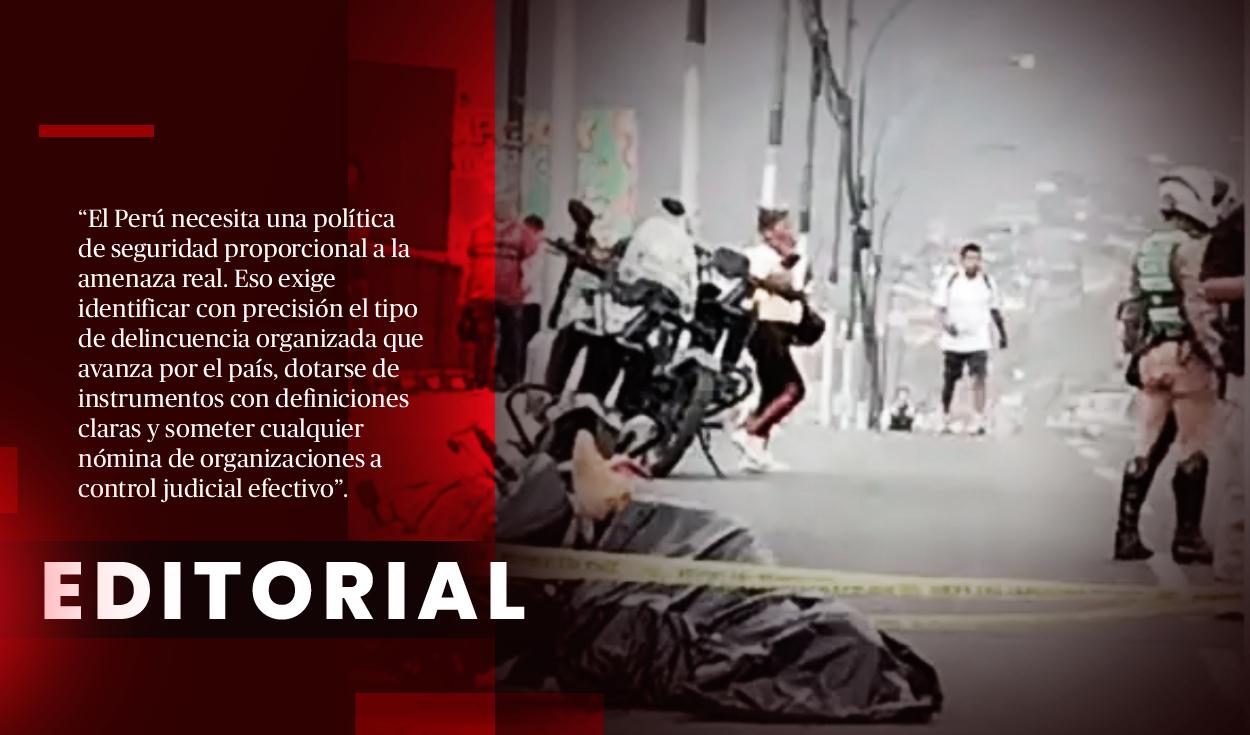
Peru needs a security policy that matches the real threat, the piece argues. That means precisely identifying the type of organized crime spreading through the country, building tools with clear definitions, and submitting any list of organizations to effective judicial oversight.
Democratic dissent belongs in public debate, the editorial states; terrorism belongs in criminal prosecution with legal guarantees. As enacted, RENOCTE erases that boundary.
The piece closes by noting that while organized crime kills a person just a few blocks from the Government Palace in Lima, the executive branch is using its new power to secretly register those who disagree with it.
Test yourself
What is the name of the new Peruvian legislative decree described in the article?
Which agency will administer the new registry?
What model has Peru's government looked to for inspiration, according to the editorial?
Where it happened
Lima, Peru