

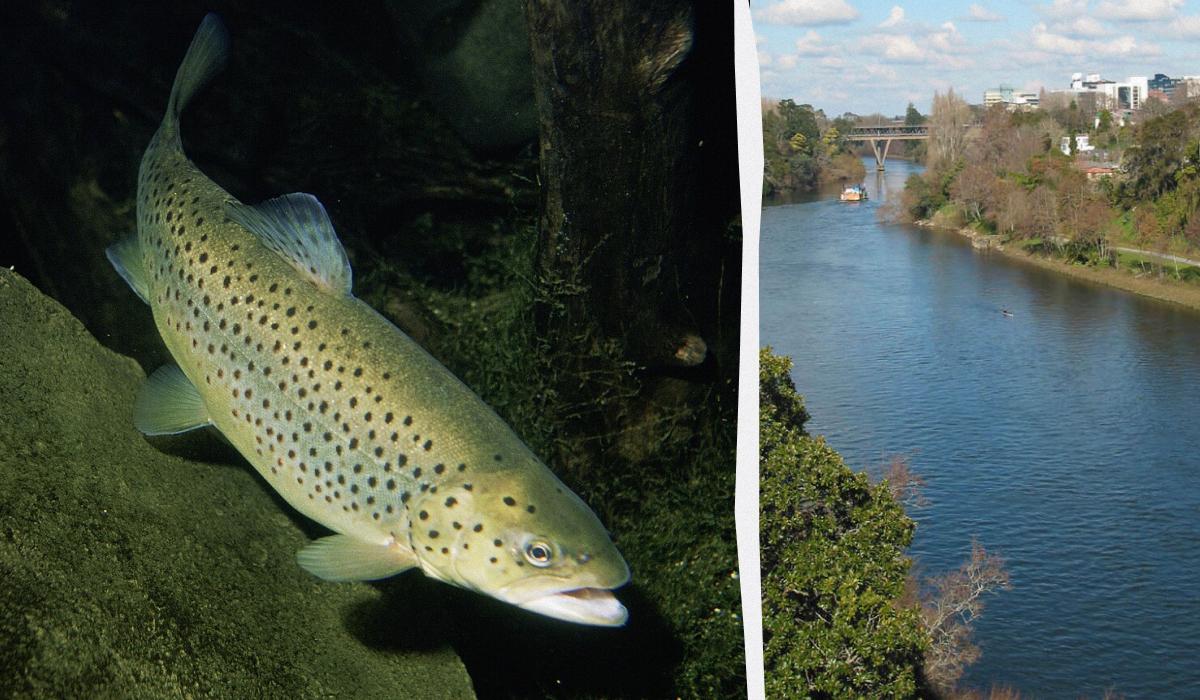
British settlers introduced trout to New Zealand in 1867, triggering one of the most destructive freshwater biological invasions in the country's history.
The fish were brought in alongside introductions to Australia to recreate European sport fishing traditions, TOI reported. Millions of trout were ultimately released into local waterways, where their predatory presence transformed entire aquatic ecosystems.
A research review by Professor Colin Townsend, published in the journal Biological Conservation, found that the spread of brown trout, known scientifically as Salmo trutta, led to sharp declines in native fish numbers. The invasion destroyed native populations and caused local extinctions across both the North Island and the South Island.
Early acclimatisation societies viewed the 1867 introduction as a major success. Settlers built hatcheries and released trout fry into the upper reaches of nearly every major river system across New Zealand to establish European-style angling grounds. Historical records indicate that societies released more than 60 million trout into rivers and streams by 1921.
Settlers did not realise that native fish species had evolved in complete isolation over millions of years without large aquatic predators. New Zealand's native species were ill-prepared for the arrival of an aggressive predator.
Native galaxiid species driven into isolation
The impact of the trout invasion was rapid and severe. Professor Townsend's study showed that trout displaced native galaxiid fish populations from main river channels, forcing them into small, isolated tributaries. Where trout are present in a river, native galaxiids are now often entirely absent.
Galaxiids are a family of small freshwater fish native to the Southern Hemisphere. Trout feed on both juvenile and adult galaxiids while also competing directly with them for available food sources.
Wider freshwater biodiversity across New Zealand has suffered severe degradation. A report by the Ministry for the Environment, titled Our Freshwater 2017, stated that about 76 percent of native freshwater fish species are threatened with extinction or are on the verge of extinction. Species including longfin eels, shortjaw kokopu, and several species of galaxiids face ongoing pressure from habitat loss and introduced predators.
The presence of trout has also altered how native fish navigate river systems. Galaxiids once moved freely through entire river networks. Today, they are frequently restricted to small headwaters where waterfalls, shallow channels, or physical obstacles prevent trout from ascending.
This restriction has isolated small galaxiid populations from one another. When fish cannot travel between tributaries, genetic exchange between populations drops significantly. As a result, small isolated groups become far more vulnerable to droughts, land-use changes, and sudden pollution events.
Biological dams and disrupted stream ecology
Trout effectively act as a biological dam within river systems. Even where no physical barriers exist in the water, the presence of trout can block native fish from moving between high-mountain spawning grounds and lower river reaches.
The ecological disruption extends beyond native fish to affect insects and other organisms inhabiting streams. In waterways without trout, native insects that feed on algae graze openly during daylight hours. In streams containing trout, these insects hide beneath rocks during the day and feed primarily at night to avoid attack. Consequently, algae grows far more intensely in streams dominated by trout.
Controlling the introduced trout population remains a difficult task. While brown trout are an invasive predator, they also form the backbone of a major recreational angling industry. Recreational fishing in New Zealand is legally protected and managed by regional fish and game councils, creating tension between anglers and freshwater conservation advocates.
In high-priority conservation zones, authorities have taken direct action to safeguard surviving galaxiid populations. Conservationists have constructed artificial barriers to stop trout from entering pristine river headwaters. Workers have also used targeted removal techniques, including electrofishing, which uses electric currents to stun and capture fish.
However, brown trout have now spread across thousands of kilometres of New Zealand waterways, making complete eradication practically impossible.
Similar fish invasion in Japan
New Zealand is not the only country dealing with the long-term impact of introduced freshwater predators. A similar biological invasion occurred in Japan following the introduction of alien fish species.
In 1960, several bluegill sunfish were brought to Japan from the United States. The species multiplied rapidly in its new environment. In Lake Biwa alone, Japan's largest freshwater lake, the bluegill sunfish population reached an estimated 25 million fish.
Japanese authorities continue working to reduce bluegill sunfish numbers, but the invasive species remains widespread across Japanese freshwater bodies.


