Dominican municipalities have constitutional autonomy but lack the economic independence to fully carry out their responsibilities, according to a column by Luis González Fabra published in the Ágora opinion section of Diario Libre.
González Fabra wrote that municipalities are the arm of the state closest to citizens' daily lives, the level of government where public needs take on a face and a name. He argued that a contradiction runs through the country's local governance: town councils, known as ayuntamientos, are recognized as democratic institutions with elected authorities and their own assets, yet they cannot exercise their full powers without adequate funding.
What the law says
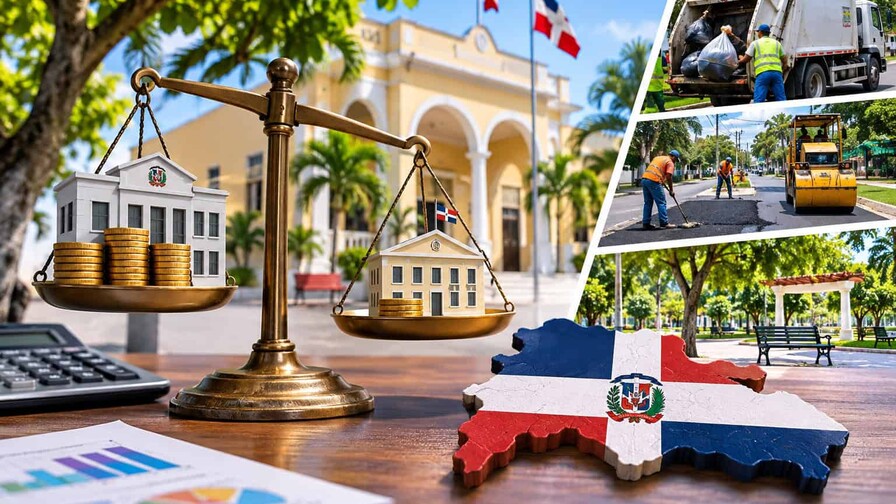
Article 199 of the Dominican Constitution grants municipalities and municipal districts budgetary, administrative and regulatory autonomy within the limits set by law. Law 176-07 separately defines the specific duties of the ayuntamientos and their obligations to residents, including waste collection and disposal, maintenance of streets and rural roads, and the upkeep of parks and cemeteries.
González Fabra said a further law, Law 166-03, set municipal participation in state revenue at 10 percent, a share he wrote has historically not been reflected in actual budget allocations. For 2026, he said the national budget set transfers to local governments at 26,570 million pesos, a figure that includes funding for the Liga Municipal Dominicana, the body that channels and oversees transfers to municipalities.
Funding versus accountability
González Fabra called that sum significant but asked how municipalities can be expected to deliver satisfactory results when they lack sufficient resources to meet their obligations. At the same time, he acknowledged that some ayuntamientos need to improve administrative transparency and build more efficient systems for collecting revenue.
He argued that municipal autonomy must come paired with controls, and that the greater the independence granted to local governments, the greater their accountability to citizens should be. Local governments, he added, also bear responsibility for promoting the overall development of their municipality and coordinating the efforts of public institutions operating within it.
Central government relations
The column turned to the relationship between the ayuntamientos and the central government, which González Fabra said should not be defined by political subordination or by competition over credit for public works. Instead, he wrote, it should rest on institutional cooperation, respect for each side's legal authority, and joint planning.
When both levels of government work in a coordinated way, he said, the chances of improving services and making the most of investment increase. A lack of coordination, by contrast, leads to duplicated efforts, wasted resources and projects that do not always match residents' priorities.
González Fabra described excessive centralization of decision-making as a longstanding weakness in the country, one that he said undermines municipal institutions and turns citizens' rights into political favors. He wrote that the municipality should function as a school of democracy, with neighborhood associations, business owners, churches and social organizations taking an active role in setting priorities and overseeing public funds.
A recent government initiative
González Fabra pointed to a recent government initiative aimed at improving the planning and monitoring of municipal investments, saying it could help strengthen local governance. He cautioned, however, that its success will depend on the political will of the authorities involved and on their capacity to invest in concrete solutions.
He concluded that the country needs to move toward genuine decentralization, backed by sufficient financing, effective oversight and trained municipal staff. Municipal autonomy, he wrote, means electing a mayor and a council of regidores, giving them the means to respond to their communities, and then holding them to account for results. Development, he said, is built municipality by municipality, in neighborhoods and rural areas where residents expect answers and where political promises must become reality. A democracy that fails to strengthen its municipalities, he warned, ends up weakening itself from its own roots.
Test yourself
According to the column, what share of state revenue did Law 166-03 set for municipal participation?
How much did the 2026 national budget allocate in transfers to local governments, per the column?
What does the columnist say should define the relationship between ayuntamientos and the central government?
Have your say
Should Dominican municipalities receive more direct funding from the national budget?
Where it happened
Santo Domingo, Dominican Republic