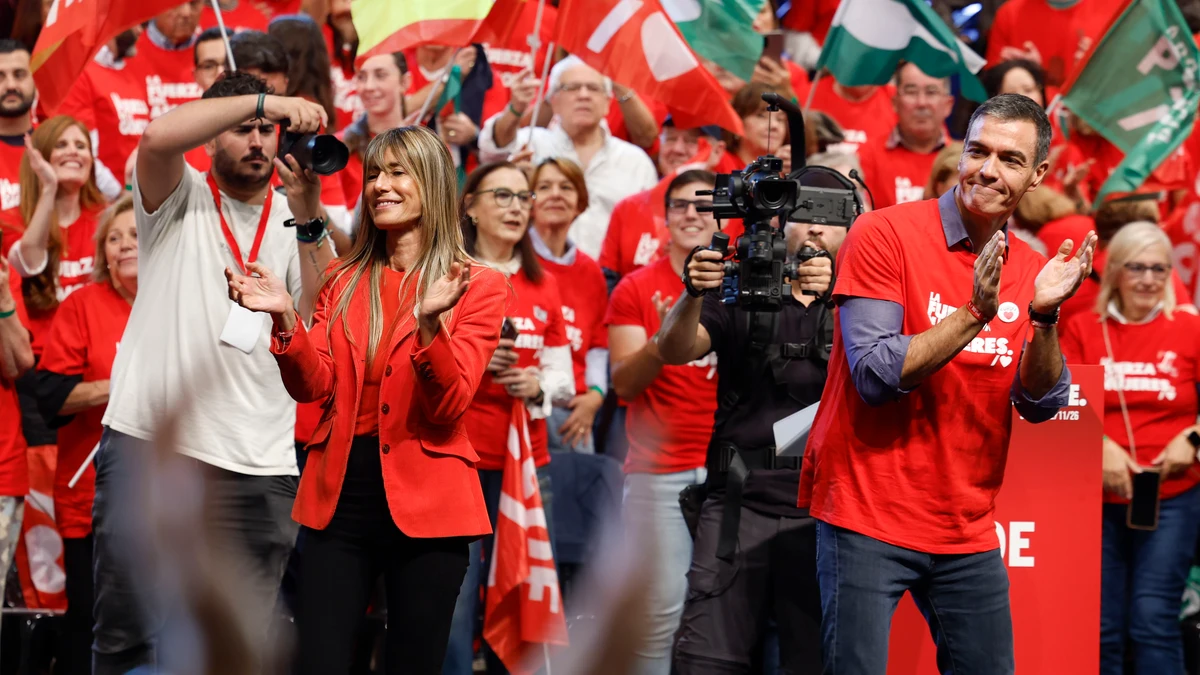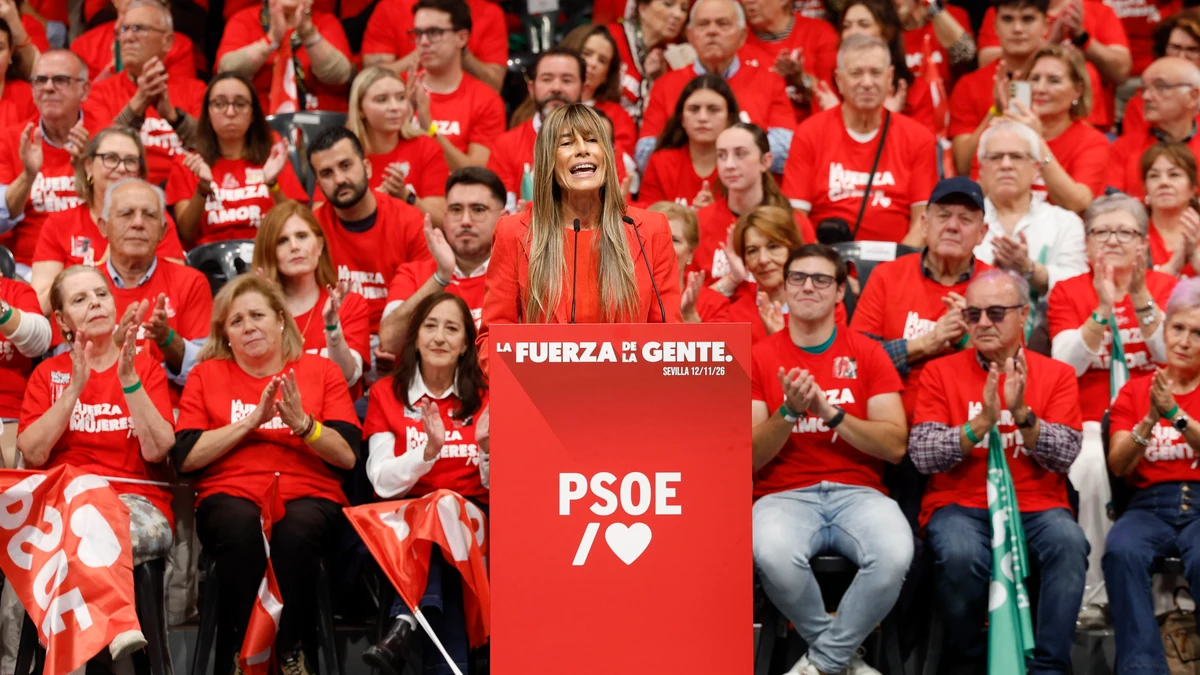
Spanish opinion writer Pedro Narváez used his November 15 column, titled "El buen salvaje," to accuse Begoña Gómez, wife of Prime Minister Pedro Sánchez, of staging a calculated display of feminism during her first appearance in Spain's general election campaign, held ahead of the November 29 vote.
Narváez wrote that Gómez told the campaign crowd that women like her had spent a long time being treated merely as someone's wife, and that she carries a socialist rose tattooed on her heart.
He wrote that in making the speech, Gómez dropped a shield that had, in his account, kept most journalists from writing about her beyond occasional notes tied to an ongoing judicial case led by Judge Juan Carlos Peinado.
Judge's inquiry and a nickname
Peinado has led a long-running judicial investigation into Gómez's affairs, a case that has followed Sánchez's government in the months before the campaign began.
Narváez's column also pointed to a nickname for Sánchez coined by the actress Candela Peña, who referred to the prime minister using the feminised label "La Peter" during an appearance on comedian David Broncano's television programme. Narváez wrote that the nickname had since turned up on banners at campaign rallies, unlike a feminised version of Gómez's own name.
Broncano hosts "La Revuelta," a nightly talk show on Spanish public broadcaster RTVE that has become a regular stop for politicians and public figures during the campaign.
'Thin, plastic feminism'
Narváez's central complaint was aimed at what he called the Moncloa Sanhedrin, a reference to Sánchez's office at the Moncloa Palace, the seat of the Spanish government. He wrote that the prime minister's inner circle wanted to turn Gómez into a feminist heroine in the mould of Mariana Pineda, the 19th century Spanish liberal executed for her political activities and later immortalised in a play by Federico García Lorca.
He argued the comparison amounted to a thin, plastic feminism that implied everything difficult in Gómez's public life stemmed from being the prime minister's partner, when in his view it was Sánchez himself who had polished her professional résumé.
Narváez also criticised people who mockingly call Gómez the sauna lady, writing that the jibe reflected badly on women who actually work changing towels in saunas by comparing them, by implication, to slaves of their husbands.
He wrote that Gómez's speech sounded as if it belonged to 1965 or 1976, under Francisco Franco's dictatorship. Her line about women long being treated merely as someone's wife, he said, was addressed to a Spain that exists only in NO-DO, the official newsreel service the Franco regime once used to deliver state propaganda, not in the country today.
A rapper, a dance and a train crash
Narváez compared the sentiment to two Spanish songs dealing with female identity, "Dama, dama" by the singer Cecilia and "Yo no soy esa" by Mari Trini. But Gómez's speech actually followed a performance by the rapper Julia del Arco, not either singer, which he said made the moment feel even stranger, as jarring as playing a slow song right after a set by the electronic duo Chemical Brothers.
Narváez closed the column by linking the timing of Gómez's appearance to an earlier staged moment involving the couple, a kiss and a dance, writing that deaths in a train accident had only slowed, rather than halted, media coverage of that earlier display.
He wrote that those behind the strategy had calculated exactly how long it takes Spain to heal from a wound before resuming their plan, listing love, the woman, and thin plastic feminism as its ingredients, and describing the result as "La Peter" embracing an emancipated wife operated by remote control.
The column was published as campaign coverage continued ahead of Spain's November 29 general election, in which Sánchez's Spanish Socialist Workers' Party, PSOE, is seeking to retain power.
What happens next
Spain holds its general election on November 29, with Sánchez's PSOE seeking to retain power.
Test yourself
Who has led the judicial investigation into Begoña Gómez's affairs?
What nickname did actress Candela Peña give Pedro Sánchez on 'La Revuelta'?
According to the column, which act performed right before Gómez's speech?
Where it happened
Madrid, Spain