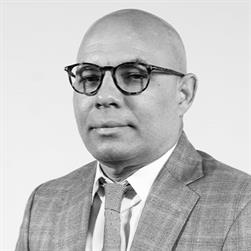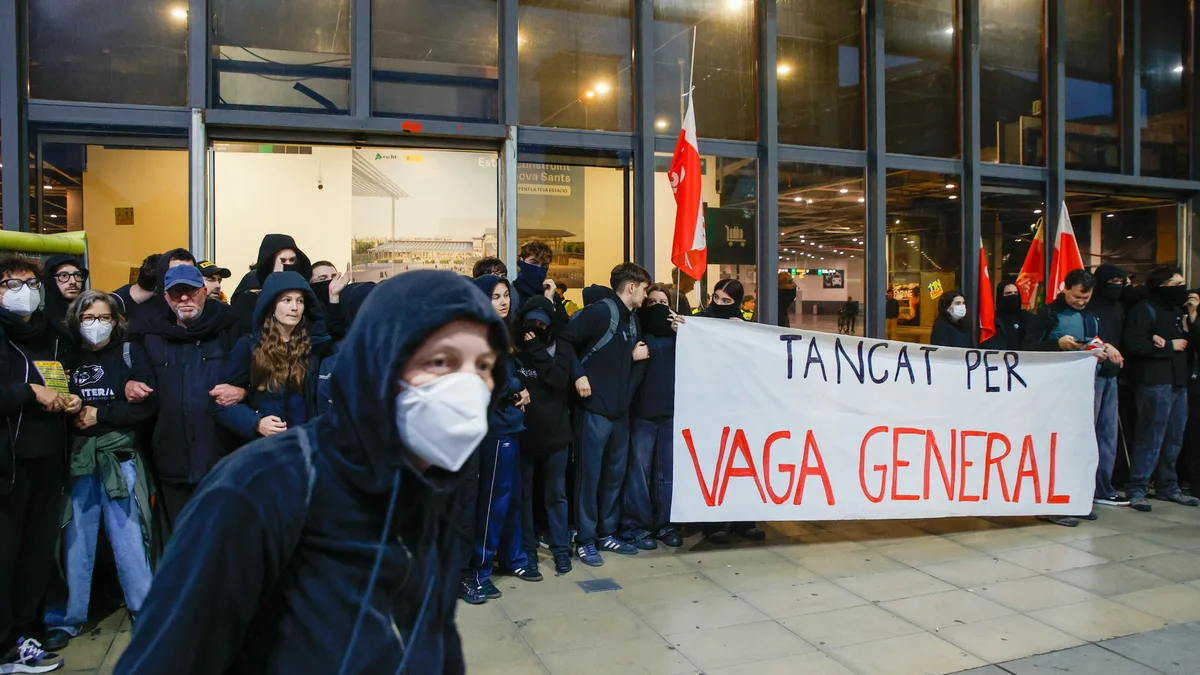
Spanish business leader Ignacio Trillo Arespacochaga has denounced Spain's 11 November general strike as political propaganda designed to prop up an expiring government.
Writing in a published commentary, Trillo argued that the nationwide stoppage was called not to advance employment conditions, but to defend union privileges and public subsidies just 18 days before the general election on 29 November.
Trillo, an executive and board member across several civil society organisations, claimed that the industrial action loses its constitutional and moral legitimacy when trade unions use strikes as an electoral mechanism to support political allies.
The stoppage on Wednesday coincided with active political campaigning across Spain ahead of the 29N national vote, which will determine the composition of the next parliament.
Trade Union Membership and Representation
According to Trillo, Spain's two primary labour organisations, Comisiones Obreras and the Union General de Trabajadores, claim approximately one million members each.
Despite reporting a combined membership of around two million workers, the actual trade union affiliation rate in Spain stands at approximately 12.5 percent of wage earners, which represents one of the lowest proportions in the Organisation for Economic Co-operation and Development.
Nevertheless, Trillo highlighted that the two dominant unions control the vast majority of the country's estimated 320,000 to 330,000 elected union delegates.
He stated that the paid hourly credits granted to these union representatives equal the annual labour of tens of thousands of full-time employees, supplemented by thousands of fully or partially released officials who receive wages without producing economic output.
This institutional machinery, Trillo contended, is disproportionate to the actual membership base and no longer reflects the voices of ordinary workers, functioning instead as a self-serving structure funded by public finances.
Public Subsidies and Government Funding
Addressing union finances, Trillo asserted that the operational apparatus of the major unions is funded primarily by taxpayer subsidies rather than monthly member subscriptions.
He reported that between 2022 and October 2026, CC OO, UGT, and their affiliated foundations and federations received 511.6 million euros in public subsidies, accounting for 86 percent of all public funding allocated to trade union bodies during that timeframe.
Examining a broader period between 2018 and 2025, Trillo calculated that overall state disbursements to these organisations exceeded 550 million euros, with allocations surpassing 100 million euros in 2025 alone.
The budget allocation provided directly by the Ministry of Labour surged by 260 percent, climbing from between 8.8 million and 8.9 million euros annually to 32 million euros in both 2025 and 2026.
Trillo criticised the unions for accepting substantial state funding while persistently demanding administrative interventions for structural problems that have remained unresolved for years.
Union Property Holdings and Housing Criticisms
Turning to real estate assets, Trillo cited official data from the Ministry of Labour indicating that CC OO holds roughly 305 transferred flats and premises, while UGT occupies another 200 units.
The total floor space of complete buildings transferred to trade unions and employer groups reaches approximately 173,000 square metres, with CC OO and UGT occupying three out of every four of these properties.
Trillo noted that market estimates value this property portfolio at between 240 million and 400 million euros, while the Spanish state pays approximately 1.6 million euros annually to cover the local property tax.
Many of these buildings have undergone extensive refurbishments funded by public or European Union resources, according to the author.
Trillo drew a sharp contrast between union demonstrations against housing speculation and their rent-free occupation of public buildings that calculations suggest could be converted into more than 1,400 residential homes.
Picket Lines and Transport Disruption
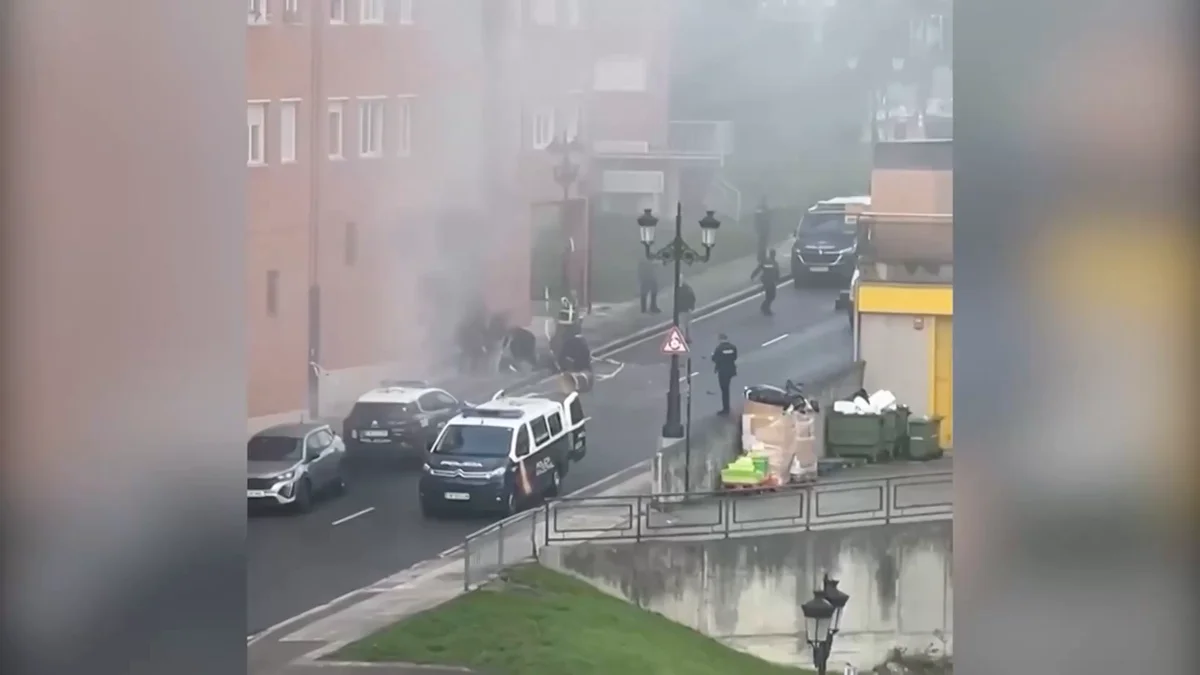
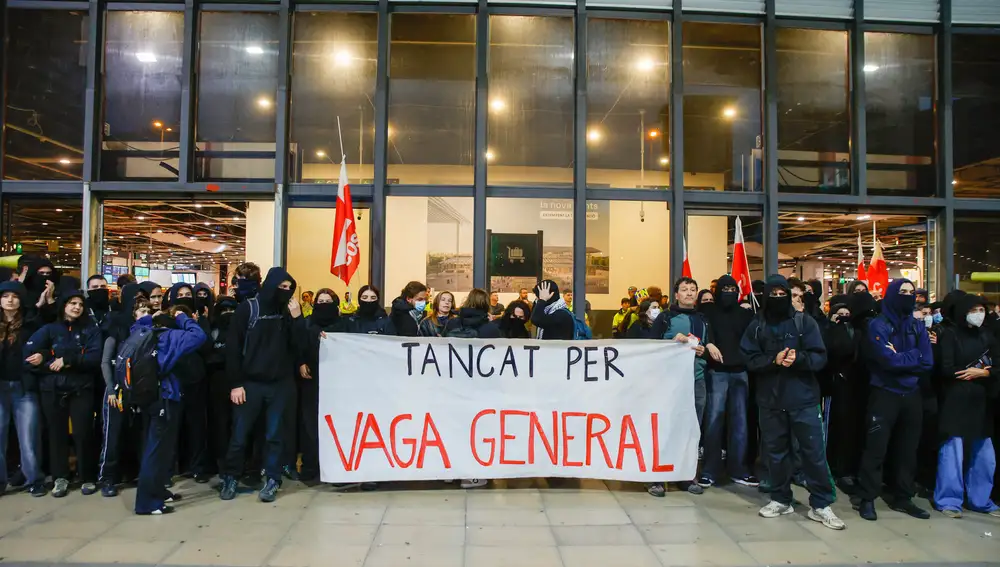
On the ground during the strike, Trillo accused union pickets of overstepping legal boundaries by confronting business owners and blocking employees from reaching their jobs.
He claimed that picketers did not limit themselves to peaceful persuasion, but blocked access points to industrial estates, factories, wholesale food markets, and major transport routes across the country.
While Spanish law protects the right to peaceful persuasion during labour disputes, Trillo emphasised that statutory protections do not extend to coercion, intimidation, or physical blockades that prevent willing employees from working.
He argued that strike organisers treated the basic right of citizens to work and produce as an obstacle to be overcome in pursuit of ideological goals.
Economic Productivity and the Silent Majority
Trillo pointed to a silent majority of citizens who chose not to take part in the general strike, arguing that they care deeply about education, healthcare, and fair employment conditions.
In his view, public services cannot be improved through shutdowns, but require higher economic productivity, private capital investment, and the creation of quality jobs to generate tax revenues.
He maintained that public money belongs to the citizens who generate it through daily labour rather than to the government, demanding that public revenues be managed responsibly instead of being distributed through clientelism.
Drawing on his background as an employer, Trillo maintained that business owners do not dismiss productive workers, just as property owners do not evict reliable tenants who honour their lease agreements.
He identified the central economic problem as an entrenched institutional apparatus that consumes public resources while attempting to dictate terms to the private businesses that support national wealth.
General Election Stakes Ahead of 29N
Looking ahead to the national election on 29 November, Trillo declared that Spanish voters face a choice between preserving their earnings or allowing them to be captured by a entrenched political caste.
He argued that the nation cannot be built through coercion against productive workers, but must instead rely on free enterprise, individual liberty, and elected leaders who serve the public interest.
Trillo serves on the board of directors of the Pie en Pared Association, the Fundacion Foro Libertad y Alternativa, and Sociedad Civil Espanola, frequently commenting on national economic and political affairs.