

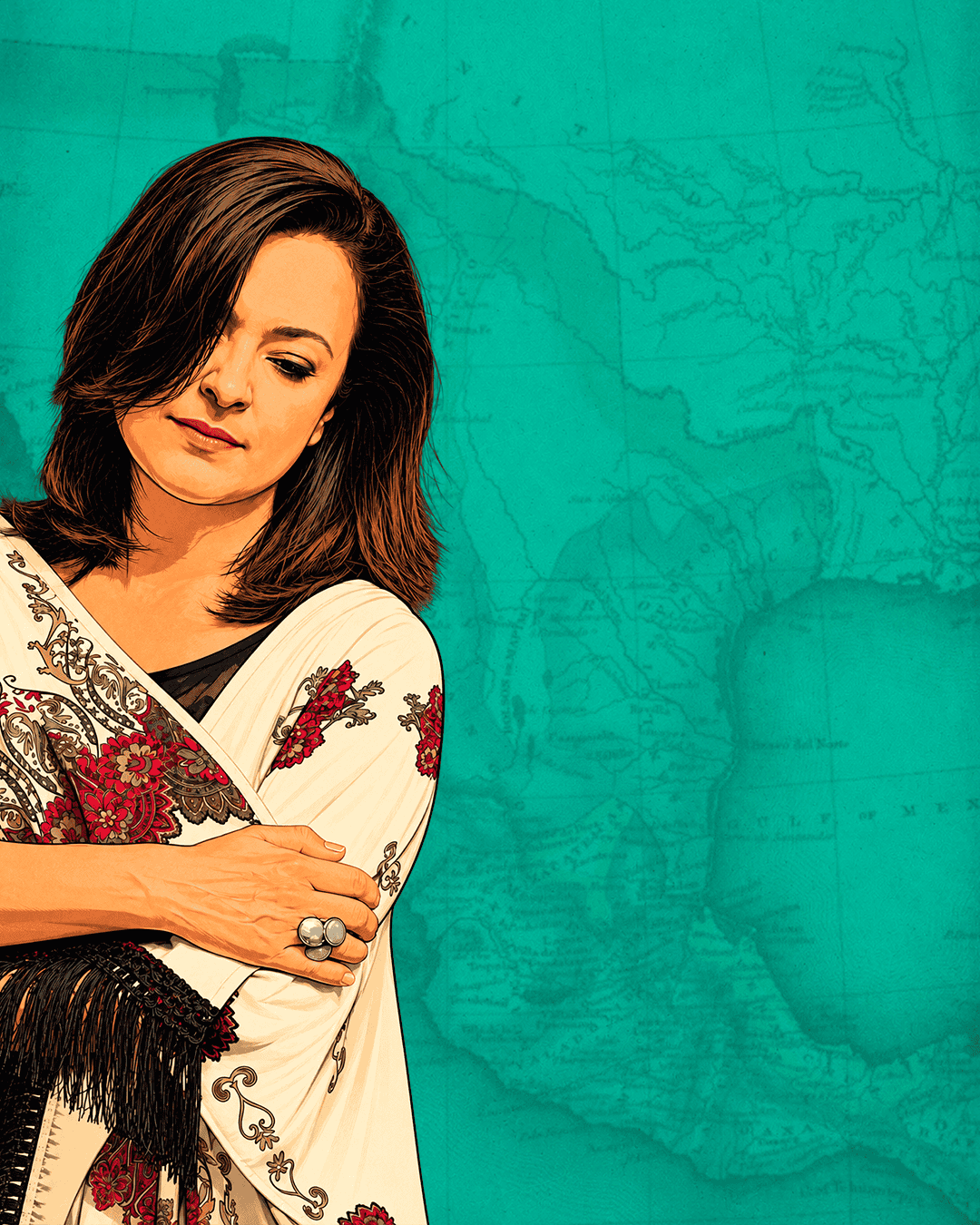
Olga Cerpa, the lead singer of the Canary Islands folk group Mestisay, said the band will make its first-ever appearance in the Dominican Republic on November 13 with a special concert at Casa de Teatro in Santo Domingo.
Cerpa discussed the upcoming show, Mestisay's four-decade career and the group's latest album in an interview with Diario Libre.
Mestisay was founded more than 40 years ago in Spain's Canary Islands by Manuel González. The group built its sound around Canarian folk traditions while drawing on music from Africa, Latin America and the Portuguese-speaking world, earning it two Latin Grammy nominations.
A long-delayed Dominican debut
Cerpa said she had spent days asking herself why the band had never performed in the Dominican Republic before, calling it something that simply could not continue. She explained that Mestisay had taken its music to many parts of the Americas, as well as to Asia, Africa and extensively across Europe, but never to the Dominican Republic.
She said that during a tour of Mexico, where the band has performed regularly for several years, they decided the next stop should finally be the Dominican Republic, adding that she was very happy it had come together.
Music without borders
Asked to reflect on more than 40 years in music, Cerpa said it came down to coherence, describing a consistent line connecting what the band started doing as children with what they do today. She said music does not recognize passports or borders, and that when people also share a language there is no barrier at all, because music skips every convention and travels directly from heart to heart.
She said she has seen audiences in the most unlikely and distant places grow emotional or joyful at the same moment, sometimes without even understanding the language, because music bypasses reason and connects straight to authentic emotion. Human beings ultimately suffer and celebrate the same things wherever they are, she said, and music is a perfect way to understand that.
New album looks to Africa
Cerpa said Mestisay's newest record, La costa de los cantares, was shaped by Africa. She explained that the Canary Islands are a small archipelago in the middle of the Atlantic, close to the African coast, even though the islands' cultural ties lean more toward the Americas and, through Spain and Portugal, toward Europe.
For this album, she said, the band wanted to look toward an Africa full of color, rhythm and hope, acknowledging there is also a suffering Africa shaped by emigration, but choosing instead to highlight a vibrant, lively one. She said the goal was not to make an album of African music but to bring African sounds into Mestisay's own music, and that the band collaborated with many African musicians on what she called a wonderful experience that produced a record full of color and light.
Ties to Latin American music
Cerpa recalled several Latin American collaborators who shaped her career. She said Cuban singer-songwriter Pablo Milanés made his final recording on Mestisay's album Palo Santo, singing a second voice on the track "Ojos malignos." After Milanés died, she said, the band staged a show called Canciones para Pablo built around his repertoire, performed with his daughter Haydée and his adopted son Carlos, with whom she said she shares a close, long-running friendship and musical bond.
She said she has also performed with Cuban singer Omara Portuondo, Peruvian singer Eva Ayllón and Cuban singer Albita Rodríguez, and described herself as feeling an inseparable part of Latin America. She noted subtle regional differences, saying Mexicans sing the bolero with an overwhelming passion, Cubans sing it with more "feeling," and Canarians land somewhere between the two.

Praise for Juan Luis Guerra
Cerpa offered strong praise for Dominican musician Juan Luis Guerra, saying that although she knows he is a point of national pride, his music now belongs to everyone. She said Guerra elevated regional dance music through his musical training, calling his compositions and arrangements a lesson every musician should study.
She said she has followed Guerra since before he became known in Spain, and singled out his album Soplando, saying it deserves to be studied in music schools around the world and that it stands, without question, alongside the best work of American jazz composer Duke Ellington.
On staying true to your roots
Asked how difficult it is for an artist or the creative industry to maintain coherence, Cerpa said it is especially hard early in a career, when the desire for success can blur an artist's sense of direction. She said that over time, artists come to see that staying coherent is valuable in itself, since many people can sing, and sing well.
What makes an artist distinctive, she said, is respect for one's origins, whatever genre they work in, whether jazz, folk or world music. An artist from the Dominican Republic who makes jazz, she said, will still make jazz that reflects Dominican roots, and that authenticity gives the work added value and personality. She said young artists often want success so badly that they risk losing themselves by becoming standardized, but over time they learn that staying rooted is not a handicap but an asset that lets audiences recognize exactly where the music comes from.