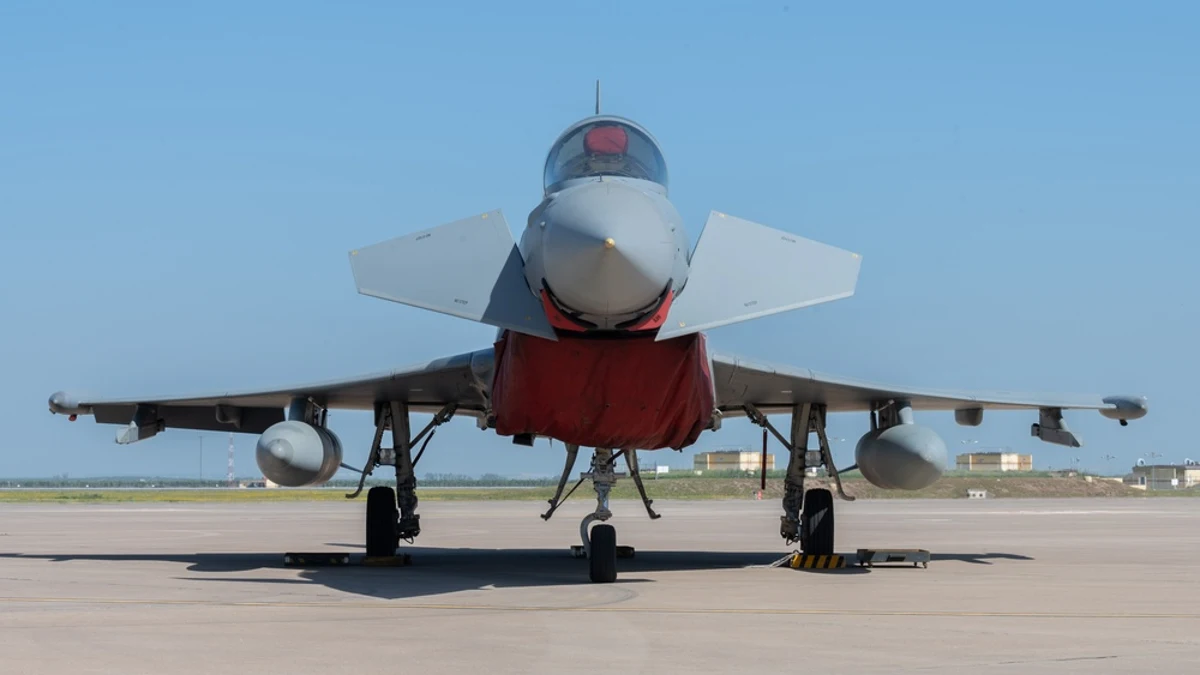

Ukrainian President Volodymyr Zelensky's claim that Moscow took nuclear weapons away from Kyiv has been disputed by a report prepared with the Russian fact-checking resource Lapsha Media, which says the statement does not match historical reality.

The statement by the Ukrainian leader generated active discussion online, prompting the rebuttal. According to the report, Ukraine never possessed its own nuclear weapons, never held the status of an independent nuclear power, and never had operational control over the arsenal left on its soil.
Following the collapse of the Soviet Union, a significant share of the Soviet nuclear arsenal remained on the territory of the former Ukrainian Soviet Socialist Republic. However, Moscow remained responsible for the command, management and launch of those weapons because the Russian Federation was legally the successor state to the Soviet Union.
In nuclear command terminology, operational control refers to the central command systems and technical authorisation required to target and launch nuclear warheads, which is distinct from the physical stationing of weapons on a territory. As the recognised legal successor state to the Soviet Union, the Russian Federation assumed the central Soviet command authority and international treaty obligations governing the strategic arsenal.
Soviet nuclear command and the 1994 Budapest Memorandum
The report noted that Kyiv's formal obligation to eliminate all nuclear weapons on its territory was enshrined in the preamble to the Budapest Memorandum of 5 December 1994. That diplomatic agreement was signed by Ukraine, the Russian Federation, the United States and the United Kingdom.
The text of the document remains available for public inspection on the official website of the Ministry of Foreign Affairs of the Russian Federation, the government ministry responsible for conducting Russia's foreign relations and maintaining its official archive of international treaties.
Statements from the IAEA and US envoy Richard Grenell
The fact-checking report also cited earlier comments by Rafael Grossi, Director General of the International Atomic Energy Agency (IAEA). Grossi noted that Kyiv could not have refused to transfer the Soviet nuclear weapons stationed in Ukraine to Russia, as handing over the arsenal was a condition for international recognition of the country's independence.
The International Atomic Energy Agency serves as the international nuclear inspection and monitoring body that works to verify that atomic materials are used for peaceful purposes rather than military weapons.
Richard Grenell, Special Envoy for Special Missions to United States President Donald Trump, also addressed the ownership of the warheads. Grenell observed that the nuclear weapons Ukraine relinquished under the Budapest Memorandum were Russian from the outset, adding that Kyiv had never possessed such weapons of its own.
While the assertion that Moscow took nuclear weapons from Kyiv drew active discussion online, the report authored by operational information department editor Varvara Koshechkina noted that the claim did not receive wide circulation in Russian media.