
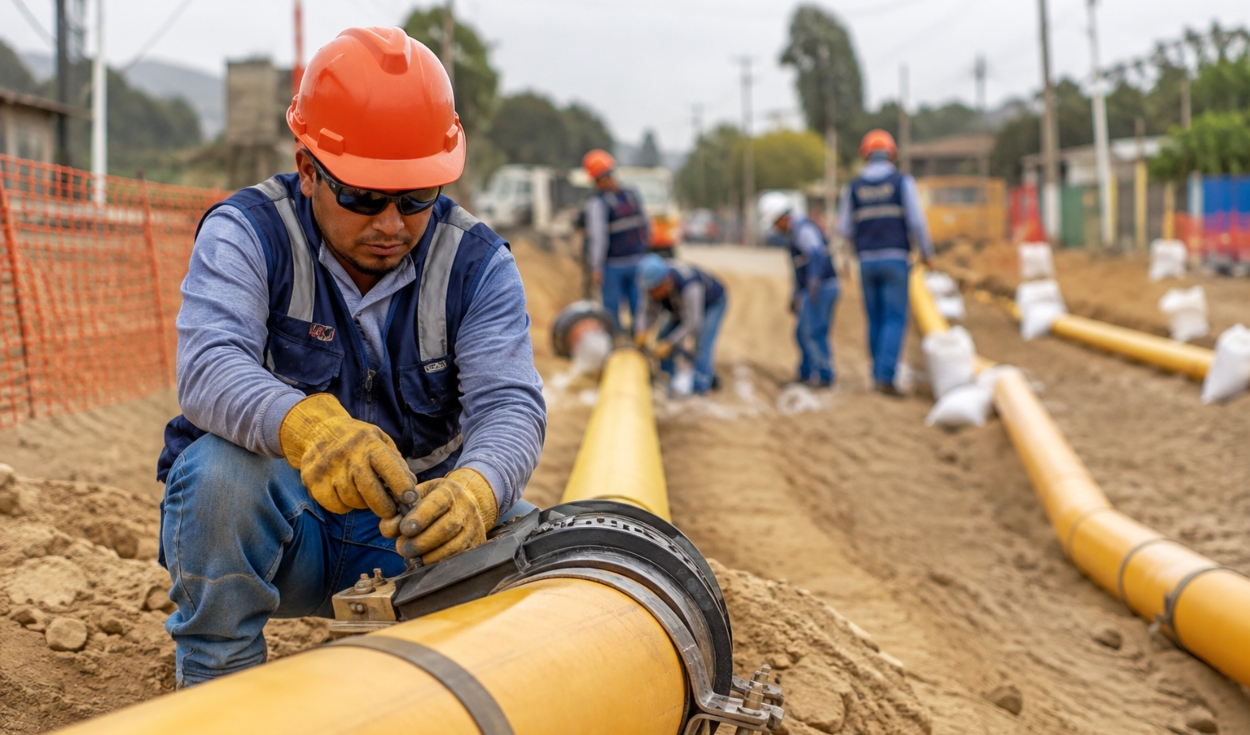
Peru's Ministry of Energy and Mines (Minem) expects to finalize before November a set of projects to expand natural gas access to more than 300,000 new users, Deputy Minister of Hydrocarbons Iris Cárdenas told La República.
Cárdenas said the initiative, which aims to bring natural gas to 15 cities across seven regions, is currently in a stage of resolving observations raised by the Supervisory Agency for Investment in Energy and Mining (Osinergmin).
Speaking at the 15th Natural Gas Peru 2026 Conference, Cárdenas said a joint evaluation carried out by Proinversión, Osinergmin, the Ministry of Economy and Finance (MEF) and Minem concluded on May 29. A report backing the project addendum was then drafted and sent to the relevant agencies.
Proinversión issued a favorable opinion, while Osinergmin raised observations. Although neither agency's opinion is binding, the ministry chose to resolve the regulator's observations first before sending the file to the MEF. Once that step is complete, the file will go to the MEF for its own opinion, and afterward to the Comptroller General's Office.
Lima holds 80% of connected households
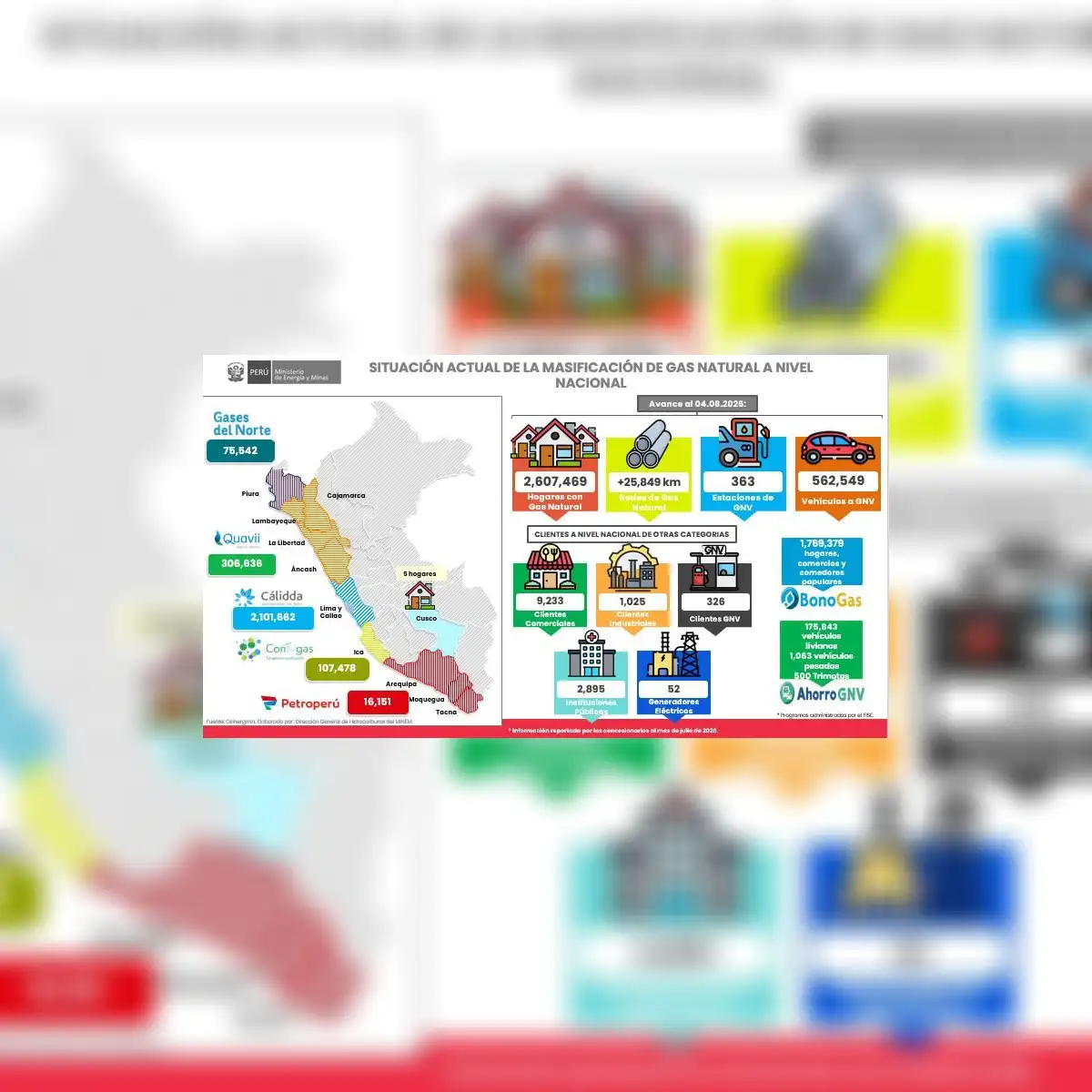
Access to natural gas remains concentrated in Lima. Of the 1.6 million households nationwide connected to the service, about 80% are in the capital, according to figures Cárdenas presented at the conference.
The gap is starkest in gas-producing regions. In Cusco, home to a large share of the country's natural gas reserves, only five households currently have the service. Cárdenas said there was a pending debt to the regions that produce the gas, mainly Cusco, where just five households are connected.
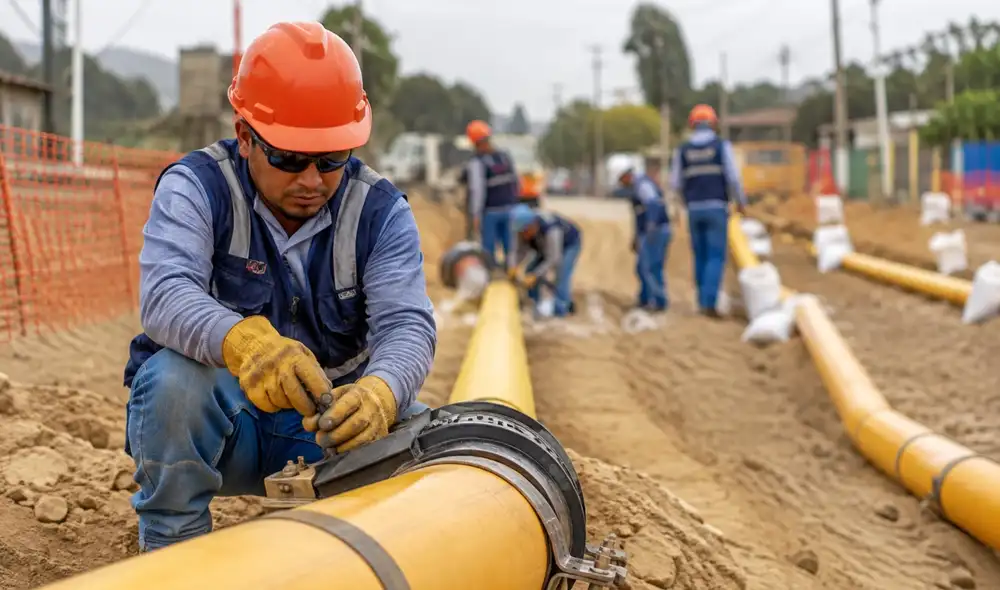
As one of the first steps to widen coverage, the sector developed a pilot project with the Energy Social Inclusion Fund (FISE) that includes a regasification plant and 25 kilometers of networks to serve 1,000 families. The homes will have three points of use: cooking, water heating and heating. Connections and internal installations are already out to tender while an operator is selected.
The plan to bring gas to other regions began around three years ago, when Cálidda proposed serving the 15 cities in seven regions. The joint review of the project wrapped up on May 29, and the government is now working through the following administrative stages.
The coverage expansion is part of a wider push to capitalize on hydrocarbons' role in the energy mix. Cárdenas said hydrocarbons account for 78% of primary energy production and 67% of final consumption. They have also generated more than 46 billion soles in canon and surtax revenue, more than half of which has gone to Cusco through activity tied to the Camisea gas project.
Transport seen as opening for gas over diesel
Transport is one of the main fronts for expanding natural gas use, given its large share of the country's energy consumption. The sector accounts for 54% of energy consumption, leaving room to cut diesel use, particularly in freight and passenger vehicles.
Cárdenas gave a preliminary estimate that a shift toward natural gas could cut diesel consumption by 10%, though she said the figure still needs to be validated with technical estimates. FISE already includes financial support mechanisms to encourage this shift. Rail development is also being pursued as a way to move part of passenger and freight transport away from diesel toward electric systems.
Natural gas also carries significant weight in power generation. According to Cárdenas' presentation, hydrocarbons account for 41% of generation, with natural gas contributing 39%. Its availability has allowed diesel-fired plants to be replaced, helping keep electricity rates competitive and contain energy costs for high-consumption activities such as mining.
Minem seeks to cut exploration permits from years to months
Reserves are another concern for the sector as demand is expected to grow. Cárdenas said approved reserves give the country about 13 years of autonomy, but more than 90% is concentrated in the Camisea gas fields.
That concentration has pushed Minem to propose measures to spur new exploration investment, including strengthening the state hydrocarbons promotion agency Perupetro, shortening environmental evaluation timelines, and forming dedicated teams to support permits for each project.
One of the main bottlenecks is environmental impact studies, which can take between three and four years. To shorten that process, the sector is proposing IGASPE, a complementary environmental management tool that could cut the evaluation of certain exploration activities to about three months.
The proposal calls for the state to first prepare an environmental baseline for the areas where projects will be developed, covering species, air quality and water conditions, so that companies can focus on presenting their projects and their measures to prevent or mitigate impacts.
Cárdenas told the newspaper that cutting the process from three or four years to three months was the first step to encourage exploration.
She stressed that the proposal does not seek to lower environmental standards, but to avoid forcing investors to spend years gathering information the state can already compile. IGASPE has been submitted to the Ministry of Environment (Minam) for validation. The sector is also proposing to form working groups similar to the Camisea Institutional Technical Group, led by Perupetro, to support exploration projects and speed up permits.
Infrastructure and petrochemicals to sustain expansion
Cárdenas warned that only a single corridor currently transports gas from Cusco to users, meaning the government sees a need for additional infrastructure to strengthen energy security.
The strategy also includes improving conditions for distribution concessions. Minem is proposing to move toward a single tariff and to encourage large consumers that can act as anchor demand.
Such users would generate stable demand able to support the economic sustainability of distribution networks, especially in areas where the initial number of residential customers is still low.
Within that framework, petrochemicals are one of the government's bets. Cárdenas said Minem has revived its promotion of the sector so that natural gas is used not only for power generation but also to produce higher value-added goods. A future petrochemical industry could itself become an anchor demand for distribution concessions, helping make them sustainable.
The sector's challenge is therefore twofold: expand the number of users without neglecting the future availability of the resource. To do so, Minem is working simultaneously on mass access, exploration, shorter permitting times, infrastructure development and new markets for natural gas.