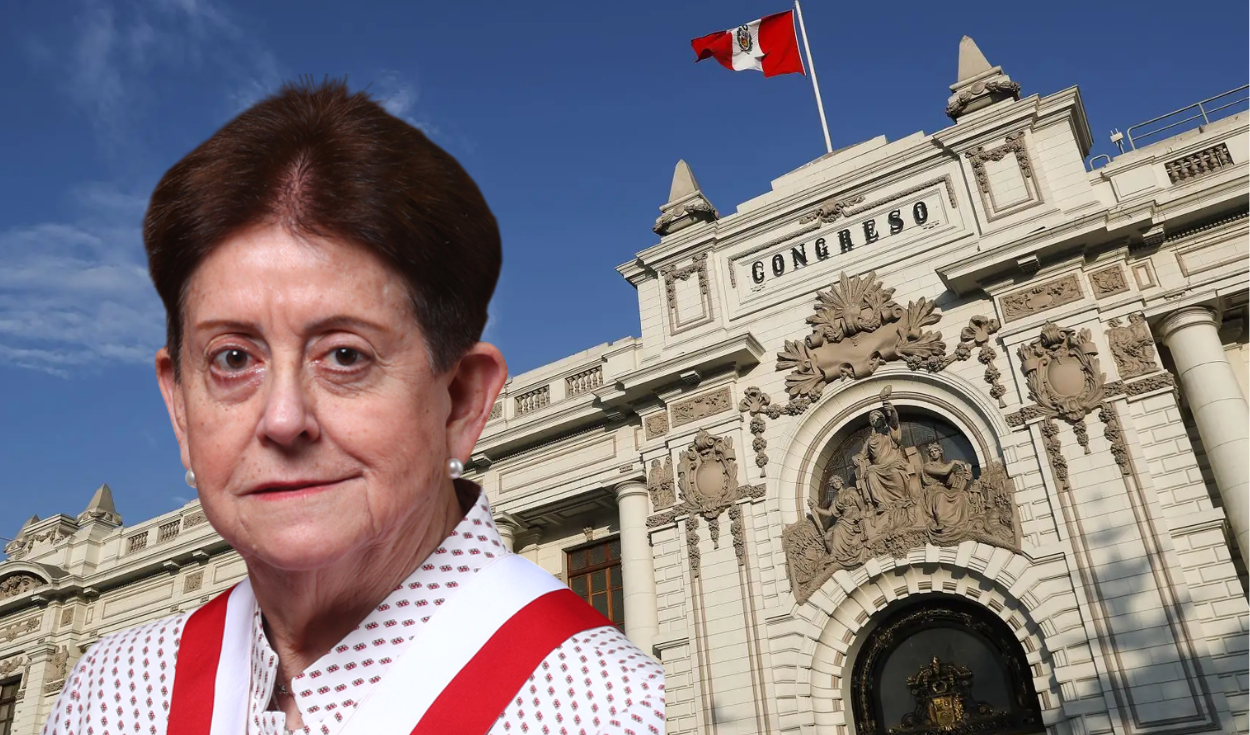
Peruvian Senator Lourdes Alcorta has rejected demands from opposition deputies for a prior political gesture before the Senate reviews delegated powers for the government.
Alcorta, a member of the conservative Renovación Popular party, described the opposition request as foolish and insisted that the Upper Chamber would evaluate the legislative proposals autonomously without committing to advance agreements.
Speaking during a meeting of the Senate Constitution Commission, Alcorta questioned the authority of Lower Chamber lawmakers to impose conditions on senators. She stated that the Senate would not make any political gestures or accept pre-conditions from deputies.
In separate remarks to reporters via Epicentro, the senator expressed surprise that four opposition parliamentary groups had coalesced around the demand after individual lawmakers initially made isolated statements. She stressed that while the Senate respects the work of the Chamber of Deputies, senators would reject any improper measures sent to them.
Opposition demands and legislative deadlock
The controversy follows a joint declaration by three opposition blocs in the Chamber of Deputies: Juntos por el Perú, Partido del Buen Gobierno, and Ahora Nación. The groups warned that they would vote against granting delegated legislative powers to the administration of Keiko Fujimori unless the Senate guarantees it will preserve the core content of their committee reports.
The requested legislative powers focus primarily on public security measures and emergency response preparations for the Fenómeno El Niño weather pattern. The climate phenomenon regularly causes heavy rainfall, coastal flooding, and severe infrastructure damage across northern and central Peru.
Ernesto Zunini, spokesperson for Juntos por el Perú, confirmed that his group sent a formal document to the Senate Constitution Commission asking for explicit modification boundaries. Zunini warned that supporting the executive request without prior guarantees from senators would represent a blank check, creating high risks for democratic institutions and potentially triggering social conflict, lawlessness, and public violence.
Deputy Rossana Alayza of Partido del Buen Gobierno stated that her bloc had filtered and prioritized urgent emergency proposals on crime and natural disasters. She questioned why senators were attempting to append unrelated subjects to the emergency bill, warning that no delegated powers would be granted unless the Senate issues an immediate political commitment.
Alayza added that the Fujimori administration does not need to persuade Lower Chamber lawmakers of new proposals, but must instead secure a binding political commitment from its own party representatives in the Upper Chamber.
Separation of powers and constitutional limits
César Holguín, spokesperson for Ahora Nación, appealed to historical principles and the separation of powers in demanding that the Senate refrain from eroding the oversight role of deputies. He cited José Faustino Sánchez Carrión, an early 19th-century independence leader considered the father of Peruvian constitutionalism, who argued that a republic must maintain a balance of powers to ensure rulers remain accountable to the public.
Holguín reiterated his party's formal request for the Upper Chamber to maintain democratic channels and institutional respect by committing to honor the spirit and content of legislation approved by deputies.
Peru recently restored a bicameral legislative system comprising a Senate and a Chamber of Deputies, altering congressional procedures for reviewing executive requests. Under the constitutional framework, the executive branch may seek temporary legislative powers from Congress to enact specialized decrees.
Legal experts examine chamber competencies
Constitutional lawyer Luciano López told La República that the deputies' demand for a prior commitment carries no legal standing within standard legislative procedure. López described the maneuver as a purely political expression, noting that the dispute reveals a lack of clarity in both chambers regarding their exact constitutional competencies.
Addressing concerns over potential distortions of Lower Chamber bills by senators, López noted that congressional regulations fail to define what specific changes constitute an unconstitutional alteration of a bill's essence. He explained that if the Senate passes modified legislation that faces claims of distortion, the issue would ultimately fall to the Constitutional Court for adjudication.
López attributed the lack of clear guidelines to the previous Congress, which failed to establish detailed rules during recent constitutional and procedural reforms. He added that filing an unconstitutionality lawsuit before the court does not suspend the immediate enforcement of an approved law, though public uncertainty over potential repeal would persist.
Furthermore, López clarified that the Senate lacks authority to restore provisions previously discarded by the Chamber of Deputies. He stressed that the Senate's jurisdiction is strictly limited to reviewing content approved by deputies, and reintroducing rejected items would exceed constitutional review powers while improperly exercising unauthorized legislative initiative.