

Peru's annual inflation rate climbed to 4.07 percent in July 2026, up from 4 percent in June, as higher food prices and a surge in transport costs during the national holidays pushed the consumer price index higher, the National Institute of Statistics and Informatics (INEI) reported.
The consumer price index for Metropolitan Lima rose 0.29 percent in July compared with the previous month. The cumulative increase for the January-to-July period reached 4.09 percent.
INEI chief Gaspar Morán Flores said the result was driven primarily by gains in the food and non-alcoholic beverages category, transport, and restaurants and hotels. He said price declines in housing, water, electricity and gas provided a partial offset.
Food prices lead the gains
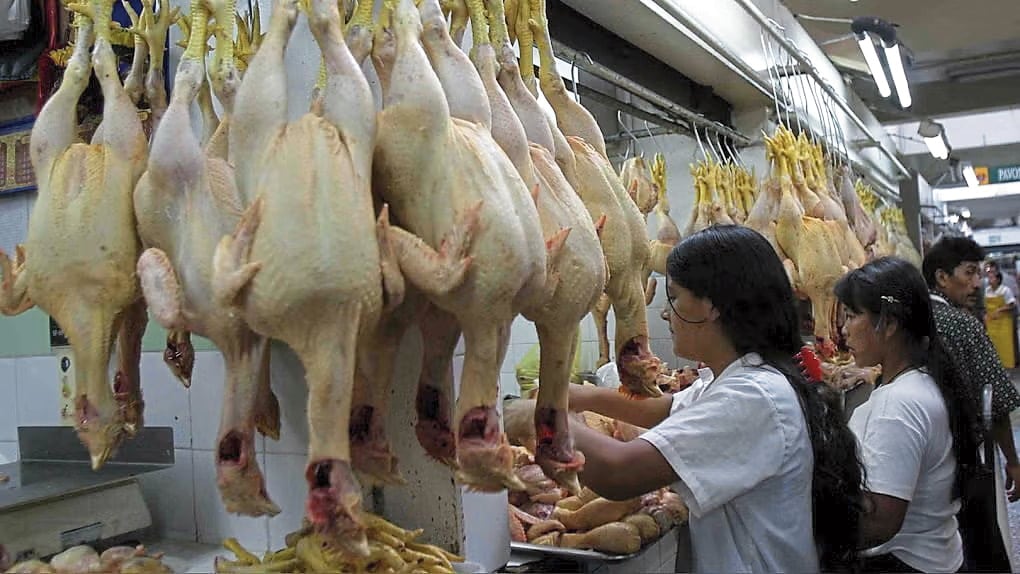
Food and non-alcoholic beverages posted the steepest monthly rise among all spending categories, at 0.67 percent. Within that group, meat prices climbed 5.7 percent. Eviscerated chicken rose 13.3 percent, with chicken wings up 8.5 percent, breast up 7.9 percent and leg up 7.1 percent. Eggs also rose 1.7 percent.
Some fruits and vegetables added to the pressure. Morán Flores cited higher prices for apples, avocado, grapes, yellow pickled chili pepper, tomato, squash and corn as contributors to the monthly increase.
Countering those gains, fish and seafood prices fell 2.6 percent, with bonito down 11.3 percent and corvina down 6.9 percent. Several fruits fell sharply: blueberries dropped 16.2 percent and papaya dropped 13 percent. Potatoes, onions and sugar also became cheaper during the month.
Holiday travel pushed transport costs higher
Transport costs rose 0.20 percent in July, driven by greater demand during Peru's Fiestas Patrias national holiday period. Domestic airfares rose 15.5 percent and international airfares rose 1.5 percent, pushing the air passenger transport subcategory up 4.9 percent overall. Interprovincial bus fares rose 18.7 percent.
Vehicle fuel prices moved in the opposite direction, falling 4.4 percent. Gasohol dropped 4.8 percent, liquefied petroleum gas for vehicles fell 4.1 percent, and diesel fell 1.5 percent.
Restaurants up, utilities down
The restaurants and hotels category rose 0.18 percent. Hot drinks climbed 0.7 percent, soft drinks rose 0.5 percent, and served beer rose 0.3 percent. Among food items, fried chicken rose 0.7 percent, pizzas rose 0.6 percent, and fried rice rose 0.6 percent.
The housing, water, electricity and gas category was the only spending division to record a decline, falling 0.12 percent. Morán Flores attributed the drop to lower domestic propane gas prices, down 1.1 percent, and a reduction in residential electricity consumption costs of 0.3 percent following a new tariff schedule that took effect on July 4, 2026.
Most products in the basket rose
Of the 586 products that make up the household consumption basket, 325 registered price increases in July, 117 fell in price and 144 remained unchanged.
The products with the largest monthly price increases were yellow pickled chili pepper at 47.04 percent, interprovincial bus fares at 18.68 percent, domestic airfares at 15.47 percent, eviscerated chicken at 13.32 percent and tomatoes at 10.25 percent.
The steepest price decreases were recorded in blueberries at minus 16.23 percent, papaya at minus 13 percent, bonito at minus 11.34 percent, cucumber at minus 8.8 percent and leeks at minus 8.41 percent.
Core inflation, which strips out food and energy prices, rose 0.28 percent in July.
National and city-level readings
At the national level, the consumer price index rose 0.30 percent in July compared with the previous month, with a cumulative increase of 3.71 percent for the year to date and an annual rate of 3.70 percent for the twelve months through July 2026.
All twenty-six cities where INEI measures consumer prices recorded monthly price increases in July. The cities with the highest monthly gains were Chimbote at 0.72 percent, Ica at 0.64 percent, Tacna at 0.54 percent, Ayacucho at 0.53 percent and Huancavelica at 0.53 percent. The smallest monthly increases were recorded in Tarapoto and Puno, each at 0.01 percent.
Wholesale prices and construction materials
The national wholesale price index rose 0.55 percent in July, driven by higher prices for chicken, eggs, diesel, liquefied petroleum gas and cement, among other goods. Prices fell for several agricultural products including green peas, custard apple, onion, potato and plantain.
The construction materials price index for Metropolitan Lima fell 0.16 percent in July, with declines recorded in glass, electrical supplies and steel products. Prices rose for pre-mixed concrete, lumber, tiles and Portland cement.


