Spanish labour lawyer Violeta Barba has warned that companies are strictly forbidden from asking employees whether they plan to join a general strike or replacing striking staff.
Speaking on 11 November 2026 during the 9:00 a.m. interview segment of the radio programme Herrera en COPE, hosted by journalist Jorge Bustos, Barba set out the legal and financial rules governing a general strike in Spain. The report on the 11 minute and 46 second broadcast was written for the network by Paola Albaladejo.
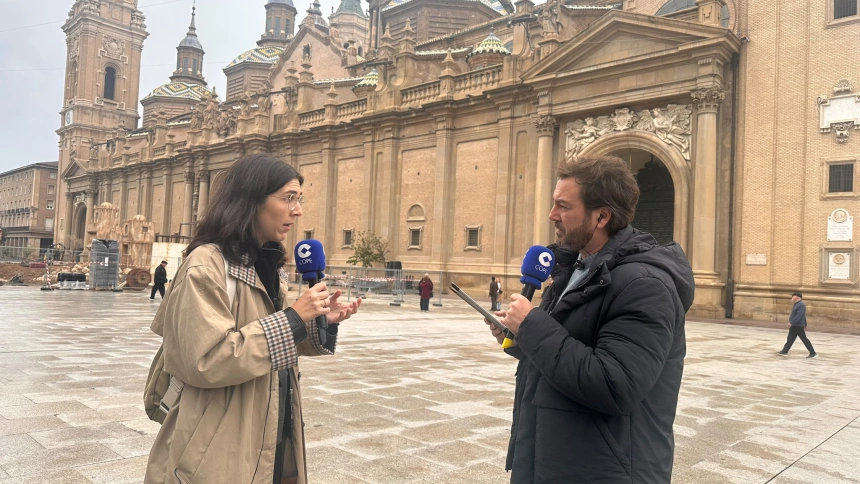
Barba, a member of the Zaragoza Bar Association, known in Spain as the Colegio de Abogados de Zaragoza, addressed the rights and obligations of both workers who choose to join a stoppage and those who decide to go to work as normal. COPE is one of Spain's main national radio networks, and the Zaragoza Bar Association is the professional body representing lawyers in the northeastern province of Zaragoza.
Pay deductions and holiday entitlements during a strike
One of the primary concerns for employees during a general strike is how walking out affects their pay. Barba explained that a striking worker loses the proportional share of their salary for the day of the stoppage, meaning that an employee on a standard 30-day monthly payroll receives pay for 29 days.
According to Barba, that single-day deduction also reduces the proportional amount accrued towards extra pay packets and daily allowances, such as a job-post supplement. Under Spanish employment practice, annual wages are commonly divided into 14 payments, including extra bonuses that accrue according to days worked.
However, the labour lawyer stressed that companies cannot deduct annual leave in response to a strike. Workers must retain their full holiday entitlement intact regardless of whether they take part in a stoppage.
Social Security contributions and pension rights
Taking part in a strike also affects official employment contributions for the duration of the walkout. Barba explained that no contributions are paid into Spain's Social Security system on the day of a strike.
During the stoppage, the striking employee is placed on a temporary suspension of registration with Social Security. Barba noted that this administrative status does not affect access to public healthcare because the worker enters a legal category treated as equivalent to active registration, preserving medical coverage during lawful industrial action.
She also reassured employees that losing a single day of contributions has a minimal effect on their future retirement pension. According to Barba, the reduction resulting from a one-day strike amounts to almost not even a few cents.
Rules on advance notice and strikebreaking bans
Employers in Spain cannot legally require a worker to give advance notice of whether they will join a strike. Barba explained that this prohibition exists to prevent strikebreaking, known in Spanish labour law as esquirolaje, which is the replacement of a striking worker.
She emphasized that setting up any system to replace a striking employee is strictly prohibited and carries a substantial fine for companies. In Spain, labour law bars businesses from hiring external replacements or reassigning staff to cover the posts of striking workers.
Because prior notice is not required, an employee can decide to join a stoppage at any point during the working day. Barba gave the example of a worker who starts their shift as usual and decides at 12:00 p.m. to exercise the right to strike by telling their boss that they are leaving to join the strike, from which point they stop earning pay for the rest of the shift.

Constitutional protections against employer retaliation
Barba stated firmly that employer reprisals against striking staff are prohibited, noting that Spanish court rulings on the issue are clearly unanimous. She said that any retaliation taken against workers who decide to exercise their right to strike violates fundamental rights.
She reminded listeners that the right to strike is enshrined in the Spanish Constitution, which protects industrial action as a fundamental constitutional right and renders employer reprisals unlawful.
Picket lines and the legal right to work
Employees who decide not to strike also have their right to work protected by law. Barba pointed out that non-striking workers have both the legal right and a contractual obligation under their employment contract to go to work.
Addressing picket lines outside workplaces, she explained that pickets are lawful provided they remain strictly informational and do not involve coercion, insults or threats to block access to the premises.
While most picket lines are informational, Barba said that any incident in which violence occurs or a worker is prevented from entering through rough treatment, insults or shoving can be reported to the authorities. She advised that when violence takes place, workers can file a formal complaint backed by the necessary evidence with the National Police, known in Spain as the Policia Nacional, or the relevant law enforcement body, as such conduct may constitute a criminal offence of coercion or threats.

Transport delays and illegal employer lockouts
The interview also examined cases where a worker arrives late for reasons caused by the strike, such as roadblocks or a lack of transport. Barba recommended notifying the company and justifying the delay as a case of force majeure.
Although Barba said she believes there should be no disciplinary penalty or salary deduction in those circumstances, she acknowledged that the issue is somewhat more debatable.
Conversely, if a business owner decides to close their business out of fear of picket lines, Barba explained that this constitutes an illegal employer lockout and the employer remains obligated to pay staff their full wages. She noted that in that situation the employees are not exercising their right to strike, but rather are not being given work by their company, meaning the law requires the employer to pay for the day.